Showing posts sorted by relevance for query James Kudelka. Sort by date Show all posts

Friday, August 15, 2014

Dancing With Puppets and Pulling the Strings: James Kudelka's Malcolm

 James Kudelka (right), and Malcolm. (Photo: Bruce Zinger)

James Kudelka danced with a puppet this year. Malcolm was his name and while their dance wasn’t quite a pas de deux there was no mistaking theirs was a unique partnership. Kudelka might have seemed in control of the movements, but it was more Malcolm pushing him into new theatrical territory. With a puppet quite literally in his hands, no strings attached, Kudelka has moved beyond the boundaries of traditional dance performance, eschewing the kinetic to focus more on the art form's more subtle, expressive side as well as it's capacity for creating an empathetic relationship with its audience. It's something of an emerging trend right now. On the West Coast, choreographer Crystal Pite has been incorporating puppets into her work of late, including her re-interpretation of Shakespeare's The Tempest – The Tempest Replica – which Canadian Stage presented in Toronto in April. In Quebec, Robert Lepage has long used Japanese-inspired puppets in his theatrical productions. On Broadway, War Horse created a sensation last season with machine-driven puppets which helped to tell a story of loss of innocence and the brutality of war. Today's puppets, in other words, aren't just child's play. With Kudelka, to get back to the point, the puppet is a conduit for intimacy, stuffed cloth made substantial, and in more ways than one.

Sunday, January 31, 2016

Back to School: James Kudelka At Ryerson University

Choreographer James Kudelka working with dancers from the Ryerson Theatre School. (Photo by Jeremy Mimnagh)

Ryerson Theatre School scored a coup when it secured James Kudelka to choreograph its annual student showcase for five performances in Toronto this past November. A former artistic director of the National Ballet of Canada, Kudelka has created large scale works for classical dance companies and more experimental pieces for modern and contemporary troupes across the continent. As a dancer, he has performed with ensembles and alone with a puppet. Last year, at age 60, he directed his first play while maintaining his credentials as a baker of artisanal bread. Always up to a challenge, Canada's self-described sex and death choreographer was eager to accept the Ryerson University invitation if only because it allowed him, again, to do something new. The challenge was to work with 57 third- and fourth-year students with varying degrees of dance and stage experience and make them look like seasoned professionals. He pulled it off. Kudelka Meets Ryerson Dances 2015 emerged as an expertly designed work of abstract dance performed with commitment by a group of young amateurs.

Saturday, December 26, 2015

A Still Savoury Nut: James Kudelka's Nutcracker at 20

 James Kudelka's The Nutcracker is celebrating its 20th anniversary at the National Ballet of Canada. (Photo: Bruce Zinger)

The Nutcracker not only lives on, it's gotten better with age. Having just seen the 20th anniversary production of James Kudelka's version of the seasonal ballet classic as performed by the National Ballet of Canada, I can say that the passing years have lent the home-grown production a lovely patina. The choreography, while still devilishly tricky, has softened to the point that interpretative performances trump the pyrotechnics. Individual dancers in command of entertaining acting skills (Harrison James, Dylan Tedladi, Meghan Pugh and Stephanie Hutchison, for instance) better stand out and the story, which previously tended to get lost in the shadows of Santo Loquasto's ravishing sets and costumes, is easier to follow. Not that there is much of a story to tell.

E. T. A. Hoffmann's original 1816 The Nutcracker and the Mouse King book, the inspiration behind Pyotr Ilyich Tchaikovsky's 1892 ballet, provides the general idea of a broken Nutcracker who comes to life at night to battle with toy soldiers against an army of bayonet-wielding rats. But the real source material appears more to be earlier ballet versions in which tropes like a growing Christmas tree and a tiara-wearing Snow Queen are now deeply embedded components of The Nutcracker narrative. Kudelka knows the formula but still ended up creating a ballet that forges its own path. Instead of a girl's coming-of-age story, as is typically the case with most Nutcracker ballets, Kudelka's version is a portrait of two squabbling siblings, a girl and a boy, Marie and Misha (played, respectively, by Jacqueline Sugianto and Adam Hone), who unite in dream to conjure the fantasy that takes them on a journey of the imagination through a land of ice and snow.

Tuesday, May 9, 2017

Danger in the Drawing Room: James Kudelka's Love, Sex & Brahms

Bill Coleman, Evelyn Hart and Ryan Boorne and the cast of Love, Sex & Brahms. (Photo: Jeremy Mimnagh)

Actors who move. It's an image Canadian choreographer James Kudelka had in mind when creating Love, Sex & Brahms whose world premiere took place at Toronto's The Citadel Theatre on March 16. Set to the Intermezzi for Solo Piano which composer Johannes Brahms created late in his career, the work is more costume drama than dance, focusing on the emotional underpinnings of the characters more than on the spiralling spurts of their bodies hidden behind the Victorian-era dress created for them by Toronto fashion label Hoax Couture.

A Tissot painting come to life, the work is an expanded version of the two-time Dora Award-winning #lovesexbrahms which debuted in April, 2015. The new hour-long version now has 10 characters compared to the original 8 and more than twice as many scenes. Coleman Lemieux and Compagnie, the critically acclaimed and community-based dance organization where the award-winning Kudelka has been choreographer-in-residence since 2008, both produced and danced it. Among the performers for the run that ended on March 19 were company founders Bill Coleman and Laurence Lemieux and independent dance artists Danielle Baskerville, Tyler Gledhill, Luke Garwood, Victoria Mehaffey, Louis Laberge-Côté, Ryan Boorne, Andrew McCormack and Daniel McArthur.

Wednesday, November 27, 2013

Harnessing the New: The National Ballet of Canada's Innovation


Innovation is the name of the program of new choreography that the National Ballet of Canada is presenting at Toronto’s Four Seasons Centre and that concludes tomorrow evening. It more than lives up to its name. Each of the four works is daringly exploratory in its use of classical dance idioms and practices, resulting in an evening of dance that is refreshingly and rewardingly new. Three of the pieces are world premières – Watershed by the Montreal-based contemporary dance choreographer José Navas, Unearth by the 22-year old National Ballet School graduate Robert Binet and ... black night’s bright day ... by Canada’s internationally acclaimed James Kudelka. Being and Nothingness (Part 1), a seven-minute solo which principal dancer and company choreographic associate Guillaume Côté created earlier in the year for Greta Hodgkinson to perform in her native Rhode Island, is a Canadian première added to the program only recently. Set to a repetitive minimalistic piano score by Philip Glass – Metamorphosis 1-V (4th Movement) as performed by Edward Connell – and danced with raw, frenetic intensity by the brilliant ballerina at its centre, Being and Nothingness (Part 1) easily fits in with the longer works on the program, all of them ensemble pieces, in that, like the others, it pushes the borders of classical dance while also testing the physical limitations of the dancer. Hodgkinson moves insect-like in the light and shadow of a single, suspended bulb. Dressed in a simple paper-white thigh-length dress by National Ballet corps de ballet dancer and budding costume designer, Krista Dowson, she rapidly rubs and whirls her hands and forearms in a worrying manner, making her existential inquiry, her uncompromising self-examination, look like a descent into madness. Hodgkinson eventually moves quickly out of this straitjacketing movement sequence, flinging limbs outwards and pretzeling her legs upwards towards her open-eyed face. It truly is a tour de force performance, the choreography amply showcasing the ballerina's range as a theatrical artist. Ballet in this work, as in the other three, is not a static thing, hidebound to tradition. It is a living, breathing, highly adaptable art form, expressing an expanded range of motion while heightening emotion in the spectator.

Sunday, December 15, 2024

Still Nuts About The Nutcracker: Celebrating a Holiday Tradition at the National Ballet of Canada

Heather Ogden and Christopher Gerty in The Nutcracker. (Photo: Karolina Kuras. Courtesy of The National Ballet of Canada)

As the curtain rose on the 29th anniversary of James Kudelka’s Nutcracker at the Four Seasons Centre, you couldn’t help but feel a frisson of excitement. This wasn’t just another night at the ballet; it was a celebration of a production that has become as much a part of the holiday season as last-minute shopping and the towering Christmas tree illuminating Nathan Phillips Square.

Sunday, March 16, 2014

Feathers In their Caps: Svetlana Lunkina and Evan McKie in Swan Lake

Evan McKie & Svetlana Lunkina (with the National Ballet of Canada) in Swan Lake. (Photo: Aleksandar Antonijevic)

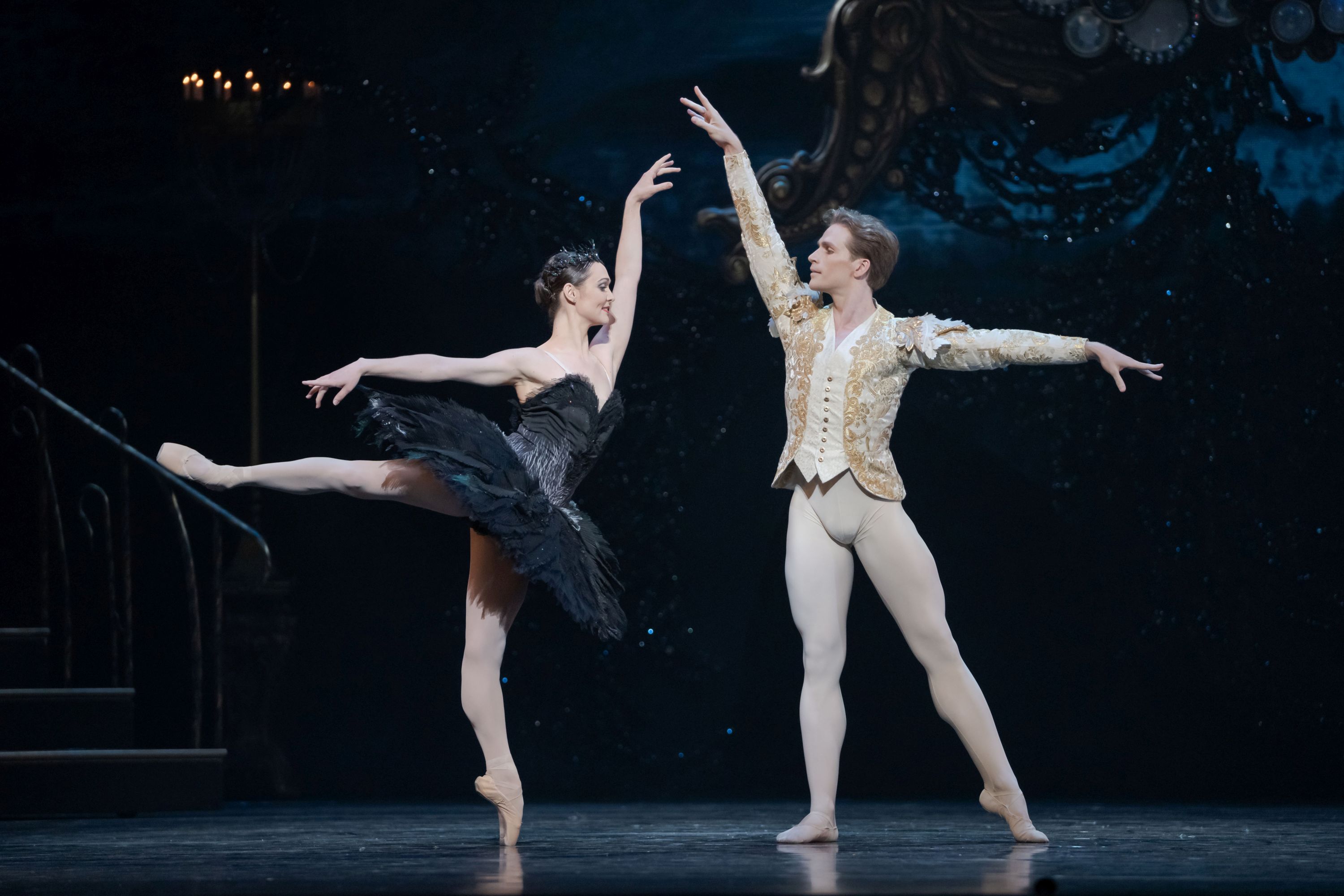
The highly anticipated debuts of principal guest artists Svetlana Lunkina and Evan McKie in James Kudelka's version of Swan Lake readily explains why Toronto's Four Seasons Centre for the Performing Arts was packed to the rafters last Saturday night (March 8). McKie who self identifies as a dancer-actor is the Toronto-born principal dancer with Germany's Stuttgart Ballet who is internationally celebrated for his ability to dramatize a role, and make it matter. Last month, the 30-year-old McKie headlined the Paris Opera Ballet, a first for a Canadian ballet dancer. In April, he will be a featured performer with the New York City Ballet where doubtless his long lyrical lines, his buoyant jumps and aristocratic mien will get audiences there as excited as they have been this past week for his homecoming in Toronto. Russian trained, McKie has also performed with the Bolshoi, making him a choice partner for Lunkina, a star ballerina of the Bolshoi who made headlines last year when she announced she was quitting Russia for Canada following a series of malevolent threats made against her and her family at a time when the Bolshoi was rocked with violence, an acid attack on its artistic director, Lunkina's former partner Sergei Filin, being one. McKie's undisputed talent as a gifted dramatic dancer notwithstanding, she was the one everyone had come to watch. The house was filled with ex ballet dancers and au courant balletomanes, all eager to see the controversial Russian ballerina show her stuff. She did not disappoint.

Tuesday, June 25, 2013

A Thing of Wonder: National Ballet of Canada Mixed Program

The National Ballet of Canada performing George Balanchine's Theme and Variations.

It’s not every day you get a news hook attached to your dance review. But here you go, and hot off the presses: National Ballet of Canada principal dancer Guillaume Côté has just been appointed to the newly created position of choreographic associate, the company announced Sunday following the final performance of his No. 24, an eight-minute pas de deux performed to a live accompaniment of Niccoló Paganini’s virtuosic violin solo, Caprice 24.

No. 24, which was performed by three separate casts over a five-day run, was one of three works on the Mixed Program which opened last week at Toronto’s Four Seasons Centre for the Performing Arts. The other works were Jorma Elo’s Pur Ti Miro, a revival of the work which the Finnish choreographer first created on the National Ballet dancers in 2010; James Kudelka’s decidedly unballetic but indisputably powerful The Man in Black, inspired by an unusual series of hurtin’ songs by the late Johnny Cash; and, for the glittering finalé (and that is meant literally given the the abundance of faux diamonds which lent sparkle to the ballerinas’ necks and ear lobes), George Balanchine’s 1947 neo-classical masterpiece, Theme and Variations.

Tuesday, November 21, 2023

Feeling Her Pain: Emma Bovary at the National Ballet of Canada

Hannah Galway and Siphesihle November in Emma Bovary. (Photo: Karolina Kuras/Courtesy of The National Ballet of Canada)

Emma Bovary ran at Toronto’s Four Season’s Centre from November 11-18.

In the promo video the National Ballet of Canada put out in advance of the world premiere of Emma Bovary, choreographer Helen Pickett says that her intention was to get the audience to understand what the titular character – one of the greatest female creations in all of literature – is feeling. That undersells it.

A triumph of dance-theatre where every gesture is loaded with narrative meaning, Emma Bovary evokes a visceral response in the audience. Much like Gustave Flaubert’s original mid-19th-century realist novel, the experience is vividly complex. We are riveted, repulsed, seduced, astonished, amused, horrified and ultimately sympathetic. Gratification is also part of the emotional mix. Together with her collaborator, the English theatre and opera director James Bonas, the California-born Pickett – a former Ballet Frankfurt dancer who has choreographed more than 60 works – has created an ultra-physical narrative ballet so potent it grabs you at your core.

Monday, August 1, 2022

Karen Kain’s New Version of Swan Lake Fails to Fly

Harrison James and Jurgita Dronina in Swan Lake. (Photo: Karolina Kuras)

As far as highly anticipated world premieres go, Karen Kain’s Swan Lake had an extraordinary amount of buildup, making it – from a box office perspective alone – a hit before it even opened. Originally scheduled for 2020, and delayed two years because of the pandemic, the $3.5-million production, a presentation of the National Ballet of Canada, sold out its two-week run in advance of its debut at Toronto’s Four Seasons Centre on June 10. This is unprecedented for any ballet outside The Nutcracker, let alone one whose merits had yet to be assessed. At the end of the day, those merits were found to be wanting, making this Swan Lake, after all the hype, a total letdown.

What was wrong with it? In brief, everything.

Wednesday, December 9, 2020

Deirdre Kelly Wins 2020 Nathan Cohen Award for Performing Arts Criticism

Critics At Large's Deirdre Kelly wins the 2020 Nathan Cohen Award for Outstanding Review. (Photo: McKenzie James)

The Canadian Theatre Critics Association has chosen Toronto dance critic Deirdre Kelly as the winner of the 2020 Nathan Cohen Award for Outstanding Review. 


Ms. Kelly won for "Danse Macabre: Three Works by the National Ballet of Canada,” her review of one of the classical dance company’s final performances in Toronto before the lockdowns in early March.

Evoking the vulnerability and ephemerality of the body, a theme whose resonance is amplified within the context of the global pandemic, the piece was published by the independent Canadian digital arts publication Critics At Large:

https://www.criticsatlarge.ca/2020/03/danse-macabre-three-works-by-national.html

Sunday, May 24, 2015

The King's Domain: Laurence Lemieux's Looking for Elvis

Looking for Elvis (photo by John Lauener).

Elvis Presley was recently back in the building belonging to Coleman Lemieux & Compagnie, the dance company located in Toronto's Regent Park. The occasion was Looking for Elvis, the work created by the Quebec-born choreographer and dancer Laurence Lemieux in 2014 and recently remounted at the intimate The Citadel performing space on Parliament St. for four nights of performances during the first week of May. As he did the first time around, Elvis appeared in the piece as a casualty of his own fame. But with Lemieux having sharpened the focus on his isolation within the culture of celebrity, the poignancy of his end-of-life story was heightened, resulting in a more nuanced encounter of the King. Looking for Elvis shared the program with a 2010 work inspired by another great of 20th century American popular music, James Kudelka's The Man in Black set to a sextet of haunting end-of-life songs by Johnny Cash (and danced in cowboy boots by the National Ballet of Canada in 2013). Both works were united by their use of popular music to get inside the memories and emotions of their viewing public and by a shared masculine sensibility.

Friday, June 10, 2016

Crash Landing: Le Petit Prince at the National Ballet of Canada

Dylan Tedaldi in National Ballet of Canada's Le Petit Prince. (Photo by Karolina Kuras)

Le Petit Prince, Guillaume Côtè's ambitious retelling of Antoine de Saint-Exupéry's classic children's story of a planet-hopping boy on a quest for truth, takes a wrong turn by over-complicating what in essence is a poetic tale simply told. The two-hour long ballet, whose highly anticipated world premiere took place at Toronto's Four Seasons for the Performance Arts last Saturday night, is fussily over-choreographed in places, resulting in a blurred focus. What does Côtê want to say about Le Petit Prince? After two hours of watching the ballet unfold against Michael Levine's cosmic set design and Kevin Lau's lushly descriptive original score, this remains the million dollar question. Correction. The two-million-dollar question.

Saturday, April 12, 2014

Harmony in Motion: Contemporary Dance in Toronto

Aleatoric Duet No. 2 from he/she

Three different programs of contemporary dance by three different companies took place within days of each other in Toronto at the end of March: Dichterliebe, a revival of a 2012 suite of 16 dances set to 16 sung sections of Robert Schumann’s same titled song cycle (the lyrics are by the late-Romantic German poet Heinrich Heine) which Coleman Lemieux & Co. presented at their Citadel theatre and studio complex in Regent Park; he/she, an evening of new and revised work by Peggy Baker Dance Projects at the Betty Oliphant Theatre, and Around, a new 60-minute work by Dancemakers artistic director Michael Trent which the company, this year celebrating its 40th anniversary, performed as an ensemble at its Distillery District-located Centre for Creation.

Tuesday, January 6, 2015

Critics Still At Large: Five Years On


During the late fall of 2009, when Shlomo Schwartzberg, the late David Churchill and myself sat down in Made in China, a restaurant in downtown Toronto, to create Critics at Large, we had no idea whether we would last five months, let alone five years. But here we are five years later and with more writers than we started with. At that time, we created the site with a chip on our shoulder. Two of us had been seasoned journalists, who were quickly finding ourselves out of season, and being left with nowhere to work. So there was a defiance in not going down quietly. Critics at Large was to be our weapon. But we were also venturing into the world of social media which many believed to be the harbinger of the death of print. So we made the decision to lower our swords, and see ourselves more as part of a pioneering effort, where we hoped we could bring the values we learned from the traditions of the analogue world and apply them to the digital one. The only thing to be decided was whether we had anything interesting to say. Time took care of that.

While I wouldn't be so bold as to say that we accomplished the goal of standing out from the pack, I think the question of what that meant was on everybody's mind who came on board. We all read each other and we knew that the bar could be raised (or dropped) in a heartbeat. Yet when I look back through our archive, I see a strong body of work that's versatile, filled with temperament and sometimes risky. The question of what constituted criticism remained a consistent quest and something we felt in the process of defining. Not all of our writers, for example, were comfortable with the idea of making harsh comments about things they didn't like. As I've come to discover (especially on Facebook), the profession isn't very well understood, or respected today, which makes writers more vulnerable than in any period I can recall. In some areas, critics are even hated, as if our goal is to deprive people of pleasure. (One Facebook 'friend' described what I did as 'parasitic.') So rather than impose a sense of what we should stand for, we became more organic in our approach. That is, we allowed people the freedom to find their true voices and their critical edge in their own time. This decision naturally took the edge off that chip we placed on our shoulder. What became more important, over time, was bringing a self-respect and integrity to what we did on a daily basis.