Showing posts sorted by relevance for query John Coltrane. Sort by date Show all posts

Wednesday, July 11, 2018

Missing Link: Both Directions At Once by John Coltrane

Cover art for John Coltrane's Both Directions At Once. (Photo: Impulse! Records)

After a long hiatus, John Coltrane is back on the jazz charts with a new album called Both Directions At Once (Impulse!). This exciting and previously unheard set of recordings will go down in jazz history as what I characterize as the missing link. It’s like discovering J.R.R. Tolkien wrote another book in the Lord of the Rings series that's meant to fit between The Fellowship of the Ring and The Two Towers. It’s the musical link of what had come before in Coltrane’s growth and where he and his band mates were going. The tracks on this album were done a couple of years before Crescent and A Love Supreme, two of the group’s seminal discs.

Thursday, September 24, 2015

Out of This World: John Coltrane in Seattle (1965)

John Coltrane and Elvin Jones (drums) at the Half Note in 1965.

For twenty years, between 1947 and 1967, John Coltrane (whose birthday was yesterday) played saxophone while engrossed with the desire to reach a place unheard, never before felt, and spiritually solvent. Beginning his career with an equal longing to be "consumed" by the spirit of Charlie Parker, in actuality, he was consumed (like Parker had been himself) with drugs and alcohol. One day, though, Coltrane had a spiritual awakening through vegetarianism and eastern religion which lead him on a quest "to make others happy through music." Who knew then that this sojourn would take him to the furthest edges of what many would call listenable music? And it would leave some people less than pleased let alone happy.

His career had begun with Dizzy Gillespie's band in the late Forties, but when Coltrane hooked up with Miles Davis in the mid-Fifties, he began to hone a virtuosity in improvisation.They were an audacious contrast in styles. Where Davis was a master of spareness, Coltrane could never seem to cram enough notes into a bar of music. His heroin problems got him kicked out of Davis's group, but then he began a short term with pianist Thelonious Monk before kicking his habit permanently. Coltrane had found a mentor in Monk. Monk taught him methods of creating complex harmonic structures within his sax solos, which in time would be long, difficult excursions into abstract blues. Coltrane could take a pop standard such as Rodgers and Hammerstein's "My Favourite Things" in 1960 and enlarge the melody on the soprano saxophone by building an extended solo overtop the basic chords of the theme. Within a year, though, in a series of concerts at the Village Vanguard, Coltrane used melody as merely a starting place for epic solos that built in intensity like a chainsaw cutting through a tornado. Sometimes they would last for close to an hour. "Chasin' the Trane," for instance, featured over eighty choruses that were built upon a twelve-bar blues. That intensity would reach a spiritual epiphany in 1964 with the luxuriant devotional suite A Love Supreme.

Thursday, August 7, 2014

Opening the Door: The 50th Anniversary of John Coltrane Quartet's Crescent


The John Coltrane Quartet's Crescent [Impulse!] was released 50 years this past June. The anniversary has largely gone unnoticed; much like the record itself did all those years ago, eclipsed by its follow-up masterpiece, A Love Supreme. Crescent has the seeds of all the ideas that are developed on A Love Supreme, but it’s a much more introspective experience. Revisiting the album recently, I was astonished to hear the quartet in the midst of musical change. The record opens with the prayer-like title track, a simple, personal ballad that doubles in tempo after the main theme is established. The playing here is superb, from Elvin Jones steady, unadorned rhythm on drums to McCoy Tyner’s piano drone that pulls the beat along. Coltrane's refined sound on the tenor saxophone sounds magnificent: a tribute to his lyrical and melodic lines. All of that will change by the next recording as if Crescent is opening a door to a more powerful and emotional breakthrough on A Love Supreme. The opening cut is followed up by a piece called, “Wise One,” another introspective work that creates a Zen-like trance in its continuous roll. “Bessie’s Blues”, a brief tribute to Bessie Smith, is its flip side: an unabashed bebop tune, typical of the Coltrane we heard a decade earlier. It’s an accessible song that closes out side one.

It might be said that the album has all the earmarks of the post-JFK era. But I think it would be unfair to label the record as a memorial to Kennedy and his legacy. Coltrane wasn’t that political a musician. Nevertheless one can’t help but think the leader and his band felt differently after their President’s shocking death in 1963. That said, "Lonnie's Lament," which opens side two, is a sober, mid-tempo modal tune, with darker, yet richer musical colours. Jones mixes up the rhythm behind McCoy Tyner's solo when the two lay out completely at the 6-minute mark. Jimmy Garrison provides a straightforward bass solo that carries the theme without veering off too much from the original chord changes. Garrison joined the quartet in 1962 replacing Reggie Workman. He remained with Coltrane until the band leader died in 1967. Like the whole record, there's beauty and simplicity in the compositions and the playing, while Coltrane, who was in his prime, seems sedate without being detached. To my ear, he sounds relaxed, and entirely in the moment. This is particularly evident on the final cut, "The Drum Thing," featuring ideas first explored on the under-recognized, Impressions (Impulse!, 1963). Elvin Jones is the featured soloist whose contribution to the quartet really served the music very well. In many ways, this quartet defined the Coltrane sound, as we know today. That they should record and release, six months later, one of the most important recordings in jazz, A Love Supreme, goes to prove it.

- John Corcelli is a music critic, broadcast/producer, musician and member of the Festival Wind Orchestra. He's currently writing a book about Frank Zappa for Backbeat Books.

Sunday, February 16, 2014

A Termite in the Wood: Captain Beefheart & The Magic Band's Trout Mask Replica (1969)

Not every record is for its time. Some don't even care about time. In the case of the strange masterpiece, Captain Beefheart & The Magic Band's Trout Mask Replica, it doesn't even pretend to keep time. In the summer of 1969, Trout Mask came out as an abstract sound collage that followed no trend, or provided even a hint to what was dominating the rock airwaves. Rather than build on what was popular then, it seemed to anticipate the rude gesture of punk almost a decade later. But it did it without the artists involved wanting to upset, or alienate anyone. Walt Whitman wrote about the spirit that Trout Mask inherited some seventy years before it was made. "A perfect writer would make words sing, dance, kiss, do the male and female act, bear children, weep, bleed, rage, stab, steal, fire cannon, steer ships, sack cities, charge with cavalry or infantry, or do any thing, that man or woman or the natural powers can do," Whitman wrote in An American Primer. Trout Mask dances and weeps and bleeds and sacks cities by integrating free form verse, the urban blues of Howlin' Wolf, the gospel blues of Blind Willie Johnson, and the free jazz of Ornette Coleman. The record was so dissonantly original that it annoyed more people than it attracted. People even heard it in records that weren't Trout Mask. A friend of mine once bought one of John Coltrane's more wildly improvisational records (John Coltrane in Seattle) only to call me later to complain, "This isn't Coltrane. It's Beefheart!" But to understand the shock and disbelief surrounding the release of this 1969 landmark, a wildly original (and unsurpassed) experimental leap in popular music, one that defied all the reasons why we listen to popular music, you have to first consider the music already on the airwaves, or perhaps about to arrive there.

Tuesday, August 1, 2017

In a Groove: Revisiting High Fidelity (2000)

John Cusack as vinyl collector Rob Gordon in High Fidelity 

Chances are, if you've ever spent a great deal of time in a used record store (in the days when there were used record stores), you will probably recognize the crackpot characters that populate Stephen Frears's frisky comedy, High Fidelity. I would also venture to guess that you might see something of yourself in the adolescent obsessions on display – especially if you are a music enthusiast. Based on Nick Hornby's delightfully funny novel, High Fidelity is about how pop music might sow the seeds of love but can't bear the fruit to nourish and sustain our relationships.

Tuesday, December 26, 2023

Interstitial Music: The Space Between the Notes

Arnold Schoenberg, MS 96.

“It’s all about starting in the middle of a musical sentence and then moving in both directions at once.” – John Coltrane

Man, we are a long, long way here from the dreamy and wistful harp pieces of the classical age, and it’s a fine thing too. In the hands of a masterfully gifted contemporary jazz composer and improviser such as Maria-Christina Harper, this historically tinged musical instrument acquires a whole new meaning. And the muscular heft to go along with it, as she pulls it further and deeper into the postmodern age, while still remaining true to the roots of its inception in a subtle way that honours her harp precursors, Dorothy Ashby in 1957-58, and Alice Coltrane in 1967-68. The blessing here is that on the new album release Passing By from Little Yellow Man Records, Harper (yes, in a delightfully charming piece of synchronicity, this edgy harpist’s name is actually Harper) is accompanied by the recently formed eponymously named Trio and joined by the restrained brilliance of Evan Jenkins on percussion and the fluid elegance of Josephine Davies on saxes. The results are stunning, in both their aggressive reach into a sonic future and their respectful evocation of a circuitous past. Together, they slam it.

Bygone days of the gilded age.

An instrument which sounded and felt so sweetly gentle in the hands of the younger son of Sebastian Bach in his Sonata for Harp in G Major, or enigmatic in Beethoven’s Six Variations on a Swiss Song, had even evolved eventually into a 20th-century modernist experiment in atonality in the visionary fingertips of Luciano Berio or Elliott Carter. But it was in the jazz canon that the harp suddenly assumed a truly startling arrival into Nowness, first in the still wistful but advanced Dorothy Ashby, followed by the cosmic vibrations of the great Alice Coltrane a decade later. And now we are permitted an even deeper dive into the Now, with Harper’s trio of ideally matched musical partners. Their debut release as a trio (which follows on the heels of her solo album Gluten Free and a duet album with lute player Yiagos Hairetis called Draft) features her uniquely tuned electric harp in tandem with her subtle sonic effects and bowing. I thought there was a bass player until I realized Harper was supplying it in her spare time.

The composer is here sharing space and time in an exemplary fused fashion with Jenkins and Davies. Far from this accomplished sax player and versatile drummer accompanying the harpist, however, here they are all engaged in a three-way conversation taking place in the space between their notes. Their jointly created music is perpetually beginning and ending at the same time, in keeping with that majestic insight expressed so well by Trane: the notion that sounds can be free enough to erupt from a shared centre (with the right partners) and then swiftly, or slowly, shift in either direction, towards a commencement or a conclusion, or both. This is interstitial music indeed, co-created according to what Trane also once referred to as “natural laws,” a sense of liberty within the form whereby content assumes its own austere gravitas, and I’m also reminded of his other amazing admonition, “Listen, you can play a shoestring if you do it with enough authenticity.”

Dorothy Ashby, 1958.

Alice Coltrane, 1968.

Maria-Christina Harper, Stavros Centre.

 The Harper Trio’s shared expedition into an exotic domain of melting away the sonorous time in between their notes, a constantly shifting sonic plateau that occasionally evokes the ambient poetry of Harold Budd or Jon Hassell, while still remaining embedded in a raw free jazz neighbourhood, is punctuated with emotive renderings that occur at the very edges of each instrumentalist’s impressive capabilities. Perhaps for that reason, I was struck by a visual depiction by the revolutionary composer Arnold Schoenberg, whose untitled ‘drawing’ on music composition paper features dramatic cut-out shapes periodically interrupting the flow of notes. Which is a virtual emblem for the music birthed by this talented combo (three musicians, seven pedals). These spaces, or silences physically removed from his notations, seem like a kind of echo in reverse of the Harper Trio’s interest in the subtle aural action taking placed in between the shared notes they are playing. This is music where the makers are leaning towards each other as performers.

Another of Trane’s characterizations, that of permission to play absolutely anything as along as it is also found in nature, is marvelously illustrated by the trio’s video for the title track, “Passing By,” performed together in a farm field somewhere, with spaces between the players mirroring the spaces between them in the album’s cover image, and, once again, of the spaces between the notes they emit together. Although I myself am personally at two with nature I do understand the fact that those who are at one with it find a symphony of sounds emerging from the lurking silences hovering around them when they sit in fields, or riverbanks or forests. There is clearly a pristine order in the disorder of sounds populating the natural environment, where simultaneous songs chirped by birds or insects all merge into one wavelength. Here, it’s almost a sonic storm of sorts, with notes, riffs, solos and melodies replacing the bird flock.

And so it is with the Harper Trio’s new album. The title piece in particular seems to embody that flight pattern between the performers, as do “Castle Hill Road” and especially “East Hill Meditation,” which feels to the bloodstream of the listener precisely like what its title suggests. In each case, the three players, each of whom is actually in the middle of their structural unit, all move in both directions at once (pace Trane) towards the other two members of the trio. The resulting shared murmur, a cluster of notes touching each other, a constellation of flickering sounds coming and going, is a veritable reverie for the ears. Sometimes, as in “Standing Alone,” there are big bonfires of silence embedded in the player’s interactions. While in “In Cairo/Grandma’s Coat,” the languid piece unfolds like a still smoldering campfire after the sitters have all gone to sleep. And “A Greek in Spain” spins a mesmerizing web of fine translucent threads as it slowly engages the trio in a subtle dance of instrumental intimacy of a sort one rarely encounters.

Harper Trio, 2023: Evan Jenkins, Maria-Christina Harper, Josephine Davies.

“A Greek in Spain” is also a piece that really breaks through to the other side. I don’t know how, but it’s as if a three-way love affair had been arranged between a flaming flamenco playing guitar and harp alternately, a tripping vagabond Art Pepper taking mystic runs and a lovely Max Roach stampede culminating back in the same quiet place everything inexplicably emerged from. While Ashby was lyrically daring in her tight combo setting, using only either her harp, a drummer and a bassist, or her harp and a flutist with no percussion at all; and while Coltrane was exuberantly insistent, propelled forward by the rhythm section of her late husband’s band, Garrison and Ali, Harper’s compositions and her deft, almost clairvoyant interplay with her fellow players plunge us headlong into the arms of what those two visionaries may have been pointing toward on the horizon.

Indeed, with this new triumvirate departure, which can accurately be called a selection of ‘cinematic soundscapes’, Harper and her fellow musicians take us to an entirely new place, even within the borders of what we customarily call the new music idiom. She has asked sincerely, “Why shouldn’t the harp have its own Jimi Hendrix?” and the resounding answer is, no reason at all. Time for lift-off. Also accurate is the assessment that their music combines Greek and Eastern scales with Western advanced jazz, creating a fresh sound for which she expresses the hope that it isn’t “too harpy” (don’t worry, it isn’t). Based in London, the trio first encountered each other in the seaside town of Hastings, where a quieter lifestyle pace enabled an unrushed exploration of the edges they could travel together musically.

“We knew we were onto something special from our very first rehearsal. It was an exciting and special moment,” Harper has observed, expressing some of the combined gratitude for the synchronicity of their first creative voyage. When you listen to The Harper Trio’s new ideally titled album Passing By, you too will be invited into the unique space and time they concoct together. Somewhere, Alice Coltrane is smiling. This group has picked up her mantle and carried it forward into a new and compelling territory: far from monastic in tone, they are a quantum-level trio, conversing in an interstitial language of subtle thresholds, as they recursively pass by our world.

Little Yellow Man Records

Harper Trio is:

Maria-Christina Harper, an award-winning, Hastings-based, jazz, avant-garde harpist, composer and songwriter. She is the first prize winner of the Wales International Harp Competition (2010), performing her own compositions on the electric harp. She studied the harp with an entrance scholarship at the Royal Academy of Music and released her solo album Gluten Free as MC & the 7 Pedals with Valentine Records. She was also part of the avant-garde folk duet Hairetis Harper, who released their album, Draft (Same Difference Music, 2020), which received exceptional reviews. Maria-Christina has toured or collaborated with many artists, including Katie Melua, Soft Cell, Anni Hogan, Alani, Jeremy Reed, Ala.ni, Richard Strange, Pete Long, Georgina Jackson, and Psarantonis,

Josephine Davis, winner of the 2019 Parliamentary Award Jazz Instrumentalist of the year, is a musical artist at the forefront of the UK contemporary music scene, pushing the boundaries of jazz with an emphasis on extended and collaborative improvisation. As a saxophonist she is known for her melodic focus, versatility and unique style, which has been described as “consistently inventive” (Jazzwise Magazine), “strong and authoritative” (The JazzMann) and “with winning immediacy” (MOJO Magazine). Now becoming equally known as a composer, her unique voice is a blend of classical, jazz and folk music, creating an intensely dynamic sound infused with the Nordic quality of her Shetland roots. Deeply influenced by the American composer Maria Schneider, Josephine was resident composer and tenor player for the London Jazz Orchestra from 2011-2016, and now has her own big band The Enso Ensemble.

New Zealand-born Evan Jenkins studied jazz at the Western Australia Academy for Performing Arts and soon after was named Drummer of the Year at the West Australian Music Industry Awards.  During this time, he played with the Western Australia Symphony Orchestra, and toured the country with the late, great Ronnie Scott.  He has been a resident of the UK (now based in Hastings) for over 30 years becoming a much in-demand drummer. An original member of The Neil Cowley Trio, Evan’s recording/live credits also include performances with Eric Clapton, Van Morrison, Robben Ford, Tom Jones, Bert Jansch, and Ben Watt.
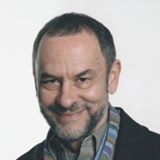
 Donald Brackett is a Vancouver-based popular culture journalist and curator who writes about music, art and films. He has been the Executive Director of both the Professional Art Dealers Association of Canada and The Ontario Association of Art Galleries. He is the author of the recent book Back to Black: Amy Winehouse’s Only Masterpiece (Backbeat Books, 2016). In addition to numerous essays, articles and radio broadcasts, he is also the author of two books on creative collaboration in pop music: Fleetwood Mac: 40 Years of Creative Chaos, 2007, and Dark Mirror: The Pathology of the Singer-Songwriter, 2008, as well as the biographies Long Slow Train: The Soul Music of Sharon Jones and The Dap-Kings, 2018, and Tumult!: The Incredible Life and Music of Tina Turner2020, and a book on the life and art of the enigmatic Yoko Ono, Yoko Ono: An Artful Life, released in April 2022. His latest work in progress is a new book on family relative Charles Brackett's films made with his partner Billy Wilder, Double Solitaire: The Films of Charles Brackett and Billy Wilder.

Monday, May 3, 2010

Contemporary Nostalgia: Christian Scott's Yesterday You Said Tomorrow

At 26, New Orleans’ musician Christian Scott seems older than his years, if not in a first-rate technique, in attitude and focus. His new release entitled Yesterday You Said Tomorrow is a very mature record. To my ears it sounds remarkably contemporary and nostalgic at the same time. In jazz, this blend is often a creative mistake or coincidence. For Christian Scott it is intentional: “I wanted to create a record that has all the qualities of the documents of that era (The 1960s) as they relate to our time.” For Scott, this era was a time of musical and socio-political commentary in the best tradition, as it were, of Charles Mingus and John Coltrane. For me, as a Canadian, that’s less important to me as a citizen. What matters is the music: how it’s written, played and recorded. For Scott the genius of the 1960s jazz recordings of this era is Rudy Van Gelder whose studios in New Jersey housed the greats of Modern Jazz from Miles Davis to Thelonious Monk, with frequent visits from Mingus and Coltrane. The album opens with a modal groove and a tune called “K.K.P.D.” It sets up the mood of the album with an improvised guitar introduction by Matthew Stevens. Scott doesn’t come in until the middle of the song thus waiting for his turn in this collective effort. Stevens takes an emotional solo during “The Last Broken Heart (Prop 8)” that is in keeping with the slow theme expressed by Scott’s muted trumpet. That track is followed up with an up-tempo, funk groove from the young rhythm section led by drummer Jamire Williams. It’s refreshing to hear such great playing unsoiled by ego or technique. The keeper is a cover of Thom Yorke’s “The Eraser” from his first solo album from 2006. This sprite instrumental captures Yorke’s yearning vocal. Recorded over 4 days last April 2009, Yesterday You Said Tomorrow is one of the best jazz albums of 2010.

-- John Corcelli is an actor, musician, writer, broadcaster and theatre director.

Wednesday, September 26, 2012

Jimi Hendrix Drifting

When Jimi Hendrix died in 1970, over forty years ago this month, I was in high school. It was a time when a number of key pop figures – all in their twenties – never got to see thirty. A year earlier, it was Brian Jones of The Stones, and Janis Joplin and Jim Morrison would soon follow Hendrix to the grave. Besides sobering you with a taste of death's final victory (right at that moment when you saw nothing but life straight ahead), you also realized that a person's genius, their gifts, even their youth, could do nothing to protect them.

Hendrix's death hit me harder than the others because I came to truly love the paradoxical nature of his music. (In a song that fundamentally came out of the blues like "Burning of the Midnight Lamp," he combined a harpsichord with a wah-wah electric guitar and a chorale section to create a powerfully intense emotional soundscape.) Although Jimi Hendrix was always fully recognized as a virtuoso and theatrical guitar stylist, he was rarely discussed in any great depth in terms of his gifts as a poet, singer and music innovator. (For those insights, it's best to read David Henderson's 1978 biography 'Scuse Me While I Kiss the Sky which still hasn't been equalled.) But John Morthland, writing in The Rolling Stone Illustrated History of Rock & Roll, captured key aspects of those many gifts that Henderson elaborates on. "As a guitarist, Hendrix quite simply redefined the instrument, in the same way that Cecil Taylor redefined the piano or John Coltrane the tenor sax," he wrote. "As a songwriter, Hendrix was capable of startling, mystical imagery as well as the down-to-earth sexual allusions of the bluesman." Those sexual allusions though also led to a particular kind of theatricality that the artist himself was growing tired of indulging. Joni Mitchell, who met Hendrix in Ottawa towards the end of his life, recognized immediately his frustration about the public and critical perception of him based on those sexual allusions. "He made his reputation by setting his guitar on fire, but that eventually became repugnant to him," Mitchell told The Guardian in 1970. "'I can't stand to do that anymore,' he said, 'but they've come to expect it. I'd like to just stand still'."

Friday, July 10, 2020

The Further Adventures of Ornette: The Biography of Ornette Coleman by Maria Golia

Ornette Coleman performing at The Hague in 1994 in 1994. (Photo: Geert Vandepoele)
“Music, faces worn by time, want to tell us something, or are about to tell us something: that imminence of a revelation as yet unproduced is, perhaps, the aesthetic fact.” – Jorges Luis Borges, 1959.
When I first heard the music of Charlie Parker, especially his Savoy recordings while I was still a teenager, my concept of what music was or could be changed forever. A sudden joy escaped from its cage and flew around the room in dizzying circles. Shortly afterward, when I first heard John Coltrane, especially with the magical Miles Davis Quartet and then flying solo on his own, my life changed again, those emotions leaving the room altogether and reaching out for the sky. The same kind of radical transformation occurred when I first encountered the raw music of Ornette Coleman, when the bird was let out forever from its cage and soared off into space.

His album The Shape of Jazz to Come, from the same year when Borges was writing about a revelation as yet unproduced, caused a rupture in musical expectation, not just for me but also for all the most advanced post-bop players then on the scene. They found him, at first, primitive, untutored and almost insanely formless in his quest for a freedom too beautiful to be contained by any customary notation. Now, of course, everyone recognizes that he was indeed foretelling the shape of a music that was, as yet, unproduced, even as he was simultaneously, and spontaneously, producing it before our eyes and ears. He was seriously cooking up music, but also still leaving it mostly raw. It felt, weirdly enough, like the sushi form of jazz.

Friday, December 26, 2014

Critic's Notes & Frames, Vol. X


Singer Joe Cocker, who sadly died over the holidays at 70 after a battle with lung cancer, could get to the bottom of heartache in a song like no other. Listening to him perform, with his gravel voice, was like hearing Louis Armstrong cured in a blue funk. Containing a melancholic soul that rivalled Billie Holiday, Cocker's ecstatic surrender to the naked emotion in a romantic number, at its best, could transcend masochism. Of all his memorable tracks from "Hitchcock Railway" to his soulful take on "With a Little Help from My Friends," his gospel tinged "Do I Still Figure in Your Life?" asks with maybe the greatest urgency the most poignant demand of his audience.


Film director Carlos Saura has made many dazzling dance pictures before, from Carmen (1983) to Flamenco (1995), but Iberia (2005) may be his most erotic work. Using a studio outfitted with minimalist backdrops of scrims, curtains and mirrors, Saura adapts sections of composer Isaac Albeniz's "Iberia" suite for a number of the biggest stars in the Spanish dance and music world to perform. Yet like Jonathan Demme in Stop Making Sense (1984), Saura makes us conscious of the artifice he's creating, letting us see the cameras, the lights, and the recording equipment, only then to employ the magic of performance to evaporate the artifice. Saura isn't content just capturing that alchemy, though, he goes further inside the process of performance art itself and, while using expressionistic techniques, reaches the purest essence of dance to create a fully realized expression of love for the sensuality of movement.

Sunday, March 27, 2016

Critic's Notes and Frames Vol. XVII

It's not a surprising irony in the late Sixties and early Seventies, just as many Americans were feeling like unwitting spiritual exiles and no longer wishing to be part of their own country, that many movie-makers began impassioned quests to find it. The results could be as powerfully masochistic as Easy Rider (1969) with its strain of pop religiosity which featured its hippie heroes romantically doomed to crucifixion by the power structure. The outcome could be as ambivalent as John Schlesinger's 1969 Midnight Cowboy (which loved its lost heroes but strangely shared no empathy for the country that produced them). The sojourn could also have the operatic sweep and depth of The Godfather (1972) and The Godfather, Part II (1974) which embraced the tidal pull of the nation along with the very elements that would come to corrupt it. Regardless of the quality of films – from Alice's Restaurant to Nashville – movies were committed to taking the pulse of a country in decline and in distress. 

In the epic striving of Jan Troell's The Emigrants (1971) and The New Land (1972), recently released by the Criterion Collection in their full Swedish versions and immaculately restored on Blu-ray, the director takes in America as an untested promise, or a fever dream that brings forth deliverance. Based on Vilhelm Moberg's epic four-volume novels which account the long journey of Swedish farming families to settlements in Minnesota in 1850, Troell captures in a largely naturalistic style for over six hours both the cost and renewal of that promise without embellishing the hopes of those making the quest, or romanticizing the claims of the new land (which the farmers discover is stolen land from the Sioux). Troell, who shoots, edits and directs his own movies, removes our awareness of film language as if the camera were a portal in which to comprehend a lost period of realism. When he focuses on the life and marriage of Karl Oskar (Max Von Sydow) and Kristina (Liv Ullmann), featuring two actors whose iconic definitions through their work with Ingmar Bergman couldn't be more recognizable, Troell clears a path for both performers to shed that skin and to embellish their work with fresh character etchings. Those nuances not only reveal how the arduous journey tests that marriage, but also the many ways it fulfills it. The marriage between the settlers and their environment, where nature is both unforgiving and inviting, is equally a test of endurance and purpose. That Jan Troell has been an invisible giant on the cinematic landscape – despite the enduring depth of later works like Flight of the Eagle (1982), Hamsun (1996), As White as in Snow (2001) and Everlasting Moments (2008) – may well be due to his gift of letting the story dictate the style rather than imposing his style on it.

Sunday, October 14, 2018

Kevin Courrier (1954-2018)

Kevin Courrier, November 23, 1954-October 12, 2018. (Photo: John Marsonet)

It is with profound sadness that we announce the passing of Kevin Courrier on October 12 after a three-year battle with cancer. Kevin co-founded Critics At Large in January 2010 along with Shlomo Schwartzberg and the late David Churchill and served as editor-in-chief until his illness compelled him to retire early this year. He also contributed hundreds of pieces, mostly on movies and music. Even after he was no longer able to write for the website, he continued to be heard here – literally as well as figuratively – on podcasts that had originated as interviews with a wide range of artists on the CJRT-FM radio show On the Arts throughout the 1980s.

Kevin was a fine writer and a formidable critic. He had a grasp of the popular arts that was simultaneously dazzlingly broad and effortlessly deep. He was a compendium of information about music and movies and he had a precise memory that never faltered, even in his final months. He had a rare – one might say unparalleled – gift for making unexpected and resonant connections between disparate works and ideas, unshakeable common sense, and the ability to make the complex lucid, whether on larger canvases (his books on Randy Newman, The Beatles, Frank Zappa and Captain Beefheart) or smaller ones (his work on this website, the culmination of a career in journalism). These same qualities were apparent in the extraordinarily popular classes on film he gave to audiences of seniors in a variety of Toronto venues.

We offer below a small selection of reviews and articles that showcase his remarkable talent. We will miss his voice.

– The editorial team of Critics At Large

Out of This World: John Coltrane in Seattle (1965) September 24, 2015 

Lost Man – O.J.: Made in America June 23, 2016

You Probably Don't Even Hear It When It Happens: The Sopranos & The Death of the Gangster Hero August 26, 2016

A Change Is Gonna Come: The End of the Obama Era January 20, 2017

Bridge Over Troubled Water: The Fiftieth Anniversary of Bobby Gentry's "Ode to Billie Joe" July 11, 2017

Run Through the Jungle: Ken Burns & Lynn Novick's The Vietnam War October 1, 2017

Deplorable: Three Billboards Outside Ebbing, Missouri January 9, 2018

Wednesday, May 18, 2016

Barron and Charlap: The Art of the Jazz Trio

In 1961, at 19 years of age, a young pianist named Kenny Barron broke into the heart of the jazz scene just as it was peaking in popularity and innovation. Barron (born in Philadelphia, the city of John Coltrane) moved to New York and free-lanced with the young lions Roy Haynes, Lee Morgan and James Moody, three different and yet distinct voices in American music. As the jazz form stretched out, he enriched his musical vocabulary and became a working sideman. Barron proved himself worthy of such stellar company by cutting his first record in 1962 with James Moody. Moody recommended the young piano-player to Dizzy Gillespie. Gillespie was infatuated with the Afro-Cuban sounds in those days and his influence on Barron was profound. Between 1962 and 1968, Barron had steady work with either Gillespie or Moody in a rich repertoire of standards, be-bop and Afro-Cuban music. By 1971 he joined the truly adventurous reed-player Yusef Lateef for six albums released on Atlantic Records. Barron’s talent lie in his ability to fuse all these musical styles (be-bop, Latin, Avant-Garde) while building his own voice, making him one of the most versatile pianists in jazz. As the decades followed, Barron quietly made his mark as a soloist and bandleader. Over the years, he’s cut some memorable records with Stan Getz and Charlie Haden. His splendid 2014 release with bassist Dave Holland, called The Art of Conversation (Impulse), was marvelous recording.

Kenny Barron’s new release is called Book of Intuition (Impulse) and it’s everything one would expect from this veteran musician: passion, joy and sensitivity. Kiyoshi Kitagawa, bass, and Johnathan Blake, drums, round out the trio on this occasion.

Wednesday, May 3, 2017

Take it As it Comes: The Doors at 50

The Doors, Venice Beach, CA, 1969 (Photo: Henry Diltz)

On January 4, 1967, The Doors debuted with their self-titled album on Elektra records. To celebrate the 50th anniversary this year, Rhino, in association with Elektra (Warner Bros), has released a 3 CD + LP limited edition collection featuring the album in mono on LP and CD, the stereo mix and a previously unreleased live performance from the Matrix club recorded in March 1967.

The Doors’ recordings have never been out of print and, considering the number of hits they had that peppered FM radio after Jim Morrison’s death in 1971, their music continues to engage us. Their history has been well maintained in countless books, magazine articles, a feature film by Oliver Stone and documentaries. The most recent doc, 2014's People Are Strange, droopily narrated by Johnny Depp, is a chronological visual study of the group’s earliest years, their growing fan base and outrageous concerts. Consequently, Morrison, the charismatic, chemically altered front man, remains one of the most popular singers in the history of rock and, in my opinion, would remain so even if he hadn’t died in 1971 at the age of 27. His songwriting was unconventional, serious and rooted in the most peculiar places. He wasn’t a Florida beach boy dreaming about girls in bikinis or interested in drag racing. This was a guy who read the poetry of William Blake and the philosophy of Friedrich Nietzsche while dabbling in the mescaline-infused writings of Aldous Huxley, whose book The Doors of Perception suggested the name of Morrison’s band. All this by the time he finished high school and enrolled in the UCLA film school.

Saturday, May 25, 2013

Blues U Can Use Part 2: Ronnie Earl and the Broadcasters' Just For Today

In 1967, while many of their friends were playing in rock bands, Rhode Island natives Duke Robillard and Al Copley formed, A Roomful of Blues. It was a seven-member ensemble that played Chicago-style blues with a heavy dose of jump-blues, r & b and rock ‘n roll that was entertaining and fun. But after a series of gigs in New England, the band got noticed by songwriter, Doc Pomus who helped them launch a working career in music with their first record deal in 1977 on the adventurous label, Island. Duke Robillard left the group in 1980 to pursue a solo career. Guitarist, Ronnie Earl, replaced him. Fast-forward to 2013, and the two have just released new solo records on Stony Plain, the fine Canadian label established by Holger Peterson.

On May 16th I wrote here about Robillard’s latest release called, Independently Blue. Today it’s Just For Today (Stony Plain) by Ronnie Earl and the Broadcasters. In 1980, Ronnie Earl (Horvath) took over for Duke Robillard in A Roomful of Blues. He was a young New Yorker filling the shoes of a fine guitarist. Five years earlier, Earl attended Boston University and took up the instrument after seeing Muddy Waters in concert. He developed his style through careful study of blues music with a pilgrimage to Chicago at the invitation of blues singer, Koko Taylor. He later spent quality time in Texas with Jimmy Vaughan and the Fabulous Thunderbirds, a band Duke Robillard did time with before going solo.

Wednesday, October 18, 2017

Into That Good Night: The Image of Mortality in Art and Culture

Dylan Thomas.

In 1952, one year before his untimely passing at the far-too-young age of 39, Dylan Thomas wrote one of his most famous poems, "Do Not Go Gentle Into That Good Night," in which that repeated chorus followed observations on why mortality seemed to bug him so much. “Old age should burn and rave at close of day; / Rage, rage against the dying of the light.” Ironically, in 1936, when he was younger and less literally at the doorstep of that diminishing light, Thomas had written a different but equally arresting poem, "And Death Shall Have No Dominion," which optimistically celebrated the fact that we could never be vanquished by that damn light switch. Oh, what a subtle difference one’s proximity to the darkness can make.

Such deep poetic insights into the human condition invite us to consider the importance of three key subjects and themes that have recurred throughout human history: the fact of our mortality, the potential for immortality, and the opportunity for transcendence. Art and cultural history are both replete with a perpetually challenging wonderment relating to these basic human subjects, whether it is in the form of poetry, philosophy, religion, mythology, painting, sculpture or movies. In addition, these themes are explored equally through liturgical and sacred as well as secular and entertainment formats. In a sense these themes are tied to the elemental subjects expressed in art throughout its long history from the cave wall to the computer screen: the mysteries of the self, of society, of nature and of the spiritual.

Friday, November 23, 2018

Remembering Kevin Courrier: A Friendship Cemented Through Music

Kevin Courrier passed away on October 12. He would have turned 64 years old today.

I was already very interested in movies when I became friends with Kevin Courrier, the late co-founder of Critics At Large, in the late eighties/early nineties, not long after I graduated from Ryerson Polytechnic Institute (now Ryerson University) in Toronto and began reviewing films professionally on a freelance basis. We bonded over our affinity for American filmmakers Brian De Palma and Steven Spielberg, who were disdained by many of our colleagues, and shared a love of other directors, such as Satyajit Ray (The Apu Trilogy) and Louis Malle (Lacombe, Lucien, Vanya on 42nd Street). But I think I learnt more about music from Kevin than from anyone else. As much as Kevin knew cinema, and he certainly did, I’d say he knew music even better.

Friday, November 29, 2013

Miles in Mono: The Original Mono Recordings by Miles Davis

In 2009 when EMI/Apple released the complete mono recordings of The Beatles in a beautiful box set of miniatures, suddenly the dreaded sound mixes that were shelved for the better part of 40 years, were in demand as the old generation sought out a new way of hearing their favourite band. As a financial opportunity, record companies couldn’t resist the notion of re-selling the same music by the same artists to the same people. Since then, mono was the way to go and so far, at least for the music fan, it has been a godsend. At Columbia records, home of the great jazz and pop recordings of the last century, mono box sets have been remastered, usually with new scholarship and placed in miniature album jacket replicas, to great success. The mono version of Bob Dylan’s first six albums, for instance, was a triumph for fans new and old as I outlined in my critique three years ago.

Wednesday, February 6, 2013

When We're Older Things May Change: Janis Ian's "Society's Child" (1966)

In 1963, Martin Luther King Jr. delivered his "I Have a Dream" speech, declaring that children wouldn't "be judged by the colour of their skin but by the content of their character." The Freedom Movement, which fought the early battles for desegregation in the South and voter registration for black Americans, was extending a call for a shared vision of interracial harmony. King, the political and spiritual leader of the civil rights struggle in the United States, called for the country to abandon the bitter legacy of slavery. King's speech, that hot day in August, hit like a bolt of lightning, and suddenly a vision of hope and possibility spread throughout the country. Critic Craig Werner persuasively describes that promise in his book A Change is Gonna Come: Music, Race & the Soul of America. "For people of all colours committed to racial justice, the Sixties were a time of hope," he writes. "You could hear it in the music: in the freedom songs that soared above and sunk within the hearts of marchers at Selma and Montgomery; in the gospel inflections of Sam Cooke's teenage love songs; in Motown's self-proclaimed soundtrack for 'young America'; in blue-eyed soul and English remakes of the Chicago blues; in Aretha Franklin's resounding call for respect; in Sly Stone's celebration of the everyday people and Jimi Hendrix's vision of an interracial tribe; in John Coltrane's celebration of a love supreme. For brief moments during the decade surrounding King's speech, many of us harboured real hopes that the racial nightmare might be coming to an end."

Wednesday, January 4, 2017

Harry Callahan and Edward Hopper Walk Into a Bar

Atlanta, 1984, by Harry Callahan.

It’s easy to think that the American artist Harry Callahan was one of the most canonical figures in both fine art and photography as an art form in the 20th century. It’s also logical and natural to think so, since it’s largely true. To be a part of a canon, as Callahan is, or even to initiate one, as his peer Walker Evans did, means, as the critic Harold Bloom has so effectively demonstrated, that you occupy a special place in the cultural stratosphere, a location which requires everyone after you to be placed in a contextual relationship to you and your work. There is a canon in every medium, be it literature, painting, dance or photography. There are also a classical, a romantic and a modernist canon, with, say, Caravaggio, Turner and Hopper, to name only a few, as part of the hierarchy of painting. Just as clearly, photography has its own historical epochs and a similar aesthetic canon: Stieglitz, Evans, Callahan.

As Aldis Browne has astutely and allegorically noticed, “Callahan’s eye was to the camera what the painter Edward Hopper’s was to the canvas."