Showing posts sorted by relevance for query sondheim company. Sort by date Show all posts

Monday, February 1, 2016

Sondheim Confab: Sondheim on Sondheim

The cast of Sondheim on Sondheim (with Sondheim, on screen) at Boston's Lyric Stage. (Photo: Mark S. Howard)

By now there have been almost as many Sondheim revues as Sondheim musicals. The first one, Sondheim: A Celebration, was a one-night-only tribute in 1973, while A Little Night Music was running. It set the tone for subsequent showcases of his songs, combining performances by original cast members, covers (Nancy Walker’s rendition of “I’m Still Here” from Follies has yet to be surpassed) and obscure deleted items: “Silly People” and “Two Fairy Tales” from Night Music, “Pleasant Little Kingdom” from Follies, “Love Is in the Air” and “Your Eyes Are Blue” from A Funny Thing Happened on the Way to the Forum. It was nectar for early Sondheim diehards. Side by Side by Sondheim was put together by Brits and had a successful run in the West End in 1976 (where I saw it) before crossing the Atlantic. Putting It Together also began in London; its 1993 Broadway cast included Julie Andrews and Christopher Durang. Sondheim: A Celebration at Carnegie Hall (also 1993) was televised in truncated form; luckily the entire concert is available on CD. But TV audiences got to see some amazing pieces, like Madeline Kahn singing “Getting Married Today “ from Company, Liza Minnelli and Billy Stritch performing a totally unknown ballad called “Water Under the Bridge” (written for an unproduced movie called Singing Out Loud), and the Boys Choir of Harlem bringing an unlooked-for poignancy to “Our Time” from Merrily We Roll Along. Sondheim’s eightieth birthday was the occasion for another event, Sondheim The Birthday Concert (2010), on Live from Lincoln Center; this one had John McMartin recreating his performance of “The Road You Didn’t Take” from Follies, as withering and heartrending as it had been on Broadway four decades earlier. The show’s finale was breathtaking: dozens of alums from Sondheim musicals marched through Lincoln Center singing “Sunday,” the sublime first-act finale of Sunday in the Park with George. A TV doc called Six by Sondheim in 2013 focused on half a dozen significant songs.

Wednesday, December 1, 2021

Remembering Sondheim

;
Stephen Sondheim, New York, July 10, 1961. (Photo: Richard Avedon)

Stephen Sondheim was ninety-one when he died on the day after Thanksgiving, yet it was a shock. Unreasonably, I thought he would live forever. For nearly three decades he’d been the sole surviving legendary songwriter from the golden age of musical theatre (Alan Jay Lerner and Frederick Loewe left us in 1986 and 1988 respectively; Irving Berlin in 1989; Jule Styne in 1994) – for he was still in his twenties when he collaborated with Leonard Bernstein on West Side Story and with Styne on Gypsy. He was all of thirty-five when he worked with Richard Rodgers on Do I Hear a Waltz? (Arthur Laurents, who departed ten years ago, wrote the books for all three shows.) Sondheim hadn’t written a new musical since Road Show in 2003, though he was toiling for years on an adaptation of Luis Buñuel’s two final movies. But there were countless major revivals of his work – Company, with a female Bobby, is on Broadway at present – and he generally showed up for them. Revue after revue was constructed around his songs, and every milestone birthday prompted a star-studded event, all of them except his Covid-shrouded ninetieth televised on PBS. Movies were still being made of his musicals; still more are promised, even though none of them has been any good. (I haven’t seen Steven Spielberg’s remake of West Side Story, which is about to be released.) Sondheim was continually, tirelessly present, so who could ever imagine him gone?

Monday, August 15, 2011

The Marriage Musical: Stephen Sondheim's Company


For Stephen Sondheim aficionados, Company is beloved as the watershed musical that established him as a musical-theatre innovator. In a number of his early musicals he supplied the lyrics for the music of older, established composers (Leonard Bernstein on West Side Story, Jule Styne on Gypsy, Richard Rodgers on Do I Hear a Waltz?). His professional debut as a composer-lyricist was A Funny Thing Happened on the Way to the Forum in 1962, but that was an old-fashioned vaudeville along the lines of Rodgers and Hart’s The Boys from Syracuse – and bizarrely, though the score was ingenious, Larry Gelbart and Burt Shevelove’s libretto received all the attention. (His other solo effort, a strained, distinctly sixties satirical farce called Anyone Can Whistle, closed after 11 performances. The Encores! series of concert-style musical revivals at New York’s City Center staged it two seasons ago with a superlative cast, but engaging as the production was you could see exactly why the show had bombed in 1964.)

Sunday, January 23, 2022

Inhospitable: Marianne Elliott’s Revival of Stephen Sondheim’s Company

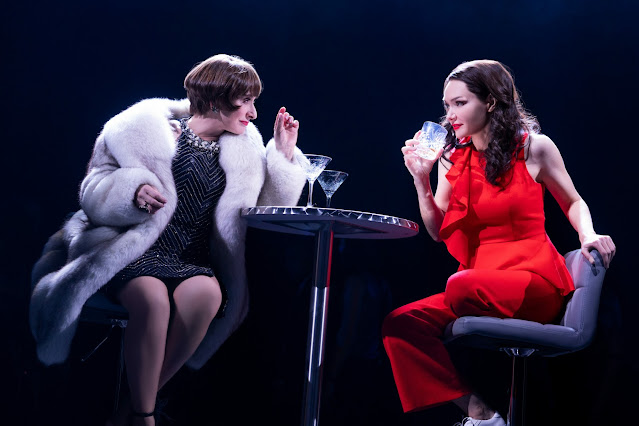
Patti LuPone and Katrina Lenk in Company. (Photo: Matthew Murphy)

There’s something undeniably poignant about seeing a Sondheim musical about New York in New York weeks after his death and mere months after theaters have opened up again. In the new revival of the 1970 Company, the fact the book (originally by George Furth) has been updated (by director Marianne Elliott, working in collaboration with Sondheim) and many of the roles have been gender-swapped raises no alarms with me, mainly because I think the material, despite its acclaim and legendary status, has never worked, so why not mix things up? What are Company’s faults? First, Bobby, the main character, is largely a cipher. He doesn’t even have a profession – all he does is have dinner with friends. Second, the central mystery of Bobby to his friends – why he isn’t married – is no mystery at all. If his friends are examples of what marriage is, it’s an unmitigated disaster that no one in his right mind would undertake. And third, the big moment when one of those friends, the uber-sophisticate Joanne, suggests that he needs someone to take care of him, leading him to ask, “But who will I take care of?,” feels less like an epiphany than a writerly conceit. It also doesn’t seem like the result would be to convince him he’s ready for marriage, especially when there’s no spousal candidate in sight. 

Monday, April 27, 2020

Take Me to the World: Sondheim, Off the Cuff

Take Me to the World: A Sondheim 90th Birthday Celebration is currently streaming at Broadway.com.

After technical screw-ups that delayed the show for a little more than an hour, last night Broadway.com carried a virtual concert in honor of Stephen Sondheim’s ninetieth birthday to benefit Artists Striving to End Poverty (ASTEP). A plethora of (practically all) Broadway performers, most of whom have Sondheim shows on their résumés, sent him birthday wishes, conveyed their gratitude, and performed his songs from their living rooms – or, in the bizarre case of Mandy Patinkin, outdoors, a capella, with his dog in tow. (His choice of song was “Lesson #8” from Sunday in the Park with George: he was the original Georges Seurat, in 1984. It sounded awful.) The title of the improvised revue, cleverly alluding to the circumstances that made its catch-as-catch-can circumstances necessary, was Take Me to the World, from one of the handful of tunes Sondheim wrote for an obscure 1966 television musical, Evening Primrose. Well, relatively obscure, since in the world of Sondheim lovers no treasure remains to be unearthed; you can watch the DVD of Evening Primrose (which is based on a story by John Collier), and many people have recorded both this song and the other rapturous ballad from it, “I Remember.”

Monday, February 20, 2012

Soured Lives: Merrily We Roll Along

Betsy Wolfe, Lin-Manuel Miranda, Colin Donnell, Celia Keenan-Bolger & Adam Grupper in Merrily We Roll Along.

The Stephen Sondheim musical Merrily We Roll Along, which was revived over the last two weekends at New York’s City Center by Encores!, flopped on Broadway in 1981, closing in two weeks after receiving punishing reviews. In the intervening decades Sondheim aficionados have struggled to reclaim it as a lost treasure wrecked in the original production by disastrous production decisions. (It ended the partnership of Sondheim and director Harold Prince, who had staged all of his seventies musicals: Company, Follies, A Little Night Music, Pacific Overtures and Sweeney Todd.) The source material is a play of the same name that George S. Kaufman and Moss Hart wrote together in 1934, their second of their half-dozen collaborations and a distinct comedown after their classic hard-boiled comedy Once in a Lifetime. The subject is the ruined friendship of three once-inseparable comrades, a playwright, a painter and a novelist, and the gimmick is that the action runs backwards, beginning when all three are middle-aged and miserable and winding up with a glimpse of who they were when they started out. It’s a terrible play in which almost every one of nine scenes ends with a melodramatic punch, and the reverse flow of the narrative – the idea that drew Sondheim and book writer George Furth to the material nearly half a century later – is intractable. The characters are so dislikable that by the time we discover what bright-eyed idealists they were in their youth we’ve already written them off.

In the musical the protagonists have become Frank Shepard, a composer, Charlie Kringas, his playwright-lyricist collaborator, and Mary Flynn, a novelist turned theatre critic. Their story, looked at chronologically, centers on Frank’s quickness to trade his integrity for the promise of fame and fortune. First he persuades Charlie to put the political musical they’ve put the best part of themselves into on the back burner and write a commercial musical comedy for producer Joe Josephson and his actress wife Gussie Carnegie. Then he coaxes him to help him turn it into a movie. Finally he abandons songwriting altogether to put his name to superficial Hollywood pictures. Meanwhile his personal life is a shambles. His wife Beth, at one time the third member of a satirical revue trio with Frank and Charlie (which Sondheim and Furth may have based on The Revuers, made up of Betty Comden, Adolph Green and Judy Holliday before they all landed on Broadway in the 1940s), divorces him when he begins an affair with Gussie and she gets custody of their little boy. He ends up marrying Gussie but by the time he’s joined the Hollywood elite their relationship is dead, and so is her career. By this time Frank and Charlie no longer speak to each other because of the public trouncing Charlie gave him on a talk show, satirizing his slavish devotion to financial success and his indifference to the creative process that brought them together in the first place. And Mary, at one time a bestselling fiction writer, has become a helpless drunk embittered by a long unrequited passion for Frank that everyone seems to know about but him.

Monday, May 16, 2016

Do I Hear a Waltz?: An Encores! Misstep

Melissa Errico and Richard Troxell in Do I Hear a Waltz? (Photo: Sara Krulwich)

Stephen Sondheim’s only collaboration with Richard Rodgers was the 1965 musical Do I Hear a Waltz?, adapted by Arthur Laurents from his 1952 Broadway success The Time of the Cuckoo. Shirley Booth had starred in the play, as a lonely Midwesterner who comes to Venice on vacation in the hopes of enjoying a romantic fling, and Katharine Hepburn took over the role in David Lean’s 1955 film version, Summertime. Though Sondheim’s early musicals were partnerships with other composers – West Side Story with Leonard Bernstein and Gypsy with Jule Styne – he had established himself as a composer-lyricist with A Funny Thing Happened on the Way to the Forum and Anyone Can Whistle at the beginning of the sixties. But Rodgers was, of course, the fabled writing partner of Sondheim’s adolescent mentor Oscar Hammerstein II, and Laurents was the man who wrote the book for Gypsy, so he agreed to the collaboration. But these two men of strikingly different sensibilities didn’t get along, and though the musical had a modest run it didn’t make much of an impression. (Neither did the leading lady, Elizabeth Allen.) And Sondheim has never thought much of it; in interviews and in his book Finishing the Hat he’s referred to it, quoting his friend, Rodgers’ daughter Mary a “why?” musical – as in “Why bother turning this material into a musical?”

Last weekend’s revival by Encores! marks the first time Do I Hear a Waltz? has been produced in New York since the original production. I saw the show as a teenager and know the cast album well, and I’ve always thought that the material was interesting and the score had considerable charm. Except for a couple of songs in No Strings, it’s the only late Rodgers score worth listening to; the ballads are especially lovely. Leona, the protagonist, thinks of herself as independent and resilient, but she’s febrile, with an all-or-nothing romantic fervor and fragile sensibilities; “Why is it I get so easily hurt?” she asks herself in one lyric, and the answer seems to be that she alternates between asking too much and not having the flexibility or the courage to accept what she’s offered if it’s not perfect. “Throw the dream away,” the Venetian shopkeeper Renato Di Rossi, who courts her, pleads in another song; he’s married, but in a union that has long since passed from passion into a state of mutual respect, and he doesn’t have money. The musical pits Leona’s Yankee puritanism with a more relaxed European attitude toward sex, embodied not only in Renato but also in Signora Fioria, the middle-aged proprietor of the pensione where Leona stays with two American couples. Signora Fioria seduces the younger of the two men, a painter named Eddie Yeager, whose marriage to the naïve, trusting Jennifer has begun to fray at the edges. When Leona spots Eddie going off in a gondola with the hotelkeeper, her moral shock is piled on top of her difficulties in taking Renato as he is, for good and for ill. The second act is overloaded: Laurents introduces one too many plot strands and the climactic scene teeters on the edge of melodrama, or perhaps goes over that edge, depending on your point of view and, I would think, the quality of the production.

Monday, April 1, 2013

Passion: Where the Romantic Becomes the Baroque

Melissa Errico and Ryan Silverman, in Classic Stage Company's new production of Passion (Photo by Joan Marcus)

No other American musical works in the same way as Passion, with its uncharacteristically subdued score by Stephen Sondheim and its book by James Lapine, who also did the elegant spare staging in the original Broadway version, in 1994. (That production was broadcast on PBS and is available on DVD.) Written in one intense act, Passion – which is currently being given an excellent revival by New York’s Classic Stage Company, under John Doyle’s direction – is a genuine oddity: a short-story musical (it’s single-themed and single-plotted) that operates exactly at cross-purposes to what it appears to be doing, and builds power by not delivering the emotional satisfaction it appears to promise.

Monday, October 10, 2011

Legendary Failures: Candide & Follies

Geoff Packard as Candide with the ensemble

The Leonard Bernstein musical based on Voltaire’s savage 1759 satire Candide has undergone so many alterations since it opened on Broadway in 1956 that it’s practically a work in progress. That’s because the original production, which had a libretto by Lillian Hellman, wasn’t a hit, and no one thought highly enough of it to revive it until Harold Prince, working from a revised book by Hugh Wheeler, staged it in the seventies. Most of the lyrics are by Richard Wilbur but a number of hands have contributed to them over the years, including Hellman, John Latouche, Dorothy Parker, Stephen Sondheim and Bernstein himself. (James Agee, at the end of his life, wrote some lyrics, too, but they were never used.) The latest version, directed by Mary Zimmerman for Boston’s Huntington Theatre Company, also lists her as adapter.

Still, it would be a mistake to call the show a noble failure. It’s literate and ingenious, and the Bernstein music is glorious, prodigiously varied in style and rich in melodic invention
– far more so (if I may venture a sacrilegious observation) than the much more famous score he wrote for West Side Story. But the musical has a history of overproduced and overstated productions. (Prince’s 1973 revival – he staged a subsequent one in 1997 that I didn’t catch – was heavy-handed and tedious in a way that played hide and seek with the virtues of the libretto.) The only time I’ve ever seen it work was when Lonny Price mounted a fairly elaborate staged reading in 2004 at the New York Philharmonic with Paul Groves as the fate-buffeted naïf Candide, Kristen Chenoweth as his beloved Cunegonde, an aristocrat whom the ravages of war and tyranny reduce to a whore, and Patti LuPone as the inscrutable Old Lady, who claims a past even more brutal and fabled than either of theirs. (The production was televised and is available on DVD.) Price and his company took a cheeky, light-handed approach to the material; it suggested something conceived by gifted undergraduates and performed by pros – though the choruses were actually splendid amateurs, from the Westminster Choir College and Juilliard. Voltaire’s hilarious misanthropy was presented in the form not of a high-caloric banquet with an excess of dishes on the table but of a movable feast of delectable hors d’oeuvres. Rather than aiming a cannon at the timeless vices of humankind, the show leveled them by sneak attack.

Saturday, August 19, 2017

A Lighter Company at Barrington Stage

Aaron Tveit (right) and the cast of Company at Barrington Stage. (Photo: Daniel Rader)

To say that a production of a Stephen Sondheim musical treats the material like sketch comedy would normally constitute an insult towards that production and its creative team. However, in the case of Barrington Stage’s version of Company (1970), which stars Aaron Tveit as the only single man among his group of married couples, it’s a savvy move that undercuts the over-the-top reverence that threatens to turn this flawed but often enjoyable show into an unbearable slog. 

Monday, January 28, 2013

Marry Me a Little: The Sondheim Jukebox Musical

Phil Tayler and Erica Spyres in Marry Me A Little at the New Repertory Theatre (Photo by Andrew Brilliant)

A jukebox musical is constructed around the pre-existing catalogue of a composer or a songwriting team or a musical group. The English phenomenon Mamma Mia! popularized the genre – and it remains the prime example of all that’s wrong with it. The plot, a loose reimagining of an Eduardo De Filippo comedy that also had a brief life as an Alan Jay Lerner-Burton Lane Broadway musical called Carmelina, is gathered around hit songs by the rock group ABBA; you could say the songs are thumbtacks holding up the story. But since they weren’t written to express the emotions of the characters or to define them – the two main purposes of songs in a conventional musical – the show lurches every time it comes to a stop at a number because the lyrics don’t really fit the dramatic situation. For that reason the most successful jukebox musicals are revues like Smoky Joe’s Café (which features the songs of Leiber and Stoller), where the book doesn’t have to justify the songs. (Jersey Boys has mistakenly been called a juxebox musical; in fact, it’s a particularly uninspired version of the musical biography that we’re familiar with mostly through movies like Lady Sings the Blues, The Buddy Holly Story and Ray. Musical bios are backstage musicals – that is, the songs are performed by characters who are professional musicians, so they aren’t meant to stylize the feelings of those characters.)

The little-known 1981 Marry Me a Little is the earliest jukebox musical I’m aware of, and its musical selection is unorthodox. So is its form: it’s a revue with a narrative; that is, there’s no dialogue. (You might also call it a through-sung jukebox musical.) Craig Lucas and Norman René raided Stephen Sondheim’s songbook for obscure tunes that had been cut from his shows or that he’d written for projects that never got off the ground, and split them between two characters (played by Lucas and Suzanne Henry) exploring their mostly romantic feelings as they sit alone in their separate Manhattan apartments. Revived off Broadway last fall with one new addition to the score – “Rainbows,” which Sondheim wrote for an intended movie version of Into the Woods – Marry Me a Little no longer had the cachet of bringing to light unknown Sondheim songs, since so many have been recorded since and included in revues; it’s safe to say that no musical theatre composer’s oeuvre has been so thoroughly mined for hidden treasures since Cole Porter’s or George Gershwin’s. And “Happily Ever After,” one of Sondheim’s two discarded efforts to find a finale for Company before he hit on “Being Alive” (the other being “Marry Me a Little”), has been restored to the score in recent revivals.

Monday, December 4, 2017

Follies at the National: Challenges and Triumphs

Photo by Johan Persson.

The National Theatre has loaded a ton of money into Dominic Cooke’s revival of Stephen Sondheim-James Goldman Follies, the NT Live transcription of which is still doing the rounds. The ensemble numbers thirty-seven, not quite up to the cast of fifty that opened the musical on Broadway in I971 but substantial. Vicki Mortimer’s gargantuan set, its perspective shifting constantly as the Olivier Theatre revolve spins, evokes the dilapidated grandeur of the theatre that housed Dimitri Weissman’s Follies annually between the World Wars and is now scheduled (in 1971) to be converted into an office building. Paule Constable’s eerie lighting accentuates the ghostliness of the proceedings, as the Weissman girls reunite for a one-night-only reunion and we see their younger selves shadowing them as they recreate old production numbers and – in the case of the four principals, Phyllis and Ben Stone (Janie Dee and Philip Quast) and Sally and Buddy Plummer (Imelda Staunton and Peter Forbes), fragments from their early-forties lives, when showgirls Phyllis and Sally shared a flat and law-school classmates Ben and Buddy courted them while Ben and Sally carried on a clandestine love affair. (Zizi Strallen, Alex Young, Adam Rhys-Charles and Fred Haig play, respectively, the younger versions of Phyllis, Sally, Ben and Buddy.) Mortimer’s costumes work fine, too, with a couple of odd, glaring exceptions. Dee’s sack-like party gown is one. The other is Staunton’s, which is green and so leaves the audience puzzled at her insistence, in “Too Many Mornings,” that she should have worn green because she wore green the last time she saw Ben, the man whom she’s fantasized into the love of her life she’s never gotten over.

Monday, October 1, 2012

Thriller: Donna Murphy on the Musical Stage

Donna Murphy in LoveMusik in 2007

We seem to be living in a golden age of musical-theatre women. The one whose name is most often on everyone’s lips is Kelli O’Hara, with her simon-pure soprano embroidered by often startlingly impassioned phrasing, whether the character she’s playing is fragile (The Light in the Piazza) or essentially conventional (South Pacific). Victoria Clark has a wide emotional range and suggests a complex response to the world deriving from accumulated experience; as O’Hara’s mother in Piazza, perhaps the best musical-theatre role ever written for a middle-aged actress, she managed to balance romantic skepticism (based on her own disappointing marriage) and optimism (based on an awakening awareness of the romantic possibilities for her damaged daughter). On the other end of the scale of middle-aged performers, Patti LuPone is a diva with grit in place of glamour, a gleaming sense of irony and an unerring instinct for how to make a song dramatic, whether in the old-fashioned Broadway manner (Gypsy) or in the Brechtian style (Sweeney Todd). Marin Mazzie, who’s been around since Ragtime and the marvelous Kathleen Marshall production of Kiss Me, Kate, has a warm soprano and an expansive presence that effortlessly fills a Broadway house. Sutton Foster has a more streamlined personality – she’s colder but more dazzling, and the best lead dancer around, as she demonstrated most recently in Marshall’s Anything Goes. Celia Keenan-Bolger is diminutive but she has a powerful core of feeling; she’s mostly attracted notice in comic roles (recently Peter and the Starcatcher), but she can be amazing in dramatic ones that call for arias of longing – Merrily We Roll Along, the Encores! revival of that Marc Blitzstein rarity Juno. Laura Benanti has a frisky, inventive wit: her show-stopping “Model Behavior” in Women on the Verge of a Nervous Breakdown is the funniest musical performance I can remember seeing on a stage since Angela Lansbury introduced “The Worst Pies in London” in the original cast of Sweeney Todd nearly three and a half decades ago. Among the clowns, Faith Prince seems to have been largely forgotten – she’s become a cabaret performer – but when she starred in a revival of Bells Are Ringing on Broadway in 2001, she proved to be almost a match for the original star, the late Judy Holliday, plus she made the lilting Jule Styne melodies sound sweeter than they ever had before. Kristin Chenoweth can be hilarious, but vocally there’s almost nothing she can’t pull off (her album, Let Yourself Go, is a virtuoso accomplishment), and she was heartbreaking in the revival of the Bacharach-David Promises, Promises a couple of seasons ago. And any era that produces Audra McDonald, owner of the most versatile and most expressive dramatic singing voice since Barbra Streisand, would need to be considered a golden age by definition.

I’d be hard put to pick a favorite, but no one thrills me more on stage than Donna Murphy. Movie buffs who recognize her name from the tiny parts she’s essayed in blockbusters like Spider-Man 2 and The Bourne Legacy have no idea what she’s like on stage, where she’s always a headliner. I first saw her in a production of Pal Joey at Boston’s Huntington Theatre in 1992, as Vera, the brittle, knowing older woman who keeps the ambitious womanizer Joey, but throws him out on his ass when he proves to be more trouble than she figures he’s worth. Vera is the high-comic element in the low-down, hard-boiled John O’Hara/Rodgers and Hart material, and Murphy’s confidence in the role was almost alarming; you wondered where she could have acquired it before she’d even turned thirty-five. Two years later she had her first Broadway lead, in Stephen Sondheim and James Lapine’s Passion. Since then she’s been seen as Anna in The King and I (my impatience with Rodgers and Hammerstein kept me away from that one); as Ruth in Wonderful Town (first at Encores! and then in a full-scale Broadway expansion, both directed by Kathleen Marshall); as Lotte Lenya in Lovemusik; with Victoria Clark in Follies; in a misbegotten and short-lived original piece called The People in the Picture; and as the Witch in Into the Woods, in Central Park last summer. She was a sensationally effective as Phyllis in Follies – sardonic yet wistful, giving that self-consciously clever poison-pen letter “Could I Leave You” much more a kick than it deserved, and exuberantly leggy, like a sleek version of Charlotte Greenwood, in “The Story of Lucy and Jessie.” But her finest work has been in Passion, Wonderful Town and Lovemusik.

Monday, September 26, 2011

Classic American Musicals: Porgy & Bess and Show Boat

Porgy and Bess

Diane Paulus’s production of Porgy and Bess, which is running at the American Repertory Theatre in Cambridge (where she’s artistic director) before heading for Broadway, came encumbered with controversy. Shortly before it opened Paulus, playwright Suzan-Lori Parks (who revised the DuBose Heyward script), and star Audra McDonald gave interviews to The New York Times and The Boston Globe trumpeting their mission to render the classic 1935 American opera accessible to twenty-first-century audiences and made a lot of other fatuous comments in addition.

Stephen Sondheim answered with a furious and brilliantly argued editorial in The Times that took apart their remarks one by one. Evidently Sondheim’s objections had some effect on the production – Paulus, Parks and the composer Diedre L. Murray, who had reworked the final scene of the show to make it more uplifting, restored the original ending. Sondheim was careful to separate out the hype from the work itself, expressing the hope that Paulus’s Porgy would turn out to be as exciting as the cast promised – in addition to McDonald, it stars Norm Lewis as Porgy and David Alan Grier as Sportin’ Life – while reiterating the importance of acknowledging the magnificence of the opera that George and Ira Gershwin and DuBose Heyward had fashioned from Heyward’s 1925 novella. Among other corrections, he pointed out the iniquity of renaming the show The Gershwins’ Porgy and Bess, when Heyward and not Ira Gershwin made the most substantial contribution to the libretto – a fact that anyone familiar with Ira Gershwin’s lyrics can spot ample evidence of, whatever he or she may think of them. (Sondheim is not an Ira Gershwin enthusiast; I am.) 


Monday, September 12, 2011

Musicals in Revival: Anything Goes & How to Succeed in Business Without Really Trying

Except for Kiss Me, Kate, no Cole Porter show has been revived as often as Anything Goes, the 1934 shipboard musical he wrote with P.G. Wodehouse, Guy Bolton, Howard Lindsay and Russel Crouse. Wodehouse and Bolton penned the original script, about a shipwreck; when the cruise ship the S.S. Morro Castle went down in a fire weeks before rehearsals were scheduled to start, marking the worst maritime disaster of the decade. Lindsay, who was also directing, and Crouse quickly refashioned the plot as a romantic farce about a young man who stows away on a ship to stop one of its passengers, the girl he loves, from marrying the man her mother has picked for her and through the device of a purloined passport ends up being mistaken for a celebrated gangster.

The book of the musical as it was finally produced is peerlessly silly, though every time it’s mounted afresh on Broadway someone is hired to tinker with it: the version that is currently intoxicating Manhattan audiences carries credits to Crouse’s son Timothy and Stephen Sondheim’s sometime collaborator John Weidman. Even the Porter score gets treated as a work in progress. All productions include “I Get a Kick Out of You,” “You’re the Top,” “Blow, Gabriel, Blow,” “All Through the Night” and the title tune, and since the sixties “It’s De-Lovely” from Red, Hot and Blue and “Friendship” from Du Barry Was a Lady are common bonuses. The 2011 edition adds “Easy to Love” (which Porter wrote for the film Born to Dance) and “Goodbye, Little Dream, Goodbye” (from an obscure British play called O Mistress Mine) while restoring the often excised “There’ll Always Be a Lady Fair,” “The Gypsy in Me” and “Buddie, Beware.”

Purists may whine, but it doesn’t seem to make much difference what tiny omissions and additions script doctors make to Anything Goes or how the Porter repertoire gets mined, as long as the shape of the original is retained and the mainstays of the score don’t go missing. After all, it’s not Fiddler on the Roof. The Porter songbook is rich in variety but the adjectives we might apply to one of his songs – effervescent, brittle, madcap, flamboyantly witty – would fit any of the others, and only Kiss Me, Kate (indisputably his finest score) is so intricately tied to a dramatic context that its songs can’t be slipped with impunity into other shows. That said, I think that the creative team behind the newest revival, headed by director-choreographer Kathleen Marshall and music supervisor-arranger Rob Fisher, has assembled the most pleasing combination of originals and interpolations yet. And it’s hard to imagine them being performed more delightfully.

Monday, December 8, 2014

Side Show and Allegro: Another Go-Round

Ryan Silverman, Emily Padgett, Erin Davie and Matthew Hydzik in Side Show (Photo by Joan Marcus)

Opening on Broadway in 1997, Side Show lasted only about three months; the current revival, staged by Bill Condon, is the first version I’ve had a chance to see. Written by Henry Krieger (music) and Bill Russell (book and lyrics), it’s a semi-fictionalized account of the lives of the conjoined twins Violet and Daisy Hilton, born in England to an unmarried barmaid and then displayed in America by abusive adoptive parents. In the musical, an unemployed talent scout named Terry Connor sees them in a side show in San Antonio in the early days of the Depression, gets his song-and-dance-man pal Buddy Foster to teach them to sing and dance, and encourages them to sue the proprietor – Sir, their foster father – for their freedom. They win, and Terry puts them on the Orpheum vaudeville circuit.

Monday, August 28, 2017

Prince of Broadway: Overstuffed and Undernourished

 Karen Ziemba, Emily Skinner, Chuck Cooper and Tony Yazbeck in Prince of Broadway. (Photo: Matthew Murphy)

The new revue Prince of Broadway, built around the career of Harold Prince, is like an all-you-can-eat buffet at a mediocre restaurant. It runs just over two and a half hours and contains thirty-five songs from sixteen musicals (plus a finale, “Do the Work,” written especially for the show by Jason Robert Brown, who also contributed arrangements and orchestrations), presented in mostly tepid reproductions intended to conjure up the feel of their sources, one after another. (Susan Stroman, who co-directed with Prince and choreographed, has barely left her mark on them.) The entire project is misconceived. It makes sense to plan an evening around the work of a theatrical artist whose work is distinctive and unified; that’s what the joyous 1999 Fosse! did, and Ain’t Misbehavin’ and several Stephen Sondheim revues. But you can’t get a sense of the shows Prince has directed by restaging numbers from them: a pair of singers in working-class Victorian costumes standing in front of a flat don’t suggest the spectacle of Sweeney Todd (1979) and eight actors in shtetl garb dancing briefly across the stage of the Samuel J. Friedman Theatre are more like a parody of Fiddler on the Roof (1964) than an evocation of it. You’d need the original set designs and, more importantly, the original performers to provide any indication of what these musicals meant. Prince of Broadway doesn’t even distinguish between the shows Prince directed and the ones he only produced, like Damn Yankees (1955), West Side Story (1957) and Fiddler – as if there were no difference between what directors and producers do. In a lengthy program note, Prince credits dozens of collaborators, yet the revue implicitly tells us that he was the creative force behind every one of these shows, even when other people devised their staging and helmed their rehearsals. This is a vanity production that verges on the delusional.

Monday, January 23, 2017

The Best of All Possible Worlds: Candide at the NYC Opera

Linda Lavin in New York City Opera's new production of Candide. (Photo:Tina Fineberg)

There was much upset over the closing of New York City Opera in October 2013 when its last-ditch fundraising efforts failed. (Regrettably, it did not go out in a blaze of glory: its final production, Mark-Anthony Turnage’s contemporary opera Anna Nicole at the Brooklyn Academy of Music, was fairly ridiculous.) But the company returned from the dead last week with an exuberant and often uproarious revival of Candide at Fredrick P. Rose Hall, as part of the Jazz at Lincoln Center series. This is the third time Harold Prince has directed the Leonard Bernstein musical, with its Hugh Wheeler book (adapted, of course, from Voltaire’s classic satire) and its lyrics by a variety of distinguished writers: Richard Wilbur, Stephen Sondheim, John La Touche and Bernstein himself. I caught Prince’s first attempt, in 1975, when Eugene and Franne Lee gutted the orchestra of the Broadway Theater to permit a free-roaming playing arena. It got great reviews but I thought the reconstructed space was more interesting than anything that was going on in it. The show was manically overstaged and terminally boisterous, and a production I saw in Stratford, Ontario a couple of years later emulated Prince’s error. Candide had bombed on Broadway in an extravagant (but more conventional) version in 1956, and after two bad experiences with it, I assumed it was unplayable – until Lonny Price staged a concert version that was televised on PBS in 2004. His Candide was scaled way down but visually inventive, and the light touch seemed to free the actors (Kristin Chenoweth and Patti LuPone were in the cast), who performed as if they were guesting on Saturday Night Live.

Friday, July 15, 2016

Farewell to John McMartin (1929-2016)

From left: Alexis Smith, John McMartin, Dorothy Collins and Gene Nelson in the 1971 production of Follies.

During my junior year in college, Stephen Sondheim’s Follies tried out in Boston and I saw it on opening night, with John McMartin – who died last week, at the age of eighty-six – in the leading male role. The musical is set at a reunion of showgirls in the about-to-be-torn-down Broadway house where they appeared in annual editions of an elaborate revue, and the main characters are two couples – one-time chorines and best friends and the men they married – whose lives turned out to be marked by longing, regret and increasing bitterness. McMartin played Ben Stone, celebrated diplomat and author, who starts out by denying that he wishes he’d lived his life differently, then falls in love all over again with the woman he didn’t marry (played by Dorothy Collins) – or rather, with his romanticized memory of her and of the man he used to be. I’ve never forgotten McMartin’s devastating performance. In act one, when he sang “The Road You Didn’t Take,” Ben’s supposed refusal to admit that his might not have been the right road, McMartin’s pebble-strewn tremolo conveyed the heartbreak and the escalating rage bubbling up beneath his insistence. It remains one of the greatest dramatic performances of a song I’ve ever experienced in a theatre. At the last televised birthday tribute to Sondheim, in 2010, McMartin reprised it. He was eighty by then, but astonishingly his rendition had lost none of its emotional power.

Monday, October 6, 2014

Live from Lincoln Center: Sweeney Todd in Concert

 Emma Thompson and Bryn Terfelin in the New York Philharmonic's Sweeney Todd

At the end of September the PBS series Live from Lincoln Center telecast a concert production of the Stephen Sondheim-Hugh Wheeler Sweeney Todd: The Demon Barber of Fleet Street. There has been no lack of Sweeney Todds. John Doyle’s brilliant 2005 Broadway revival, with Michael Cerveris as the homicidal barber and Patti LuPone as Mrs. Lovett, his partner in crime – who bakes the victims of his throat-cutting into meat pies – sharpened the musical’s Brechtian chops, reimagining it as a leaner, less lavish show, with the actors doubling wittily as musicians. Since the TV transcription of Harold Prince’s original version, which opened in 1979, is still available on DVD, aficionados were at liberty to compare them, and see how LuPone’s performance matched up to Angela Lansbury’s. (LuPone did superlative work in the role, but you missed Lansbury’s music-hall humor, especially in her socko first number, “The Worst Pies in London.”) Tim Burton’s 2007 movie was a misstep. He wasn’t right for the material, which is way more gruesome than his pictures normally get, and the leading actors, Johnny Depp and Helena Bonham Carter, both non-singers, had all they can do just to hit the notes

The latest Sweeney is in collaboration with the New York Philharmonic – Alan Gilbert serving as musical director and conductor – and the director, Lonny Price, has had great success with several previous concert stagings, including two other Sondheims, Company and Passion. His wry, ebullient mounting of Leonard Bernstein’s Candide was a revelation. It’s the only time I’ve ever seen that musical work; Price and his cast aired out the Broadway-blockbuster dust and made the wit in the lyrics (contributed by, among others, Dorothy Parker, Lillian Hellman and John Latouche) truly glitter. And you recognize that card Lonny Price in the opening moments of Sweeney Todd. The ensemble, led by the Welsh bass-baritone Bryn Terfel and Emma Thompson, promenade up to the podia in formal dress, elegantly bound scripts under their arms, to the eager applause of the Lincoln Center audience, but as soon as the dissonant opening chords of the overture sound, they cut loose, knocking over pedestals of flowers, sending their scripts scattering to the stage floor, and even upending a piano. Thompson rips the collar of her red dress; Terfel shifts (out of camera range, so you don’t see how he pulls it off) into a black wife-beater and ankle-length black leather coat.