Showing posts sorted by date for query Kafka. Sort by relevance Show all posts

Wednesday, September 24, 2025

It’s Elementary: Gaston Bachelard, An Intellectual Biography

(Reaktion Books, University of Chicago Press.)

“An element, we take it, is a body into which other bodies may be analyzed, present in them potentially or in actuality, and is not itself divisible into bodies different in form. That, or something like it, is what all men in every case mean by element.”
--Aristotle, “On the Heavens,” 350 BCE.

Perhaps the most famous of the horde of books by the prolific French philosopher Gaston Bachelard (1884-1962) was his marvelous tome from 1957, The Poetics of Space. It was so popular that it almost accidentally became a bestseller, at least by the standards of rarefied French philosophers, so that Bachelard nearly achieved the same stature as the pop media philosopher Marshall McLuhan. It’s certainly the one that had the most lifelong impact on me personally, since I first encountered it many years ago on the nightstand bookcase of a youthful chum who was an architecture student at the time. He kept it in pride of place in a charming little shelf-like display that contained only about three or four books. I borrowed The Poetics of Space from his shelf (possibly without his permission) during one visit, and I didn’t return it for thirty years.

Sunday, June 22, 2025

Berlin Alexanderplatz: Döblin Meets Fassbinder Meets Lewis


“It’s only because of their stupidity that they are able to be so sure of themselves.”
                        --Franz Kafka (to Max Brod)

Not so long ago I was discussing the compelling and distressing works of four Japanese novelists in terms of a special category I rashly called the scariest narratives ever written. And while it’s true that Kenzaburo Oe, Osamu Dazai, Kobo Abe and Yukio Mishima are right up there in terms of writing seemingly elegant and restrained tales while secretly scraping off the thin psychological veneer of civilization to reveal the throbbing savagery beneath, now I might have to retract my assessment in light of recent re-readings of two novelists who are even more pertinent and sadly applicable to these harrowing times we’re all trying to live through. They were written historically close to each other, one by a German author, Alfred Döblin in 1929, when his country was witnessing the demise of the wistful Weimar Republic and the rise of National Socialism, while the other was an American novelist in 1935, Sinclair Lewis, who was witnessing a threat to his own country’s democratic principles under the paranoid banner of white nationalism.

Sunday, May 25, 2025

Life is a Game of Go: The Enigmatic Literature of Yoko Tawada

(New Directions.)

“It is the second job of literature to create myth. But its first job is to destroy it.”
--Kenzaburo Oe

Yoko Tawada’s beautiful and strange literary work is totally saturated with mythology, both the public and the private sort, mixed together through a frantic postmodern blender to shake up a truly startling smoothie of poetic insights about the odd sensations that accompany our situation as human beings in a weary century. True, Tawada’s novels, often written in both German and Japanese before being deftly translated into the only language I can access, are what we might quaintly refer to as an acquired taste. But then, so is sake. But sake, once tasted, and whether hot, chilled or room temperature, alters our senses forever after. And so it is with Tawada’s marvelous and marvel-filled stories. They have the capacity to inalterably change the open-minded reader, in the way that only great literature can, and after reading her surreal, dreamlike reveries about our relationship to words and language, most other literary beverages feel slightly bland by comparison. So we won’t compare them, any more than we would compare sake to tapwater.

Monday, March 17, 2025

Stoner by John Williams: The Most Famous Unknown Novel in the World

NYRBooks Classics.                University of Texas Press.     

“But first, are you experienced? Or have you ever been experienced?”
--Jimi Hendrix

Like most folks who read books and watch films as a professional activity, it can sometimes feel as if we’re expected to pass cogent judgment on all books or films (or in my case also on music, visual art and buildings) to discern and share whether something is worth reading or watching. To me, however, life is too short to advise people on what to avoid, what didn’t work, succeed or achieve its creative aims, and what the artistic flaws were that made it a failure. There are plenty of good critics who do that to some degree, and I too enjoy reading their opinions, but I’d much rather talk about films, music or in this case books, that are so marvelous that they can or might actually alter the course of your life in some significant way if you read them. Stoner, released by John Williams in 1965, is just such a book. So is the book about his book, written by Charles Shields in 2018. In fact, The Man Who Wrote the Perfect Novel might even be that rare case of a work that will really help readers to appreciate the whereof and what-for of the book it examines, in such micro-detail and macro-fondness, that it could even benefit from being consumed prior to Stoner itself.

Sunday, February 23, 2025

Alone with David Lynch: Notes from a Séance

David Lynch in the documentary David Lynch: The Art Life (2016).

A wise man once told me that mystery is the most essential ingredient of life, for the following reason: mystery creates wonder, which leads to curiosity, which in turn provides the ground for our desire to understand who and what we truly are.

 — “Opening Statement” of “The Archivist,” from The Secret History of Twin Peaks (2016), by Mark Frost

Only a few times have I ever felt that being in an audience enhanced my experience of a film. For me art has always been a private thing: “just me and a mirror and my brain,” as The Bee Gees once put it. The obvious benefit of solitary viewing is that you needn’t filter out your neighbors’ responses—contagions of fidgeting whenever action slows or logic separates, gales of laughter at aggressively unfunny jokes. Freed from the bullying influence of consensus, you watch differently; you don’t expect a film to perform for you in the same way. Instead of saying, “Here I am, entertain me,” you adopt the less adversarial, more absorptive role of the engaged bystander. You let the thing develop on its own terms, taking whatever risks it chooses to become whatever it wants to be. Then you judge how well, or if, it did that.

Friday, February 21, 2025

The Brain Doctor: William Burroughs (1914-1997)

Portrait of William S. Burroughs by Lance Austin Olsen.

“Language is a virus.”
W. B.

William S. Burroughs’ supernal and subterranean Beat influence on Allen Ginsberg and Jack Kerouac alone would secure him a stable place in the modernist canon of American letters, as would Norman Mailer’s prescient early acclamation, “Burroughs might be the only American writer of sheer genius.” For me, Alexander Kafka penned what I’ve long felt was an ideal characterization of this experimental literary legend: “Burroughs was an ethereal intermediary between the here and the fiery beyond, pausing to give us the purgatorial skinny.” That skinny was transmitted in haunting and disturbing novels such as Junky (1953), Naked Lunch (1959), The Soft Machine (1961), and The Ticket That Exploded (1962), among many others. However, it was through his influence on every other aspect of 20th-century culture in all media that his spectral presence as a testifier was most perhaps most long-lasting.

Sunday, January 19, 2025

Argonaut of Modernity: Impersonating Pessoa

“You are what you contemplate, so choose wisely.”
--Machado de Assis

Reaktion Books/University of Chicago Press.

This new entry into the modernist archive by CultureLab member Bartholomew Ryan, Critical Lives: Fernando Pessoa, sheds fresh and welcome light on one of the most mysterious and elusive figures in the annals of contemporary literary culture. He was, in fact, not only a prototypical modernist, but also a stylistic harbinger of the amorphous postmodern ethos long before it even existed. The French writer Jules Michelet once declaimed, “Each epoch dreams the era to follow it.” Pessoa seems to have been the brilliant dreamer who imagined the relativistic and quantum-drenched psychological environment in which we currently dwell. Assis certainly knew whereof he spoke, for both he and his younger countryman Pessoa may have bravely contemplated the very shaky future we all live in now as a wobbly present.

Tuesday, May 9, 2023

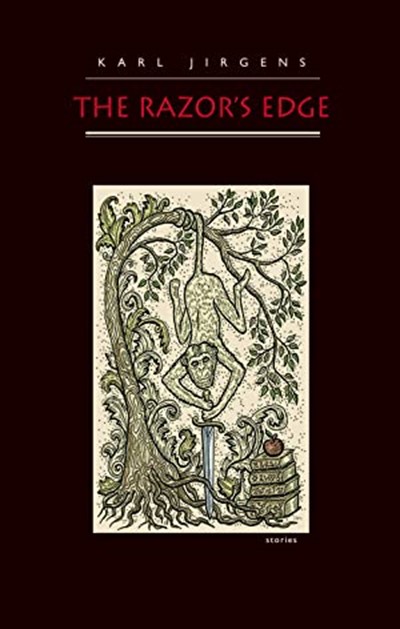
Reveries Unlimited: The Razor’s Edge Stories of Karl Jirgens

Porcupine’s Quill Press, 2022.


"There is something missing . . . if I knew what it is then it wouldn't be so missing . . . " – Hans in The Recognitions by William Gaddis (1955).

No, Reveries Unlimited is not the corporate name of a company specializing in providing services related to waking dreams, dreams we have with our eyes wide open while engaging in psychological wanderings. I’ve coined this hopefully supple phrase to encapsulate the kind of author who prompts, encourages, inspires and otherwise seduces us into sharing his or her narrative roamings through a past, present and future which collide, intersecting gently in a series of gently linked stories. Such is the service provided by Karl Jirgens in the recent collection called The Razor’s Edge, from Porcupine’s Quill Press, which subtly touches upon Maugham’s classic tale of a search for the meaning of life, in which we often feel as if we were walking on that precarious edge, posed between transcendence and a fall into oblivion.

Sunday, March 26, 2023

Haptic Happiness: Analog as Allegory

“Ever since Adam, who has really gotten the meaning of this great allegory—the world?”
– Herman Melville, 1851

“Any sufficiently advanced technology is indistinguishable from magic.”
– Arthur C. Clarke, 1968

In “The Machine Stops,” a short story written by E.M. Forster in 1909, the famed novelist surprised the many lovers of his compelling but still conventional fiction, highly regarded tomes such as A Room With a View, A Passage to India, Maurice, and Howards End, by taking a radical detour into the kind of speculative fiction most often associated with science and its limits. He went on a similar jaunt in 1914 with his collection of stories called The Eternal Moment, which explored parallel science fiction themes and supernatural speculations. Throughout his lengthy writing career, during which he lived long enough to witness humans landing on the moon, he frequently alternated between entertaining social observation writing and the vividly imaginative ideas he explored in his wildly cerebral Celestial Omnibus. In fact, “The Machine Stops” was so utterly astonishing largely due to its surmise, nearly a century before the internet even existed as a concept, that we might eventually occupy, via technics (the original and official word for technology), a world where we are interconnected through a threshold-breaking mechanical means which starts out as a benevolent helper but invariably ends up virtually colonizing our very definition of reality.

Monday, April 4, 2022

Under the Radar: Charlatan, All Hands on Deck and Dream Horse

Ivan Trojan and Juraj Loj in Charlatan.

Agnieszka Holland’s Charlatan is based on the little-known story of Jan Mikolášek (an authoritative performance by Ivan Trojan), a Czech herbalist and faith healer who was arrested by the Communist government on a trumped-up murder charge in the 1950s. As a young man in the 1930s (played by Trojan’s son Josef), Jan is trained by an aging healer (Jaroslava Pokorná) to interpret the ailments of the sick by “reading” their urine; his apprenticeship is in direct defiance of his farmer father, who locks him in his room to keep him at home. Jan takes a hatchet to the bedroom door – and almost uses it on his father. When the old woman, Mühlbacherová, dies, he takes over her practice and his herbal treatments become so famous that during the war he is even called upon to dispense curatives to high-ranking Nazis. He gets in hot water from both sides: a Czech Gestapo officer (Joachim Paul Assböck) whose little girl he couldn’t save arrests him and beats him, and after the war he’s charged with collaborating. His protector is the Czech president, Zápotocky (Ladislav Kolár), who is one of his patients. But after the president dies Jan and his assistant, Frantisek Palko (Juraj Loj), are put on trial as charlatans and murderers.

Thursday, March 24, 2022

Post-What: Just What Was Modernism, Anyway?


“By 'modernity,' I mean the ephemeral, the fugitive, the contingent, the half of art whose other half is the so-called eternal and the supposedly immutable . . . “ – Charles Baudelaire, poet of the inexpressible.
It is very important, perhaps even crucial for some of us, that we come to have a full and clear grasp of what modernism actually was before even dreaming of approaching the thorny question of what so-called postmodernism might mean. Let’s not be too hasty here. Like most advanced forms of alternative thinking, at least on the surface, modernity emerged as a discussable notion during the mid-19th century in Europe, specifically France, which had already long established itself as a vanguard socially, politically and culturally, especially with the invention of the camera in about 1840. But also like most advanced ideas, the concept of the modern was imported by America and drastically enhanced before being blown up to global proportions.

In the context of art history, modernité, and the designation of modern art covering the early period from roughly 1860-1870, first entered the lexicon in the head, hands and pen of French poet Charles Baudelaire, whose 1864 essay entitled “The Painter of Modern Life” tossed his invented neologism like a conceptual hand grenade into the cultural marketplace. The radical symbolist poet, and possibly the first modern art critic, referred to “the fleeting, ephemeral experience of life in an urban metropolis and the responsibility which art has to capture and explore that experience.” 

Monday, April 26, 2021

Human Heart for Sale, Well Worn: Hemingway

Our erstwhile safari guide in 1954, appearing to contemplate checking out of the mortal hotel after being honoured with a Nobel Prize. (John F. Kennedy Archival Library)

"For sale: baby shoes, never worn." – Ernest Hemingway, ca. 1927.

The opening epigram pretty much perfectly sums up the essence of Ernest Hemingway’s strange magic. Ostensibly the result of a drunken wager between fellow writers about who could write the shortest story, but also based on an actual journalistic article about a tragic 1910 fire in the Spokane Press, this early example of flash fiction spookily captures some of the inherently sad ekphrasis that so saturated Hemingway’s heavy soul (even if the sodden tale might be slightly apocryphal). He was, of course, the winner of that bet, pocketing ten dollars for his effortless ease and demonstrating an uncanny skill at restrained understatement which surely must have originated in his own early jobs as a news reporter. Including for my hometown paper, The Toronto Star.

Wednesday, March 10, 2021

Found in Translation: Across a Bridge of Words

left: Marina Tsvetaeva, 1925. (Photo: Roger Viollet); right: Nina Kossman (Photo: courtesy of American Pushkin Society)

“A real translation is transparent; it does not cover the original, does not block its light, but allows the pure language, as though reinforced by its own medium, to shine upon the original all the more fully.” – Walter Benjamin, “The Task of the Translator,” 1921.

The Poets & Traitors Press series "seeks to showcase authors who travel between writing and translation" and "views translation as forming part of a continuum with the creative writer’s work". This imprint series began in 2013 and arose from the New York New School's translation workshop readings, which explored a shared format: featuring the original poems of translators of major poets alongside their translations of writers with whom they share a deep poetic resonance. Other Shepherds is the fifth book from Poets & Traitors, an independent press which continues to offer intriguingly hybrid books of poetry in conversation by a single author-translator.

Wednesday, January 27, 2021

Prescriptions for Melancholy: Rachel Blum and Paul Celan

Paul Celan (1920-1970).
“I can swim like everyone else, only I have a better memory than them. I have not forgotten my former inability to swim. But since I have not forgotten it, my ability to swim is of no avail and in the end I cannot swim.” – Franz Kafka, Notebook, 1920

One thing an art and literary critic, or any cogent observer really, never wants to do if they can help it is to compare a contemporary painter to Mark Rothko or Barnett Newman, compare a contemporary musician to Brian Eno or Terry Riley, compare a contemporary playwright to Samuel Beckett or Harold Pinter, and especially not to compare a contemporary poet to Paul Celan or W.S. Merwin. Poets, and the rest, hate being compared to giants in their field, even if it’s meant in the most complimentary way, since it taints their work with unfairly gargantuan lauding, the weighty shadow of which might be too much for them to comfortably bear. And yet, that last poetic reference is exactly the aesthetic crime I’m compelled to commit in this assessment of two new and recent books, one by and the other about, two poets of sterling caliber. 

Wednesday, November 18, 2020

Entwined: The Life and Art of Agnes Martin

Happy Holiday by Agnes Martin, 1999, oil and graphite on canvas, five feet square (Tate Gallery)

“I paint with my back to the world.” – Agnes Martin, interviewed by Mary Lance, 2003.

Agnes Martin, the hermetic artist and creator of hermetic paintings that invite us to enter their quiet domain without any preconceptions or conscious thoughts, was such an international figure in the visual cultural arena and so prominent a reclusive presence in her hermitage studio in the Southwest of America, that people are often surprised to learn that she’s in fact a Canadian, born in Saskatchewan in 1912. But once you register her point of origin, and also remember what the flat and spacious physical geography of Saskatchewan looks like, then the austere and serene paintings she sends us, which I maintain are actually pure landscapes devoid of topographical features, then her entire oeuvre, which dramatically anticipated minimalism yet continued the evolution of abstract expression at the same time, suddenly makes shocking sense. As does her somewhat outside-the-mainstream art-world status, earned by her hard-fought battles with psychological crisis, isolation and her seemingly monkish devotion to a solitary existence in New Mexico, one that makes Georgia O’Keeffe come across like a party girl by comparison.

Monday, April 20, 2020

Stunner: The Metamorphosis at the Royal Opera House

Edward Watson as Gregor Samsa in The Metamorphosis at London’s Royal Opera House. (Photo: Tristram Kenton)

For the next month, Arthur Pita’s dance-theatre adaptation of Franz Kafka’s The Metamorphosis, which premiered at London’s Royal Opera House in 2011, can be streamed on Youtube – and you don’t want to miss it. I think it’s one of the most astonishing pieces of theatre or dance that I’ve ever seen. Baryshnikov starred in a stage version, directed by Steven Berkoff, in 1989, that I thought was fake and repetitive; Baryshnikov was the only reason to see it, but it didn’t serve him especially well. Pita made this adaptation for Edward Watson, one of the Royal Ballet’s principal dancers, who has a narrow, geometric face that matches his marvelously elongated frame – the perfect physical equipment to play Gregor Samsa, the Czech bourgeois who awakes one day to find he’s been transformed into an insect.

Friday, April 10, 2020

Living With Limits: Dancing With Rita Hayworth


Just as psychoanalysis reconstructs the original traumatic situation in order to release the repressed material, so we are now being plunged back into the archaeopsychic past, uncovering the ancient taboos and drives that have been dormant for epochs . . . Each one of us is as old as the entire biological kingdom, and our bloodstreams are tributaries of the great sea of its total memory. (J. G. Ballard, The Drowned World, 1962, p. 41)
The recent passing of my friend, the writer, broadcaster and co-founder of Critics At Large Kevin Courrier, prompted me to engage in some spontaneous and unexpected speculations about mortality and the finite nature of our charming little sojourns here on this odd earth.

Westerners who live in either Europe or North America don’t really like to talk about death, or even to think about it if possible. It’s a foreboding subject that fills us with fear and dread, probably as a result of our trained expectation of punishment for sins of one kind or another, of retribution in hell rather than a blissed-out vacation in Shangri-La heaven. This is unlike Easterners from any numbers of places, such as India, Japan or Tibet, let’s say, who don’t follow the same template of a deity, or a messiah, or some supernatural figure sitting on a throne in space who resembles Charlton Heston handing out post-mortem candies.

Saturday, March 28, 2020

Past and Present Collide in Poetry from the Future: Lorette C. Luzajic’s Pretty Time Machine


“I may lie a lot. But never in my lyrics.” – Courtney Love

Imagine receiving a postcard from a friend who claimed to be writing to you from the year 2120, describing their vacation there through a series of artworks to which they were responding with duende. El duende is the spirit of evocation. It comes from inside as a physical/emotional response to art. It is what gives you chills, makes you smile or cry as a bodily reaction to an artistic performance that is particularly expressive. The poet Lorca stated, "The duende's arrival always means a radical change in forms. It brings to old planes unknown feelings of freshness, with the quality of something newly created, like a miracle, and it produces an almost religious enthusiasm . . . All arts are capable of duende, but where it finds greatest range, naturally, is in music, dance, and spoken poetry, for these arts require a living body to interpret them, being forms that are born, die, and open their contours against an exact present." The works of Lorette Luzajic, like those of Lorca himself, are utterly drenched in duende.

Friday, January 31, 2020

Close Encounters of the Enlightened Kind: Awakening My Heart

Tina Turner shared her own transformative heart experiences with Andrea Miller. (Photo: Nathan Beck).

I wish I had known about Awakening My Heart, this marvelous new book by Andrea Miller from Pottersfield Press, compiling her close encounters with multiple Buddhist luminaries, before I recently completed my new book on Tina Turner’s life and music. Though as a longtime practitioner myself, mostly of a mixture of Zen and Dzogchen, I was, of course, aware of Turner’s many-decades-long affiliation with Buddhist chanting and practice, Miller’s well-crafted conversations with celebrated seekers such as her would have greatly informed the portions of my book devoted to her philosophical pursuits.

Friday, October 11, 2019

The Cult of Rock and Roll: Six Degrees of Art, Poetry and Music

William S. Burroughs (right) with Jimmy Page, guitarist/composer of Led Zeppelin.

A writer with the incredibly apt but real name of Alexander Kafka, who frequently writes about literature for The Washington Post, The Boston Globe and The Chicago Tribune, penned what I’ve long felt was an ideal characterization of beat legend William S. Burroughs: “Burroughs was an ethereal intermediary between here and the fiery beyond, pausing to give us the purgatorial skinny.” That skinny was transmitted, of course, in haunting and disturbing novels such as Junky, Naked Lunch, The Soft Machine and The Ticket That Exploded. However, it is through his influence on every other aspect of 20th-century culture in all media that his spectral presence as a witness was most perhaps most long-lasting.

Music for instance. What do Bob Dylan, The Beatles, The Rolling Stones, Kurt Cobain, David Bowie, Lou Reed, Jimmy Page, Frank Zappa, Jim Carroll, Jerry Garcia and a few even more disparate musicians all have in common? William Burroughs. Kafka cleverly referred to them all as the writer’s amped-up apostles, and indeed they were, chiefly as a result of his outlaw status but also partly because of his unique and innovative literary techniques. All of the above musical artists, to one degree or another, were influenced by not just the Burroughs style and ethos but also the surreal potential to manufacture new and fresh meanings as the result of aleatory alignments of thought, image and text.