Showing posts sorted by date for query Margaret Atwood. Sort by relevance Show all posts

Friday, July 24, 2026

Louisa May Alcott: The Heroine Builder

Portrait of Louisa May Alcott by Lance Austin Olsen.

“I am not afraid of storms, for I am learning how to sail my ship. Far away in the sunshine are my highest aspirations.”
Louisa May Alcott

Alcott was not quite the quaint homespun lady who wove utopian fables of blissful childhood dreams that her writings, or at least one segment of her complex literary persona, would have you believe. She was not afraid of storms, true enough, but that was mostly because she was a storm herself, albeit a secret storm. Unlike the writings of either Jane Austen or the Brontë sisters, Alcott was not so very interested in what she defined as domestic fiction, a term she used to categorize, though not necessarily to critique, literary works that focus on family dynamics in contrast to the dynamics of female social perspectives, despite the fact that her most famous work, Little Women (1868), would appear to do just that, at least on the surface anyway. She even defined her own alternative literary position, as distinguished from the other writers mentioned, as having a preference for what she called “sensation stories and novels” as opposed to tales of domestic intrigue or turbulence. Some readers of Little Women, Good Wives (1869), Little Men (1871), or Jo’s Boys (1886), might be especially surprised to hear her declare, albeit in a quiet voice, “I fancy lurid things.” and to acknowledge a literary debt to Johann Goethe’s turbulent Sorrows of Young Werther and his diabolically beautiful Faust drama. Active during one of the most tumultuous and horrific times in American history, when the nature and even existence of that country was in perilous question, Alcott started writing for The Atlantic Monthly in 1859, and upon the outbreak of the Civil War became an active nurse at the Union Hospital in Georgetown. A fervent anti-slavery activist and advocate of complete equality and freedom in all its forms, she was so supportive of the Union cause that she enthusiastically rushed off to enlist in its army, only to be rebuffed, for what to her was that most inane of reasons: because the military did not accept female soldiers. This enraged her, not only as a devoted patriot but also as a avid supporter of the cause of suffrage and equality for women in every walk of life. To say that she was ahead of her time would be a drastic understatement. She was an unalloyed feminist, during a time when what she wanted, though simple enough to our modern eyes, was incomprehensible to not only the government but also to family and friends in her circle. Her dispatches were featured in the anti-slavery newspaper Commonwealth and her advanced thinking, often belied by the obvious charming quality of her fiction, propelled her to the forefront of a then gestating suffrage movement. This courageous dame had guts galore, not to mention the literary skill to captivate readers with her apparent coming-of-age stories, which cleverly concealed in their charms the author’s suggestions for improving our mutual existence.

Thursday, June 25, 2026

Found in Translation: Wayne McGregor’s MADDADDAM, Reconsidered

Heather Ogden in the National Ballet of Canada's MADDADDAM. (Photo: Karolina Kuras.)

In 2022, I walked out of Toronto’s Four Seasons Centre and wrote that MADDADDAM — Wayne McGregor’s adaptation of Margaret Atwood’s trilogy of visionary novels — had gotten lost in translation, the story confounding, the choreography swallowed by its own scenography. Watching the National Ballet of Canada’s revival last Saturday night, I retract nearly all of it. This time I was not confused so much as conquered. I felt, for the first time, that I was in the presence of genius.

Monday, January 30, 2023

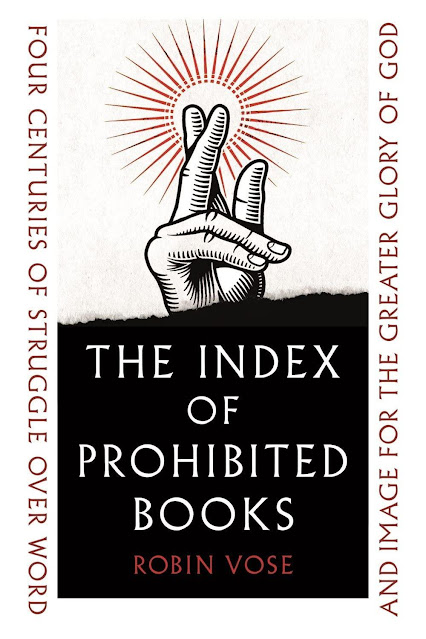
Glorifying Intolerance: The Sad History of Banning Books

:reaktion books u of chicago.jpg

Art censorship, especially in cases that did not involve printed books, also once again reveals the limitations and often fortuitous nature of the whole Index project. Condemnations were often delayed for years or even centuries, or omitted altogether, as censors struggled to keep up with the constant flow of publication and creative works. They instead targeted individuals on a selective and often somewhat random basis, according to what came to their attention. Montaigne was quite dismayed by the close expert scrutiny his Essais received on his arrival in Rome, and it must also have been a hawk-eyed reader indeed who managed to pick out a single offending passage in the hundreds of pages of Cervantes’s Don Quixote.
– Robin Vose, The Index of Forbidden Books: Four Centuries of Struggle Over Word and Image For the Glory of God.

Alas, the history outlined in Robin Vose’s harrowing new study of institutionalized intolerance, The Index of Forbidden Books (Reaktion Books, distributed by University of Chicago Press), often veered all the way to the extreme right and even included, on special occasion, bonfires built to incinerate ideas which were deemed too dangerous, or sometimes just too alternative to orthodoxy, to be permitted on the open market of human consciousness. You can imagine how afraid the powers that be must have been around the turn of the first millennium, when the paranoid forces of paralyzing superstition were simply not enough and they needed to resort to more stringent methods of control, such as the complete non-existence of alternate perceptions of reality that ran counter to their own strategic plan for managing moral behaviours and belief systems. The one key ingredient they never quite clarified or explained, of course, was just why the supreme Deity they worshipped, and whose psychic persona armor they were obsessed with forcing down the throats of the entire population of the world, would ever need to be “glorified” in so crass a manner. 

Sunday, January 29, 2023

Lost in Translation: Wayne Mcgregor’s MADDADDAM

Siphesihle November and Jason Ferro in Wayne McGregor’s MADDADDAM. (Photo:Bruce Zinger; Courtesy of The National Ballet of Canada)

"But the people couldn’t be happy because of the chaos.” It’s a line uttered during the course of MADDADDAM, and it comes close to summing up reaction to a ballet where the dance got in a swirl of virtuosic theatrical effects. Based on a trilogy of dystopian novels by Canada’s Margaret Atwood, British choreographer Wayne McGregor‘s lavish three-act adaptation for the stage, a co-production of the National Ballet of Canada and England’s Royal Ballet, commission of The National Ballet, confuses and disappoints. It doesn’t tell a story that’s easy to follow, and it doesn’t use the art of dancing that measures up to the soaring imaginative peaks of Atwood’s speculative prose. Where her novels feel futuristic, McGregor’s ballet, whose world premiere took place at Toronto’s Four Seasons Centre at the end of November, appears curiously anachronistic, being more concerned with scenography – a hallmark of the early-20th-century Les Ballets Russes – than with pushing classical dance into brave new territory.

Wednesday, June 19, 2019

Forbidden: The Strange History of Censorship

Photo by Valentin Kopalov.

“All the desires we try to suffocate will drown in our soul and poison it. The only way to get rid of a temptation is give in to it.”– Oscar Wilde
Several friends of mine on Facebook have recently been ensnared in their corporate policies around censorship and the enforcement of so-called “community standards.” The irony here is that in two specific cases, one of a charming freelance model and the other of a roguish lover of freelance models, both posted images that contained . . . wait for it . . . nipples, or more accurately, female nipples. For this they were punished, if that is the right word, by being forbidden to post, share or even comment on anything for a varying duration. All because of something everyone in both genders has?

Yet another irony is the fact that the roguish fellow was more fond of posting images of various male hunks in different degrees of undress, with almost always a not-so-subtle emphasis on their admittedly admirable chest muscles, and yes, an abundance of nipples . . . but male nipples. And those were never in doubt or questioned at all, yet when he posted one of a female model, even one that was totally elegant and in good taste, boom. And this also unfolded in a virtual world where the social media network had no objections whatsoever to spreading Russian lies, right-wing extremist propaganda, racist hate content and misogynistic tripe. How paradoxical.

Monday, November 26, 2018

Magic Season – Fantastic Beasts: The Crimes of Grindelwald

Eddie Redmayne and Callum Turner in Fantastic Beasts: The Crimes of Grindelwald.

We can all agree that the more franchises crowd the multiplexes, the more difficult it is for other sorts of pictures to get seen – indeed, to get made at all. Still, some of the most enjoyable experiences I’ve had at the movies this year have been at the latest entries in various series: Incredibles 2, Mission Impossible: Fallout, Ant-Man and the Wasp, even the much-maligned Solo. However, Fantastic Beasts: The Crimes of Grindelwald towers above the others. It confirms that, visually and emotionally, this particular franchise is on the same level as the recently concluded Planet of the Apes trilogy.

Sunday, February 11, 2018

Yes They Can: Naomi Alderman's The Power


The 2017 publication of Women & Power: A Manifesto by the eminent classical scholar Mary Beard offers a witty and caustic literary and historical overview of how women have been ridiculed, demeaned and silenced. She begins with the moment that Telemachus in The Odyssey told his mother Penelope to shut up, go to her room and resume her own work leaving public speech to men. Eventually, Beard spotlights the moment over two millennia later when Senator Elizabeth Warren was silenced for quoting from a letter by Coretta Scott King (the widow of Martin Luther King), while others, like Bernie Sanders, were not. Beard is a particularly apt scholar to pen this manifesto considering the inflammatory vitriol that has been hurled at her for her speaking publicly about controversial issues. Her manifesto could be read in conjunction with Naomi Alderman's speculative-fiction novel, The Power (Little, Brown and Company, 2017) since she speculates what would happen if men were removed from their perches of power, demeaned, violated and silenced.

The Power is couched as "a historical novel" written by Neil Adam Armon. It is framed by an exchange of letters thousands of years into the future between Neil, who pleads for patronage from an address at "The Men Writers Association," and a woman called Naomi. He explains to her that he has written a novelized history after his academic studies have been ignored. Naomi’s responses, especially in the back end, are flecked with ridicule, charged with sexual innuendos, and downright condescending. Even before we read the novel within the novel, this literary conceit signals that we are entering into a vastly changed reality: the traditional schematics of sex and power are reversed with women exercising the real power while men are the disrespected other.

Friday, January 5, 2018

Delectable Samples: A 2017 Arts Roundup

Robert Lepage in 887.

Since I rarely write about the arts, I welcome the opportunity to briefly comment upon what I enjoyed most this year, even though several of the pieces below have been reviewed by colleagues at Critics At Large. Apart from, perhaps, television, my sampling from the arts scene is relatively small yet I did experience some wonderful aesthetic moments. – Bob Douglas

Two theatre productions I attended this year were outstanding. Auteur Robert Lepage’s one-man bravura performance in 887 unspools the interplay between the fragmented recollections of his family life and the perils of collective Quebec memory from the 1960s to the present. 887 was the number of the apartment building on Murray Avenue in Quebec City where Lepage spent his formative years. The staging is jaw-dropping: a revolving set showing the interior of his current apartment and the exterior of his childhood home that reveals a doll’s-house replica of that apartment complex, toy cars, puppets and hand shadows. The catalyst for these reveries occurred in 2010 when the organizers of a cultural anniversary invited Lepage to recite by heart a 1968 poem, “Speak White.” He found that he could not learn the lines until he had explored his family history, particularly his relationship with his absent father, and how the personal dynamics intersected with the larger world of nationalist politics.

Saturday, July 29, 2017

Nothing To Be Afraid of Here: Ben H. Winters’ Underground Airlines


The recent furor over HBO’s announcement of a proposed TV series to be called Confederate that imagines a world where the South seceded from the Union and has kept slavery as an institution to the present day is puzzling for any number of reasons. The objections seem to be to the very concept of the show, created by David Benioff and D.B. Weiss (Game of Thrones), that it would be offensive to black viewers and exploitative of the subject of slavery. (Black writer Roxane Gay labelled it "slavery fan fiction" in a New York Times op-ed.) But that argument ignores the obvious fact that the idea is not exactly a novel one in fiction. Science-fiction writer Harry Turtledove wrote an epic ten-book series on this very subject in his Southern Victory series (1998-2007). Kevin Willmot’s CSA: The Confederate States of America was a 2004 film mockumentary which posited a British-made documentary examining the present-day CSA, an empire that spans Cuba, Mexico and Central America, and the realities of its racist culture, complete with a revised history of America. (In the film's imagined history Mark Twain, Ralph Waldo Emerson and others left to go live in a free Canada and President Abraham Lincoln also ended up there after being free from imprisonment by the Confederacy.) And last July saw the release of Ben H. Winters’ similarly themed novel Underground Airlines (Mulholland Books). So why the fuss about an idea that is hardly a radical departure from the literary or visual norm? The answer might be because it hits too close to home.

Saturday, July 1, 2017

Ohhhh Canada: Critics At Large Celebrates Canada 150


Celebrating birthdays is complicated enough when you're discussing people, let alone when you start talking about a nation. For a few months, the idea of doing a special series of pieces reflecting the complicated and controversial history of our Confederation was kicked around. But these days there is no one person who is a driving force at Critics at Large to bring consensus and focus to these kinds of ambitious plans. So the notion languished passively and died on the vine. We ended up doing an ad hoc number of random pieces that became part of an informal Canada 150 series. Since my turn to write was coming up today, I had to ask myself if I wanted to do something – anything – about why Canada mattered. But I had too many ideas and none that jumped out as inspired. So while recently culling together some of my own Critics at Large writing for a summer project I've been working on, I began reading a number of other critics who said things in the heat of reviewing that touched on some fascinating aspects of what it meant for them being Canadian. In a matter of moments, I began lifting selections from those reviews dating back to our beginnings in 2010. In those works, Canada was a leitmotif that I had the urge to embroider into a motley quilt of cultural discourse. Not all our writers are included here, as some over the years had little to say about Canada, while others make repeat appearances because some idea of Canada predominated in their work in a way that looms larger than it might have when the piece was once a review. As I was the one to do the writing today, I throw down the first gauntlet with a selection from a book review I did back in 2010.

-- Kevin Courrier, July 1/17.
    

Tuesday, May 16, 2017

Two Poets, Two Voices: Gianna Patriarca and Alden Hadwen


It is not known if Gianna Patriarca and Alden Hadwen know each other. But these two women have more in common than having coincidentally published books in 2016. Both are poets with ties to Toronto, and both are mothers who are roughly the same age somewhere north of 50. But it is their work that draws them together here for comparison. Each projects a nuanced feminine sensibility regarding poetic writing that serves as a form of self-revelation. Words chisel deep into memory and emotion, exposing hidden meaning. Both write honestly and straightforwardly about personal experience, yielding highly individualized portraits of everyday womanhood which yet have something of the universal about them. Their language is raw and sensual and the subject is quotidian life buying postcards, sipping coffee, watching the flowers grow. The ordinary made extraordinary through an alchemy of potent words. Love, loss, desire, regret, the quest for identity and a sense of belonging are concerns they share in common, regardless of their divergent backgrounds and decisively different points of view. Where Hadwen describes trilliums "piercing the moist forest floor," Patriarca writes of extinguished candles and plastic flowers garlanding the Virgin in churches visited by widows at dawn. One celebrates the potent energies of nature while the other rages against the emotional chill of the city. There's a reason for that.

Saturday, July 30, 2016

Talking Out of Turn #45 (Podcast): Film Critic Jay Scott (1985)

Jay Scott was film critic for The Globe and Mail from 1977 until his death in 1993.

From 1981 to 1989, I was assistant producer and co-host of the radio show On the Arts at CJRT-FM in Toronto. With the late Tom Fulton, who was the show's prime host and producer, we did a half-hour interview program where we talked to artists from all fields. In 1994, after I had gone to CBC, I had an idea to collate an interview anthology from some of the more interesting discussions I'd had with guests from that period. Since they all took place during the Eighties, I thought I could edit the collection into an oral history of the decade from some of its most outspoken participants. The book was assembled from interview transcripts and organized thematically. I titled it Talking Out of Turn: Revisiting the '80s. With financial help from the Canada Council, I shaped the individual pieces into a number of pertinent themes relevant to the decade. By the time I began to contact publishers, though, the industry was starting to change. At one time, editorial controlled marketing. Now the reverse was taking place. Acquisition editors, who once responded to an interesting idea for a book, were soon following marketing divisions concerned with whether the person doing it was hot enough to sell it.

Tom Fulton, host and producer of On the Arts.
For a few years, I flogged the proposal to various publishers but many were worried that there were too many people from different backgrounds (e.g., Doris Kearns Goodwin sitting alongside Oliver Stone). Another publisher curiously chose to reject it because, to them, it appeared to be a book about me promoting my interviews (as if I was trying to be a low-rent Larry King) rather than seeing it as a commentary on the decade through the eyes of the guests. All told, the book soon faded away and I turned to other projects. However, when recently uncovering the original proposal and sample interviews, I felt that maybe some of them could find a new life on Critics at Large.

Talking Out of Turn had one section devoted to reviewers who ran against the current of popular thinking in the Eighties. That chapter included discussions with New Yorker film critic Pauline Kael, who had returned to writing in the Eighties after a brief hiatus as a consultant in Hollywood, talked to me in 1983 about how the Reagan decade was already having a deadening impact on the movie industry; author Margaret Atwood, who turned to literary criticism in her 1986 book Second Words, discussed  from an author's perspective  the value of criticism and how it was changing for the worse during this decade; Vito Russo, who in 1981, wrote a book called The Celluloid Closet: Homosexuality in the Movieswhich examined the way gays and lesbians had been portrayed in the history of American movies; and Globe and Mail film critic and author Jay Scott (Midnight Matinees) who spoke about how, despite being one of Canada's sharpest and wittiest writers on movies, he was initially a reluctant critic.

One of Canada's best film critics, Jay Scott died from AIDS on July 30, 1993 – 23 years ago today – but in his short life he left quite a mark on the Canadian cultural scene. When he sat down with me in his hotel room in 1985, we were both in Montreal covering the Film Festival and talking about his book of criticism, Midnight Matinees, which had just come out. He spoke about how his passionate love for movies would ultimately grow into a life of film criticism. No surprise that after our long chat, we both ran off to catch Paul Morrissey's Mixed Blood. I think he enjoyed it more than me.

– Kevin Courrier.

Here is the full interview with  Jay Scott as it aired on CJRT-FM in 1985.


Tuesday, July 19, 2016

Talking Out of Turn #44 (Podcast): Bharati Mukherjee (1985)

Author Bharati Mukherjee in 2011. (Photo: Jennifer Roberts)

From 1981 to 1989, I was assistant producer and co-host of the radio show On the Arts at CJRT-FM in Toronto. With the late Tom Fulton, who was the show's prime host and producer, we did a half-hour interview program where we talked to artists from all fields. In 1994, after I had gone to CBC, I had an idea to collate an interview anthology from some of the more interesting discussions I'd had with guests from that period. Since they all took place during the Eighties, I thought I could edit the collection into an oral history of the decade from some of its most outspoken participants. The book was assembled from interview transcripts and organized thematically. I titled it Talking Out of Turn: Revisiting the '80s. With financial help from the Canada Council, I shaped the individual pieces into a number of pertinent themes relevant to the decade. By the time I began to contact publishers, though, the industry was starting to change. At one time, editorial controlled marketing. Now the reverse was taking place. Acquisition editors, who once responded to an interesting idea for a book, were soon following marketing divisions concerned with whether the person doing it was hot enough to sell it.

Tom Fulton, host and producer of On the Arts.
For a few years, I flogged the proposal to various publishers but many were worried that there were too many people from different backgrounds (e.g. Margaret Atwood sitting alongside Oliver Stone). Another publisher curiously chose to reject it because, to them, it appeared to be a book about me promoting my interviews (as if I was trying to be a low-rent Larry King) rather than seeing it as a commentary on the decade through the eyes of the guests. All told, the book soon faded away and I turned to other projects. However, when recently uncovering the original proposal and sample interviews, I felt that maybe some of them could find a new life on Critics at Large.

In 1984, Paul Mazursky made Moscow on the Hudson, a poignant comedy about exile and homesickness, which starred Robin Williams as a Russian musician touring with the Moscow circus who spontaneously defects in New York City. The movie ostensibly deals with the complex set of emotions set loose when he finds his freedom. His actions trigger a mixture of homesickness, sadness, and the longings for a sense of place that come when (for political and ethical reasons) you are forced to leave home. With those themes in mind, I devised a chapter called Exiles and Existence where a number of artists (including authors Jerzy Kosinski, Josef Škvorecký, Neil Bissoondath, and Ariel Dorfman) examined what it means to find yourself in a new land while looking back at the home you abandoned. 

In 1985, one of those interviewed was author Bharati Mukherjee. Already the author of two novels and a memoir (with partner Clark Blaise), her first collection of short stories, Darkness, had just been published. Born in Kolkata and educated in India and the U.S., Mukherjee had lived in Montreal and Toronto for over a decade before returning to the United States to accept a university teaching position. To date, she has written eight novels, including Jasmine (1989) and most recently Miss New India (2011). 


In this interview we explore the idea of those sometimes necessary (but painful) trade-offs immigrants have to make in order to become a citizen of another land. The stories collected in Darkness are a living, breathing testament to those conflicts. She tells us, "I'm a comic writer who chases the darkness."

– Kevin Courrier.
 

Here is the full interview with Bharati Mukherjee as it aired on CJRT-FM in 1985. 


Sunday, May 1, 2016

Talking Out of Turn #43 (Podcast): Ariel Dorfman (1983)

Author Ariel Dorfman.

From 1981 to 1989, I was assistant producer and co-host of the radio show On the Arts at CJRT-FM in Toronto. With the late Tom Fulton, who was the show's prime host and producer, we did a half-hour interview program where we talked to artists from all fields. In 1994, after I had gone to CBC, I had an idea to collate an interview anthology from some of the more interesting discussions I'd had with guests from that period. Since they all took place during the Eighties, I thought I could edit the collection into an oral history of the decade from some of its most outspoken participants. The book was assembled from interview transcripts and organized thematically. I titled it Talking Out of Turn: Revisiting the '80s. With financial help from the Canada Council, I shaped the individual pieces into a number of pertinent themes relevant to the decade. By the time I began to contact publishers, though, the industry was starting to change. At one time, editorial controlled marketing. Now the reverse was taking place. Acquisition editors, who once responded to an interesting idea for a book, were soon following marketing divisions concerned with whether the person doing it was hot enough to sell it.

Tom Fulton, host and producer of On the Arts.
For a few years, I flogged the proposal to various publishers but many were worried that there were too many people from different backgrounds (e.g. Margaret Atwood sitting alongside Oliver Stone). Another publisher curiously chose to reject it because, to them, it appeared to be a book about me promoting my interviews (as if I was trying to be a low-rent Larry King) rather than seeing it as a commentary on the decade through the eyes of the guests. All told, the book soon faded away and I turned to other projects. However, when recently uncovering the original proposal and sample interviews, I felt that maybe some of them could find a new life on Critics at Large.

In 1984, Paul Mazursky made Moscow on the Hudson, a poignant comedy about exile and homesickness, which starred Robin Williams as a Russian musician touring with the Moscow circus who spontaneously defects in New York City. The movie ostensibly deals with the complex set of emotions set loose when he finds his freedom. His actions trigger a mixture of homesickness, sadness, and the longings for a sense of place that come when (for political and ethical reasons) you are forced to leave home. With those themes in mind, I devised a chapter called Exiles and Existence where a number of artists (including authors Jerzy Kosinski, Josef Škvorecký, and Neil Bissoondath) examined what it means to find yourself in a new land while looking back at the home you abandoned. 

In 1983, one of those interviewed was Chilean-America author, academic, and human rights activist Ariel Dorfman. Now more widely known for his 1991 play Death and the Maiden, at the time I sat down with Dorfman his recent book Widows had just been published in English by Pantheon Books. It was his first novel to be translated into English.

– Kevin Courrier.

Here is the full interview with Ariel Dorfman as it aired on CJRT-FM in 1983.


Friday, February 5, 2016

Talking Out of Turn #42 (Podcasts): Dr. G. William Jones (1987) and James Earl Jones (1987)

James Earl Jones in John Sayles' Matewan (1987).

From 1981 to 1989, I was assistant producer and co-host of the radio show On the Arts at CJRT-FM in Toronto. With the late Tom Fulton, who was the show's prime host and producer, we did a half-hour interview program where we talked to artists from all fields. In 1994, after I had gone to CBC, I had an idea to collate an interview anthology from some of the more interesting discussions I'd had with guests from that period. Since they all took place during the Eighties, I thought I could edit the collection into an oral history of the decade from some of its most outspoken participants. The book was assembled from interview transcripts and organized thematically. I titled it Talking Out of Turn: Revisiting the '80s. With financial help from the Canada Council, I shaped the individual pieces into a number of pertinent themes relevant to the decade. By the time I began to contact publishers, though, the industry was starting to change. At one time, editorial controlled marketing. Now the reverse was taking place. Acquisition editors, who once responded to an interesting idea for a book, were soon following marketing divisions concerned with whether the person doing it was hot enough to sell it.

Tom Fulton, host and producer of On the Arts.
For a few years, I flogged the proposal to various publishers but many were worried that there were too many people from different backgrounds (e.g. Margaret Atwood sitting alongside Oliver Stone). Another publisher curiously chose to reject it because, to them, it appeared to be a book about me promoting my interviews (as if I was trying to be a low-rent Larry King) rather than seeing it as a commentary on the decade through the eyes of the guests. All told, the book soon faded away and I turned to other projects. However, when recently uncovering the original proposal and sample interviews, I felt that maybe some of them could find a new life on Critics at Large.

After the murder of Martin Luther King Jr, in the late sixties, the momentum of the Civil Rights movement seemed to wane. No leader could fill that vacuum and black voices in the eighties became fragmented. Often the question of black identity and culture came up during interviews. The chapter entitled Black Legacies included conversations with figures like author Toni Morrison, film archivist G. William Jones, and actor James Earl Jones. With the Academy Awards approaching and the controversy over the dearth of black talent among this year's Oscar nominees still heating up and February being Black History Month, it is timely to bring together the latter two interviews, both conducted in 1987.

Saturday, January 23, 2016

Talking Out of Turn #41 (Podcast): Joel and Ethan Coen (1984)

A scene from Joel and Ethan Coen's Blood Simple (1984)

From 1981 to 1989, I was assistant producer and co-host of the radio show On the Arts at CJRT-FM in Toronto. With the late Tom Fulton, who was the show's prime host and producer, we did a half-hour interview program where we talked to artists from all fields. In 1994, after I had gone to CBC, I had an idea to collate an interview anthology from some of the more interesting discussions I'd had with guests from that period. Since they all took place during the Eighties, I thought I could edit the collection into an oral history of the decade from some of its most outspoken participants. The book was assembled from interview transcripts and organized thematically. I titled it Talking Out of Turn: Revisiting the '80s. With financial help from the Canada Council, I shaped the individual pieces into a number of pertinent themes relevant to the decade. By the time I began to contact publishers, though, the industry was starting to change. At one time, editorial controlled marketing. Now the reverse was taking place. Acquisition editors, who once responded to an interesting idea for a book, were soon following marketing divisions concerned with whether the person doing it was hot enough to sell it.

Thursday, December 31, 2015

Talking Out of Turn #40 (Podcast): Dave Marsh on Bruce Springsteen (1987)

Bruce Springsteen, on stage during The River tour in 1981. (Photo: Patrick Harbron)

From 1981 to 1989, I was assistant producer and co-host of the radio show On the Arts at CJRT-FM in Toronto. With the late Tom Fulton, who was the show's prime host and producer, we did a half-hour interview program where we talked to artists from all fields. In 1994, after I had gone to CBC, I had an idea to collate an interview anthology from some of the more interesting discussions I'd had with guests from that period. Since they all took place during the Eighties, I thought I could edit the collection into an oral history of the decade from some of its most outspoken participants. The book was assembled from interview transcripts and organized thematically. I titled it Talking Out of Turn: Revisiting the '80s. With financial help from the Canada Council, I shaped the individual pieces into a number of pertinent themes relevant to the decade. By the time I began to contact publishers, though, the industry was starting to change. At one time, editorial controlled marketing. Now the reverse was taking place. Acquisition editors, who once responded to an interesting idea for a book, were soon following marketing divisions concerned with whether the person doing it was hot enough to sell it.

Thursday, December 10, 2015

Dystopian Playground: Margaret Atwood’s The Heart Goes Last

Author Margaret Atwood. (Photo credit: IBL/REX Shutterstock)

Margaret Atwood’s latest novel, The Heart Goes Last, opens with spouses Stan and Charmaine living in squalor in their car following an economic collapse in the not-so-distant future. Charmaine waits tables for tips while Stan ruminates on his state of unemployment. He used to work in robotics, she used to work in a nursing home, and they used to be happy before things went horribly awry. Longing still for the illusory (North) American dream (let’s remember Atwood is Canadian), Stan and Charmaine are all too pleased to hear about the “Positron Project,” a utopian scheme where civilians spend one month living in Leave It To Beaver-style domestic bliss and the next in a neighbouring prison, alternating every 30 days for the rest of their lives. The twin cities of Positron and Consilience seem to be the answer to Stan and Charmaine’s prayers but anyone who’s ever read an Atwood novel will recognize from the get go that some things really are too good to be true.

Sunday, November 22, 2015

Talking Out of Turn #39 (Podcast): Doris Kearns Goodwin (1987)

Historian Doris Kearns Goodwin at her home in Concord, Massachusetts in 2014. (Photo: Steven Senne/AP)

From 1981 to 1989, I was assistant producer and co-host of the radio show On the Arts at CJRT-FM in Toronto. With the late Tom Fulton, who was the show's prime host and producer, we did a half-hour interview program where we talked to artists from all fields. In 1994, after I had gone to CBC, I had an idea to collate an interview anthology from some of the more interesting discussions I'd had with guests from that period. Since they all took place during the Eighties, I thought I could edit the collection into an oral history of the decade from some of its most outspoken participants. The book was assembled from interview transcripts and organized thematically. I titled it Talking Out of Turn: Revisiting the '80s. With financial help from the Canada Council, I shaped the individual pieces into a number of pertinent themes relevant to the decade. By the time I began to contact publishers, though, the industry was starting to change. At one time, editorial controlled marketing. Now the reverse was taking place. Acquisition editors, who once responded to an interesting idea for a book, were soon following marketing divisions concerned with whether the person doing it was hot enough to sell it.

Wednesday, November 18, 2015

Talking Out of Turn #38 (Podcast): Clive Barker (1987)

Author and filmmaker Clive Barker, circa 1987.

From 1981 to 1989, I was assistant producer and co-host of the radio show On the Arts at CJRT-FM in Toronto. With the late Tom Fulton, who was the show's prime host and producer, we did a half-hour interview program where we talked to artists from all fields. In 1994, after I had gone to CBC, I had an idea to collate an interview anthology from some of the more interesting discussions I'd had with guests from that period. Since they all took place during the eighties, I thought I could edit the collection into an oral history of the decade from some of its most outspoken participants. The book was assembled from interview transcripts and organized thematically. I titled it Talking Out of Turn: Revisiting the '80s.

With financial help from the Canada Council, I shaped the individual pieces into a number of pertinent themes relevant to the decade. By the time I began to contact publishers, though, the industry was starting to change. At one time, editorial controlled marketing. Now the reverse was taking place. Acquisition editors, who once responded to an interesting idea for a book, were soon following marketing divisions concerned with whether the person doing it was hot enough to sell it.