Showing posts sorted by relevance for query Naoya Ebe. Sort by date Show all posts

Saturday, November 12, 2016

Stars Through the Rain: Soirée des Étoiles/A Night With the Stars

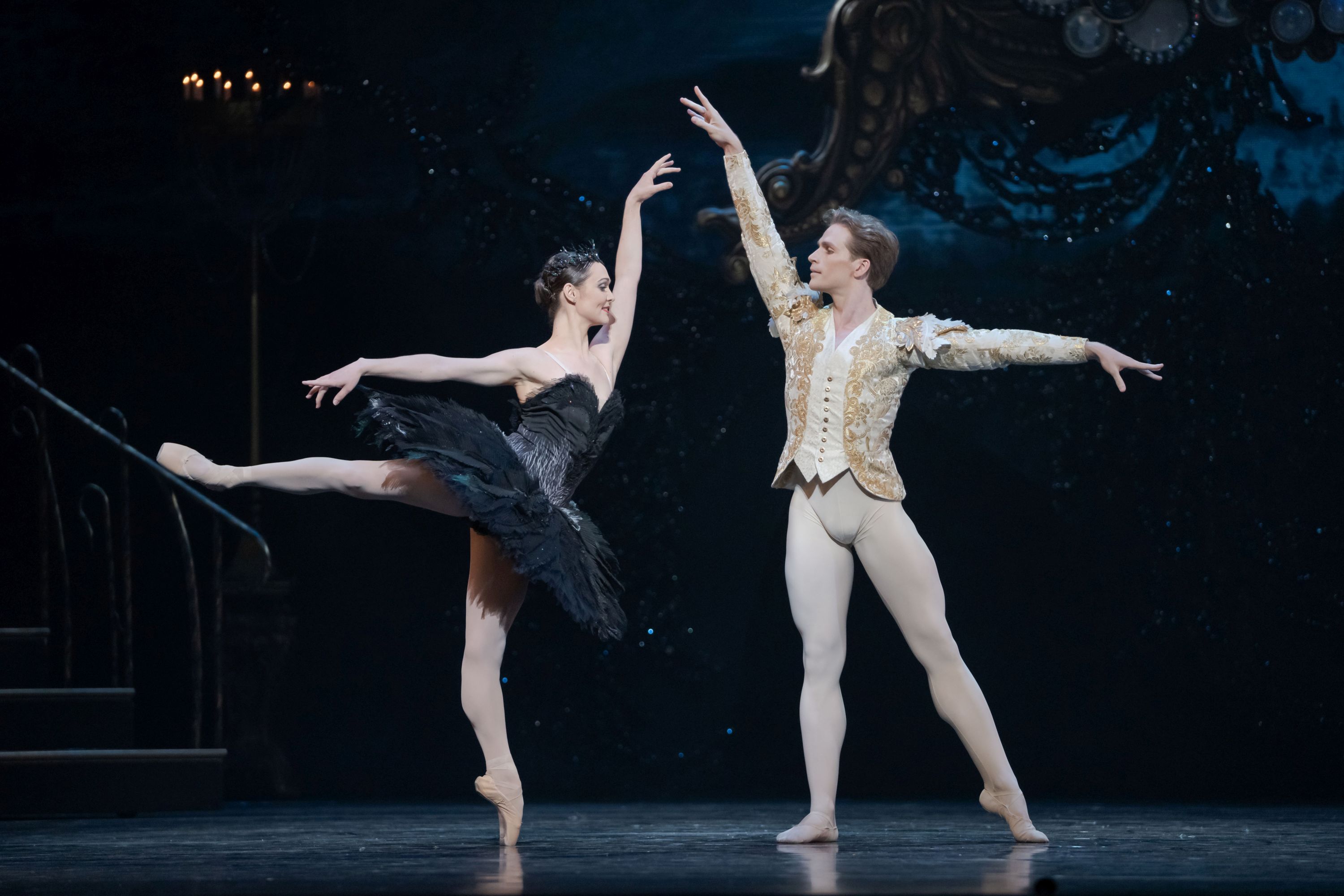
Naoya Ebe (Photo by Karolina Kuras)

Rain fell heavily on the makeshift stage inside a tent set up outside on the Saint-Sauveur High School parking lot, and for most of the day local volunteers were kept busy sponging up puddles in anticipation of the evening’s highly anticipated international dance gala. It was a scenario that at first seemed to spell disaster for Soirée des Étoiles/A Night With the Stars, a two-hour program featuring leading dancers from The Royal Ballet, American Ballet Theatre, and The National Ballet of Canada and Quebec intended to conclude the week-long Festival Des Arts de Saint-Sauveur (FASS) with two performances on Aug. 12 and 13. Tickets had been sold out weeks in advance and fears ran high that the star-studded talent, some of whose legs are insured for millions of dollars, could take a spill on the sodden stage. But not even the added burden of soaked-through front-row seats could dampen the spirits of the organizers. The show must go on, and without delay. Mais, oui! "Of course we have our fingers crossed," said executive director Etienne Lavigne anxiously before the curtain rose on the first of the gala’s two nights of performances. "Let's hope the weather cooperates."

It did, the rain letting up for the duration of the Friday night performance, which spelled a huge relief to ballet fans who had travelled great distances to attend the 25th-anniversary edition of the popular Francophone summer arts in the picturesque resort town of Saint-Sauveur, about a 45-minute drive north of Montreal. The lure was the opportunity to experience dance talent rarely seen in Quebec, if not the rest of Canada. The brainchild of Guillaume Côté, the National Ballet principal dancer and associate choreographer who assumed the role of FASS artistic director in the fall of 2014, the gala gathered together dancers from as far as London and New York to perform in close proximity to nature. Not a ballet dancer’s usual gig. Saint-Sauveur is not La Scala. But on this wet summer's night you could easily have confused the two based on dancing flair alone.

Friday, March 25, 2022

Aiming High: The National Ballet of Canada’s Mixed Program

Jillian Vanstone and Harrison James in After the Rain. (Photo: Karolina Kuras, courtesy of The National Ballet of Canada)

A departure, a beginning, a wobble, a blast from the past. The ebb and flow of life united four works seen on the mixed program that the National Ballet of Canada presented at Toronto’s Four Seasons Centre for the Performing Arts last week. Amid two world premieres – one each by company principal dancer Siphe November and guest choreographer Alysa Pires – was the company debut of Christopher Wheeldon’s After the Rain, and a reprise of Kenneth MacMillan’s Elite Syncopations as the evening’s frolicsome conclusion. But one at a time.

Wednesday, November 23, 2011

You Don’t Want the Dancing to Stop: National Ballet’s Romeo and Juliet

Guillaume Côté and Elena Lobsanova in Romeo and Juliet. (Photo by Bruce Zinger)

Creating something new out of something already established poses a challenge. You have tradition to contend with, not to mention other people’s expectations – especially true when your source is Shakespeare. In the case of Russian choreographer Alexei Ratmansky, who has just created a dramatic new dance version of Romeo and Juliet, the solution was to acknowledge all this while still forging ahead. The result is a modern day masterpiece of narrative ballet.

With Romeo and Juliet, Ratmansky – the former artistic director of the Bolshoi Ballet, now into his second term as artist in residence of New York’s American Ballet Theater – revisits not only literary tradition but also music and dance history.

A commission commemorating the 60th anniversary season of the National Ballet of Canada, his new three-hour work is at Toronto’s Four Seasons of the Performing Arts through Saturday with alternating casts. It's a tremendous accomplishment.

Sunday, March 17, 2013

John Neumeier’s Nijinsky: As Brilliant and Mad as its Subject

Guillaume Côté in Nijinsky. (Photo by Erik Tomasson)

I am aware that saying I am over the moon mad for a ballet about a dancer who spent half his life in and out of insane asylums sounds, well, a little crazy. But go ahead, commit me. Because I am certifiably nuts about Nijinsky, choreographer John Neumeier’s two-act homage to the great Ballets Russes dancer who tragically lost his mind in 1919, at the age of 29, after only 10 years of blazing like a comet across the stage. This ballet is my amour fou.

I saw it twice earlier this month during its recent run at Toronto’s Four Seasons Centre for the Performing Arts as part of the National Ballet of Canada’s spring season and each time the ballet was a revelation to me. Neumeier captures the epic sweep of the singular dancer’s triumphs and tragedy and as such his ballet is a masterpiece. It held me mesmerized, start to finish. 

Saturday, March 16, 2024

Down the Rabbit Hole with the National Ballet of Canada

Tirion Law and Svetlana Lunkina Alice's Adventures in Wonderland. (Photo: Karolina Kuras. Courtesy of The National Ballet of Canada)

The National Ballet of Canada's presentation of Alice's Adventures in Wonderland transcends mere entertainment, offering an unbridled exploration of creativity, imagination, and the human experience. Christopher Wheeldon's shape-shifting choreography, inspired by Lewis Carroll's timeless tale, serves as a poignant reflection on the power of storytelling and the journey of self-discovery. A mesmerizing use of computer-generated imagery, eye-popping colour and actual dancing in the aisles allow for a fully immersive experience, accessible to all.

Friday, February 28, 2025

Cycles of Transformation at The National Ballet of Canada

Genevieve Penn Nabity and Christopher Gerty in The Four Seasons. Gerty was injured and replaced by Larkin Miller in the performance our critic attended. (Photo: Carolina Kuras.)

Dancers in leaf-green unitards slip into a line at the rear of the stage, their arms raised overhead, wrists connected, fingers fanned into a vessel-like shape—a motif in David Dawson’s The Four Seasons. Subtle yet striking, the gesture suggests an offering, a quiet acknowledgment of something greater than oneself. Dawson, a British choreographer with a distinguished European pedigree, has built his career on crafting works that channel this sense of humility and connection into movement, transforming classical ballet into a language of both physical and spiritual exploration. His choreography demands not only technical precision but also an ability to embody its emotional weight, asking dancers to balance control with a sense of surrender—to the music, to the movement, and to the larger themes it seeks to express.

Wednesday, December 26, 2012

From Ballet to Bharatanatyam: Dance in Toronto Breaks New Ground in 2012

Piotr Stanczyk in Hamlet at the National Ballet of Canada (Photo: Corbin Smith)

With the Mayan calendar predicting the end of the world, 2012 was a year tinged with doomsday prophecies if not apocalyptic visions. But in dance, the zeitgeist was reversed. Instead of calling it quits, artists whose métier is choreographed movement instead ushered in a new era of renewal, presenting dance pieces that pushed forward into new directions. This feeling of regeneration was wide-spread, affecting a diversity of genre from ballet in the West to bharatanatyam in the East, all traditions re-considered and re-calibrated to make them more relevant and reflective of the times. Accepted notions of beauty were also re-investigated and re-invigorated, with some dance artists exploring the beast within as a way of unbalancing the audience, stripping away complacency, in presenting dance as a conduit for exploring the human condition. This transformational trend in dance was global but proponents of it reached Canada as a result of inspired artistic directors at the helm of the country’s leading and experimental dance troupes. looking to rejuvenate the domestic dance scene with work signalling, if not the end of dance as we have come to know it, then certainly its rebirth. Among them was Karen Kain who, as head of the National Ballet of Canada, this year ushered in the North American premiere of Hamlet by Ballett Mannheim artistic director Kevin O’Day – a dark and difficult and occasionally obtuse work that pushed both the ballet dancers and their audience members to the far-most edges of their comfort zone. For that, Canada’s former prima ballerina needs to be applauded. In adding non-traditional ballets to her company’s roster, Kain is helping to strengthen the dramatic, emotional and technical range of her dancers. Composer John King's electro score is largely improvised, forcing the dancers constantly to be on edge. No two performances are alike as a result of the dancers having to adapt the choreography to suit the music on a given night. There's nothing safe or predictable about it, for neither spectator or performer. And yet the NBOC took to it well, seamlessly holding together the fragments. Dancers include principal dancer Piotr Stanczyk, alternating with Guillaume Côté and Naoya Ebe in the eponymous role of the Shakespearean prince immobilized by analyzing situations he instead needed to act upon, performed acrobatic stunts on one hand but also soft shoe shuffles as part of his character’s schizophrenic relationship with both himself and his dysfunctional society. Stancyzk’s Ophelia was Sonia Rodriguez. 2012 was Rodriguez’s season to shine. Besides garnering standing ovations for her role in Hamlet, the wife of Canadian figure skater Kurt Browning, a working mother of two, went from strength to strength in the company’s revival of Alice’s Adventures in Wonderland in which she played the female lead. She rounded out the season getting a star on Canada’s Walk of Fame. The ballerina is back, but as new and revitalized artist. (See also my book!)

Thursday, March 19, 2020

Danse Macabre: Three Works by the National Ballet of Canada

Greta Hodgkinson in Marguerite and Armand. (Photo: Karolina Kuras)
 
Given that dance seasons usually are organized at least a year in advance, the National Ballet of Canada couldn’t have anticipated the uncanny timeliness of a mixed program highlighting the body’s fragility, ephemerality and resilience – themes now resonating with a public spooked by the global spread of the new coronavirus, which the World Health Organization has recently declared a pandemic. A sure case of art imitating life.

None of the three works the company presented two weeks ago at Toronto’s Four Seasons Centre for The Performing Arts simulated a contagion – nothing as obvious or as graphic as that. Featuring the world premiere of Angels’ Atlas by Vancouver’s Crystal Pite, a remount of Wayne McGregor’s Chroma and the Canadian debut of Sir Frederick Ashton’s Marguerite and Armand, the two-hours-plus evening more explored momentum and transience – metaphors, if you will, for the human condition in the throes of an existential crisis.

Monday, March 2, 2026

Urgency and Grace: The National Ballet’s Flight Pattern and Suite en blanc

The National Ballet of Canada company in Flight Pattern. (Photo: Ted Belton.)

The National Ballet of Canada opens its 2026 winter season with a study in contrast — the searing humanism of Crystal Pite’s Flight Pattern and Serge Lifar’s Suite en blanc, here staged to radiant precision by former Paris Opera Ballet étoile Charles Jude. Together they form a dialogue across eras: one confronting the fractures of our contemporary world, the other reaffirming ballet’s formal beauty and historical resilience.

Friday, April 8, 2022

A Rejuvenated Sleeping Beauty at the National Ballet of Canada

Harrison James and Heather Ogden with artists of the National Ballet of Canada in The Sleeping Beauty. (Photo: Teresa Wood)

As a harbinger of spring, the National Ballet of Canada’s recent presentation of The Sleeping Beauty was an especially happy occasion. The first lavishly designed full-length ballet to open on the Four Seasons Centre stage since the March 2020 lockdowns, it burst on the eye like a garden of suddenly blooming flowers. Oh the sumptuousness of it all. And how sorely such choreographed extravagance, the ultimate in escapism, has been missed during the bleak days of the pandemic.

Wednesday, March 16, 2016

Toppling Pretensions: The National Ballet of Canada's Mixed Program

Artists of the National Ballet of Canada in Cacti. (Photo: Aleksandar Antonijevic)

At the risk of Swedish choreographer Alexander Ekman rolling his eyes, I will now self-consciously pass comment on Cacti, the prickly but popular work which the National Ballet of Canada performed last week as part of a mixed program at Toronto's Four Seasons Centre. A delicious parody that had the audience laughing start to finish, his 30-minute dance is a critique on art criticism, especially the kind of arid discourse that gives the discipline a bad name. First created in 2010 for Nederland's Dans Theatre 2 and now performed by companies around the world drawn to its irreverent sense of humour, Cacti erupts beneath a pompous voice-over teeming with cringe-worthy pronouncements comparing artistic creation to ant hills and dancers to emotionally stunted delinquents. The verbal drone culminates in the dead-end question, what does it all mean? Answer at your peril. This isn't to suggest that Cacti, a co-production shared by the National Ballet, the Boston Ballet and the Atlanta Ballet, is immune to criticism. It's more that this physically daring piece, set to live musical accompaniment and the dancers' own percussive poundings on large Scrabble-like ivory tiles serving as mini stages, makes meaning take a back seat to sheer enjoyment. Give it up for the needle in your side.

Cacti – so named because dancers actually perform with potted plants in hand – made its Canadian debut last week as the fantastically refreshing finale to a three-part program dominated by two modernist ballets by the late George Balanchine. The Four Temperaments, created in 1946 to Paul Hindemith's commissioned score, and Rubies, a dazzling excerpt from 1967's full length Jewels set to Igor Stravinsky's rollicking Capriccio for Piano and Orchestra, complimented the Ekman work by similarly challenging perceptions and toppling pretensions.

Wednesday, June 6, 2018

Ballet Extravaganza: Saniya Abilmajinova's Follow Your Dreams

Saniya Abilmajinova with the Ballet Jörgen ensemble performing the Walpurgis Night ballet from Faust. (Photo: Jakub Kracmar)

To celebrate her 15-year dancing career, Saniya Abilmajinova gave herself the gift of a ballet gala which she presented – at her own expense – at the Toronto Centre for the Arts for two performances only, May 19 and 20. The Uzbekistan-born dancer, recently made a Canadian citizen, called her two-hour program Follow Your Dreams, an inspirational title suggesting an unwavering commitment to a personal goal. Rising repeatedly up on her pointes to perform the lion’s share of the work, both classical and contemporary, Abilmajinova never once lost hold of the electrifying elegance which makes her, a tiny dancer with an outsized talent, such a delight to watch.

A graduate of the Choreography College in Moscow, Abilmajinova started her professional career in Russia as a first soloist with the Natalya Sats Musical Theatre, a Moscow-based company specializing in ballet, theatre, and opera productions for children. She quickly distinguished herself, becoming a two-time medalist at the International Ballet Competition in Berlin (the silver in 2005 and the gold in 2007) and a semi-finalist at the International Ballet Competition in Moscow in 2009. That same year, she immigrated to Toronto to join Ballet Jörgen, a touring company routinely taking ballet across the country, often into far-flung communities where professional dance rarely ventures. In Canada, she found her dream job.

Sunday, March 16, 2014

Feathers In their Caps: Svetlana Lunkina and Evan McKie in Swan Lake

Evan McKie & Svetlana Lunkina (with the National Ballet of Canada) in Swan Lake. (Photo: Aleksandar Antonijevic)

The highly anticipated debuts of principal guest artists Svetlana Lunkina and Evan McKie in James Kudelka's version of Swan Lake readily explains why Toronto's Four Seasons Centre for the Performing Arts was packed to the rafters last Saturday night (March 8). McKie who self identifies as a dancer-actor is the Toronto-born principal dancer with Germany's Stuttgart Ballet who is internationally celebrated for his ability to dramatize a role, and make it matter. Last month, the 30-year-old McKie headlined the Paris Opera Ballet, a first for a Canadian ballet dancer. In April, he will be a featured performer with the New York City Ballet where doubtless his long lyrical lines, his buoyant jumps and aristocratic mien will get audiences there as excited as they have been this past week for his homecoming in Toronto. Russian trained, McKie has also performed with the Bolshoi, making him a choice partner for Lunkina, a star ballerina of the Bolshoi who made headlines last year when she announced she was quitting Russia for Canada following a series of malevolent threats made against her and her family at a time when the Bolshoi was rocked with violence, an acid attack on its artistic director, Lunkina's former partner Sergei Filin, being one. McKie's undisputed talent as a gifted dramatic dancer notwithstanding, she was the one everyone had come to watch. The house was filled with ex ballet dancers and au courant balletomanes, all eager to see the controversial Russian ballerina show her stuff. She did not disappoint.

Monday, August 1, 2022

Karen Kain’s New Version of Swan Lake Fails to Fly

Harrison James and Jurgita Dronina in Swan Lake. (Photo: Karolina Kuras)

As far as highly anticipated world premieres go, Karen Kain’s Swan Lake had an extraordinary amount of buildup, making it – from a box office perspective alone – a hit before it even opened. Originally scheduled for 2020, and delayed two years because of the pandemic, the $3.5-million production, a presentation of the National Ballet of Canada, sold out its two-week run in advance of its debut at Toronto’s Four Seasons Centre on June 10. This is unprecedented for any ballet outside The Nutcracker, let alone one whose merits had yet to be assessed. At the end of the day, those merits were found to be wanting, making this Swan Lake, after all the hype, a total letdown.

What was wrong with it? In brief, everything.

Wednesday, November 25, 2015

The Winter's Tale: A Riveting Reinterpretation

Piotr Stanczyk and Hannah Fischer in Christopher Wheeldon’s The Winter's Tale. (Photo: Karolina Kuras)

In choreographer Christopher Wheeldon’s riveting reinterpretation of The Winter’s Tale, a new full-length ballet which the National Ballet of Canada presented this past week at Toronto’s Four Seasons Centre, the dancer portraying King Leontes, the troubled and troubling monarch at the heart of Shakespeare’s brilliantly convoluted story, collapses the palm of his hand and ripples the fingers in imitation of a spider. It’s not a move typically associated with ballet but on this occasion it serves as a fluent example of the art form’s ability to communicate powerful emotions and universal themes without the use of words.

The expressionistic gesture renders in physical terms the metaphor of the spider conjured by Leontes in the play when describing an onslaught of jealousy. Suspecting that his good wife, Hermione, is having an affair with his best friend, Polixenes, King of Bohemia, the suddenly sick-at-heart King of Sicilia says he feels as though he has drunk a cup “with a spider steep’d” and this has cracked “his gorge, his sides,/With violent hefts.”

Leontes’ deluded belief that an infidelity has indeed occurred is the pivot on which the rest of the play turns, veering sharply from a scene of domestic bliss to one of tragedy. Shakespeare’s late career problem play will later shift back to comedy mode once the King, in a sense, kills the spider gnawing at his sanity. The antidote will be love and forgiveness whose powers of redemption Leontes rediscovers in due time. These are large ideas, fundamentally Christian in nature, and the wonder of The Winter’s Tale is that they endure even when translated into the mute art of dance.

Tuesday, June 25, 2013

A Thing of Wonder: National Ballet of Canada Mixed Program

The National Ballet of Canada performing George Balanchine's Theme and Variations.

It’s not every day you get a news hook attached to your dance review. But here you go, and hot off the presses: National Ballet of Canada principal dancer Guillaume Côté has just been appointed to the newly created position of choreographic associate, the company announced Sunday following the final performance of his No. 24, an eight-minute pas de deux performed to a live accompaniment of Niccoló Paganini’s virtuosic violin solo, Caprice 24.

No. 24, which was performed by three separate casts over a five-day run, was one of three works on the Mixed Program which opened last week at Toronto’s Four Seasons Centre for the Performing Arts. The other works were Jorma Elo’s Pur Ti Miro, a revival of the work which the Finnish choreographer first created on the National Ballet dancers in 2010; James Kudelka’s decidedly unballetic but indisputably powerful The Man in Black, inspired by an unusual series of hurtin’ songs by the late Johnny Cash; and, for the glittering finalé (and that is meant literally given the the abundance of faux diamonds which lent sparkle to the ballerinas’ necks and ear lobes), George Balanchine’s 1947 neo-classical masterpiece, Theme and Variations.