Showing posts sorted by date for query John Ford. Sort by relevance Show all posts

Monday, February 16, 2026

More from Criterion: His Girl Friday

Rosalind Russell and Cary Grant in His Girl Friday.

The complicated saga of the funniest comedy ever written by Americans began in 1928, when Ben Hecht and Charles MacArthur’s The Front Page opened on Broadway. It’s a newspaper play, an especially flavorful version of the hard-boiled comedy, a genre that flourished in the Roaring Twenties. (The other signature samples are the war play What Price Glory? from 1924 by Maxwell Anderson and Laurence Stallings; Chicago, set mostly in Cook Country Jail, from 1926; and Once in a Lifetime from 1930 by Moss Hart and George S. Kaufman, a burlesque of Hollywood’s rocky passage from silent movies to talkies. Chicago, of course, got new life as a Broadway musical nearly half a century after Maurine Watkins wrote the original version.) In The Front Page, the best reporter in Chicago, Hildy Johnson, quits his job – and his sly, manipulative editor, Walter Burns – to get married, move to New York and launch himself into a less disreputable career. But he never gets there because on his way out he gets embroiled in a sensational story about a convicted murderer who escapes from his jail on the eve of his hanging due to the incompetence of the sheriff, who has also colluded in the burying of his reprieve from the governor. This is prime hard-boiled comedy: the press corps may be expert fabricators, but the forces of law and order and the local government are truly corrupt. At the end Hildy realizes what we – and Walter – knew all along: that he’s a reporter to the bone. Plus Burns whips up one final trick to keep him from leaving, prompting one of the most memorable curtain lines in Broadway history.

Sunday, September 15, 2024

Robert Towne: A Portrait of the Artist as a Hollywood Screenwriter

Robert Duvall, Robert Towne, and Tom Cruise on the set of Days of Thunder (1990). (Photo: Don Simpson)

Robert Towne, who died July 1, at age 89, at his Los Angeles home, established irrefutably that a screenwriter could operate as an artist. Unlike literati such as Ben Hecht and Dorothy Parker, who separated movies from their real work, and writers who catered to directors, the way Jules Furthman did to von Sternberg and Hawks, and Frank Nugent to John Ford, Towne initiated and nurtured projects that fascinated him, and he fought to get his visions on the screen.

Towne elevated his chosen form by developing a style of his own, as intricate, expressive and plainspoken as Thornton Wilder’s or Mark Twain’s. He used sly indirection, canny repetition, unexpected counterpoint, and even a unique poetic vulgarity to stretch a scene—or an entire script—to its utmost emotional capacity. He changed how Americans hear themselves, whether with the vocabulary of everyday obscenity (in 1973’s The Last Detail) or the feel-good mantras of domesticated hedonism (“You’re great”; “George is great”; “Jill is great”; “Everything is going to be great”), given satiric edge in 1975’s Shampoo.

Tuesday, December 26, 2023

Interstitial Music: The Space Between the Notes

Arnold Schoenberg, MS 96.

“It’s all about starting in the middle of a musical sentence and then moving in both directions at once.” – John Coltrane

Man, we are a long, long way here from the dreamy and wistful harp pieces of the classical age, and it’s a fine thing too. In the hands of a masterfully gifted contemporary jazz composer and improviser such as Maria-Christina Harper, this historically tinged musical instrument acquires a whole new meaning. And the muscular heft to go along with it, as she pulls it further and deeper into the postmodern age, while still remaining true to the roots of its inception in a subtle way that honours her harp precursors, Dorothy Ashby in 1957-58, and Alice Coltrane in 1967-68. The blessing here is that on the new album release Passing By from Little Yellow Man Records, Harper (yes, in a delightfully charming piece of synchronicity, this edgy harpist’s name is actually Harper) is accompanied by the recently formed eponymously named Trio and joined by the restrained brilliance of Evan Jenkins on percussion and the fluid elegance of Josephine Davies on saxes. The results are stunning, in both their aggressive reach into a sonic future and their respectful evocation of a circuitous past. Together, they slam it.

Bygone days of the gilded age.

An instrument which sounded and felt so sweetly gentle in the hands of the younger son of Sebastian Bach in his Sonata for Harp in G Major, or enigmatic in Beethoven’s Six Variations on a Swiss Song, had even evolved eventually into a 20th-century modernist experiment in atonality in the visionary fingertips of Luciano Berio or Elliott Carter. But it was in the jazz canon that the harp suddenly assumed a truly startling arrival into Nowness, first in the still wistful but advanced Dorothy Ashby, followed by the cosmic vibrations of the great Alice Coltrane a decade later. And now we are permitted an even deeper dive into the Now, with Harper’s trio of ideally matched musical partners. Their debut release as a trio (which follows on the heels of her solo album Gluten Free and a duet album with lute player Yiagos Hairetis called Draft) features her uniquely tuned electric harp in tandem with her subtle sonic effects and bowing. I thought there was a bass player until I realized Harper was supplying it in her spare time.

The composer is here sharing space and time in an exemplary fused fashion with Jenkins and Davies. Far from this accomplished sax player and versatile drummer accompanying the harpist, however, here they are all engaged in a three-way conversation taking place in the space between their notes. Their jointly created music is perpetually beginning and ending at the same time, in keeping with that majestic insight expressed so well by Trane: the notion that sounds can be free enough to erupt from a shared centre (with the right partners) and then swiftly, or slowly, shift in either direction, towards a commencement or a conclusion, or both. This is interstitial music indeed, co-created according to what Trane also once referred to as “natural laws,” a sense of liberty within the form whereby content assumes its own austere gravitas, and I’m also reminded of his other amazing admonition, “Listen, you can play a shoestring if you do it with enough authenticity.”

Dorothy Ashby, 1958.

Alice Coltrane, 1968.

Maria-Christina Harper, Stavros Centre.

 The Harper Trio’s shared expedition into an exotic domain of melting away the sonorous time in between their notes, a constantly shifting sonic plateau that occasionally evokes the ambient poetry of Harold Budd or Jon Hassell, while still remaining embedded in a raw free jazz neighbourhood, is punctuated with emotive renderings that occur at the very edges of each instrumentalist’s impressive capabilities. Perhaps for that reason, I was struck by a visual depiction by the revolutionary composer Arnold Schoenberg, whose untitled ‘drawing’ on music composition paper features dramatic cut-out shapes periodically interrupting the flow of notes. Which is a virtual emblem for the music birthed by this talented combo (three musicians, seven pedals). These spaces, or silences physically removed from his notations, seem like a kind of echo in reverse of the Harper Trio’s interest in the subtle aural action taking placed in between the shared notes they are playing. This is music where the makers are leaning towards each other as performers.

Another of Trane’s characterizations, that of permission to play absolutely anything as along as it is also found in nature, is marvelously illustrated by the trio’s video for the title track, “Passing By,” performed together in a farm field somewhere, with spaces between the players mirroring the spaces between them in the album’s cover image, and, once again, of the spaces between the notes they emit together. Although I myself am personally at two with nature I do understand the fact that those who are at one with it find a symphony of sounds emerging from the lurking silences hovering around them when they sit in fields, or riverbanks or forests. There is clearly a pristine order in the disorder of sounds populating the natural environment, where simultaneous songs chirped by birds or insects all merge into one wavelength. Here, it’s almost a sonic storm of sorts, with notes, riffs, solos and melodies replacing the bird flock.

And so it is with the Harper Trio’s new album. The title piece in particular seems to embody that flight pattern between the performers, as do “Castle Hill Road” and especially “East Hill Meditation,” which feels to the bloodstream of the listener precisely like what its title suggests. In each case, the three players, each of whom is actually in the middle of their structural unit, all move in both directions at once (pace Trane) towards the other two members of the trio. The resulting shared murmur, a cluster of notes touching each other, a constellation of flickering sounds coming and going, is a veritable reverie for the ears. Sometimes, as in “Standing Alone,” there are big bonfires of silence embedded in the player’s interactions. While in “In Cairo/Grandma’s Coat,” the languid piece unfolds like a still smoldering campfire after the sitters have all gone to sleep. And “A Greek in Spain” spins a mesmerizing web of fine translucent threads as it slowly engages the trio in a subtle dance of instrumental intimacy of a sort one rarely encounters.

Harper Trio, 2023: Evan Jenkins, Maria-Christina Harper, Josephine Davies.

“A Greek in Spain” is also a piece that really breaks through to the other side. I don’t know how, but it’s as if a three-way love affair had been arranged between a flaming flamenco playing guitar and harp alternately, a tripping vagabond Art Pepper taking mystic runs and a lovely Max Roach stampede culminating back in the same quiet place everything inexplicably emerged from. While Ashby was lyrically daring in her tight combo setting, using only either her harp, a drummer and a bassist, or her harp and a flutist with no percussion at all; and while Coltrane was exuberantly insistent, propelled forward by the rhythm section of her late husband’s band, Garrison and Ali, Harper’s compositions and her deft, almost clairvoyant interplay with her fellow players plunge us headlong into the arms of what those two visionaries may have been pointing toward on the horizon.

Indeed, with this new triumvirate departure, which can accurately be called a selection of ‘cinematic soundscapes’, Harper and her fellow musicians take us to an entirely new place, even within the borders of what we customarily call the new music idiom. She has asked sincerely, “Why shouldn’t the harp have its own Jimi Hendrix?” and the resounding answer is, no reason at all. Time for lift-off. Also accurate is the assessment that their music combines Greek and Eastern scales with Western advanced jazz, creating a fresh sound for which she expresses the hope that it isn’t “too harpy” (don’t worry, it isn’t). Based in London, the trio first encountered each other in the seaside town of Hastings, where a quieter lifestyle pace enabled an unrushed exploration of the edges they could travel together musically.

“We knew we were onto something special from our very first rehearsal. It was an exciting and special moment,” Harper has observed, expressing some of the combined gratitude for the synchronicity of their first creative voyage. When you listen to The Harper Trio’s new ideally titled album Passing By, you too will be invited into the unique space and time they concoct together. Somewhere, Alice Coltrane is smiling. This group has picked up her mantle and carried it forward into a new and compelling territory: far from monastic in tone, they are a quantum-level trio, conversing in an interstitial language of subtle thresholds, as they recursively pass by our world.

Little Yellow Man Records

Harper Trio is:

Maria-Christina Harper, an award-winning, Hastings-based, jazz, avant-garde harpist, composer and songwriter. She is the first prize winner of the Wales International Harp Competition (2010), performing her own compositions on the electric harp. She studied the harp with an entrance scholarship at the Royal Academy of Music and released her solo album Gluten Free as MC & the 7 Pedals with Valentine Records. She was also part of the avant-garde folk duet Hairetis Harper, who released their album, Draft (Same Difference Music, 2020), which received exceptional reviews. Maria-Christina has toured or collaborated with many artists, including Katie Melua, Soft Cell, Anni Hogan, Alani, Jeremy Reed, Ala.ni, Richard Strange, Pete Long, Georgina Jackson, and Psarantonis,

Josephine Davis, winner of the 2019 Parliamentary Award Jazz Instrumentalist of the year, is a musical artist at the forefront of the UK contemporary music scene, pushing the boundaries of jazz with an emphasis on extended and collaborative improvisation. As a saxophonist she is known for her melodic focus, versatility and unique style, which has been described as “consistently inventive” (Jazzwise Magazine), “strong and authoritative” (The JazzMann) and “with winning immediacy” (MOJO Magazine). Now becoming equally known as a composer, her unique voice is a blend of classical, jazz and folk music, creating an intensely dynamic sound infused with the Nordic quality of her Shetland roots. Deeply influenced by the American composer Maria Schneider, Josephine was resident composer and tenor player for the London Jazz Orchestra from 2011-2016, and now has her own big band The Enso Ensemble.

New Zealand-born Evan Jenkins studied jazz at the Western Australia Academy for Performing Arts and soon after was named Drummer of the Year at the West Australian Music Industry Awards.  During this time, he played with the Western Australia Symphony Orchestra, and toured the country with the late, great Ronnie Scott.  He has been a resident of the UK (now based in Hastings) for over 30 years becoming a much in-demand drummer. An original member of The Neil Cowley Trio, Evan’s recording/live credits also include performances with Eric Clapton, Van Morrison, Robben Ford, Tom Jones, Bert Jansch, and Ben Watt.

– Donald Brackett is a Vancouver-based popular culture journalist and curator who writes about music, art and films. He has been the Executive Director of both the Professional Art Dealers Association of Canada and The Ontario Association of Art Galleries. He is the author of the recent book Back to Black: Amy Winehouse’s Only Masterpiece (Backbeat Books, 2016). In addition to numerous essays, articles and radio broadcasts, he is also the author of two books on creative collaboration in pop music: Fleetwood Mac: 40 Years of Creative Chaos, 2007, and Dark Mirror: The Pathology of the Singer-Songwriter, 2008, as well as the biographies Long Slow Train: The Soul Music of Sharon Jones and The Dap-Kings, 2018, and Tumult!: The Incredible Life and Music of Tina Turner, 2020, and a book on the life and art of the enigmatic Yoko Ono, Yoko Ono: An Artful Life, released in April 2022. His latest work in progress is a new book on family relative Charles Brackett's films made with his partner Billy Wilder, Double Solitaire: The Films of Charles Brackett and Billy Wilder.

Sunday, February 19, 2023

Opening Wednesday at a Theater or Drive-In Near You: An Interview with Charles Taylor

Author and film critic Charles Taylor. (Photo: Lelia McCabe)

I've long been a fan of 1970s American movies, a time when American cinema mattered and when it was a far cry from the mostly bland, pallid fare on tap in America today. Films from that era – The Godfather, Taxi Driver, Nashville, Alice Doesn't Live Here Anymore, McCabe & Mrs. Miller, The Conversation, Carrie, The Sugarland Express, Five Easy Pieces, Chinatown, The Last Picture Show, Blue Collar, The Landlord and many more – were nuanced, complex, often morally ambiguous, and reflected the breadth and depth of American society and the issues of the day that mattered. And the many talented filmmakers making those movies, including Martin Scorsese, Steven Spielberg, Robert Altman, Francis Ford Coppola, Brian De Palma, Hal Ashby, Arthur Penn, Peter Bogdanovich and Paul Mazursky, strived both for relevance and for impact but also displayed a sheer excitement in making movies that translated to the screen and the audience's enjoyment of what they were seeing.  For that reason, that thrilling era of moviemaking has also been the subject of a favourite course, American Cinema of the '70s: The Last Golden Age, that I have taught over the years and that I'm constantly tweaking – and, hopefully, improving – with each iteration. When Charles Taylor's superb book Opening Wednesday at a Theater Or Drive-In Near You: The Shadow Cinema of the American '70s (Bloomsbury USA) came out in 2017, I was so impressed that I switched things up and made it the subject of one of my classes. 

Thursday, December 22, 2022

Dylan in Winter, Part II: Greil Marcus’s Folk Music

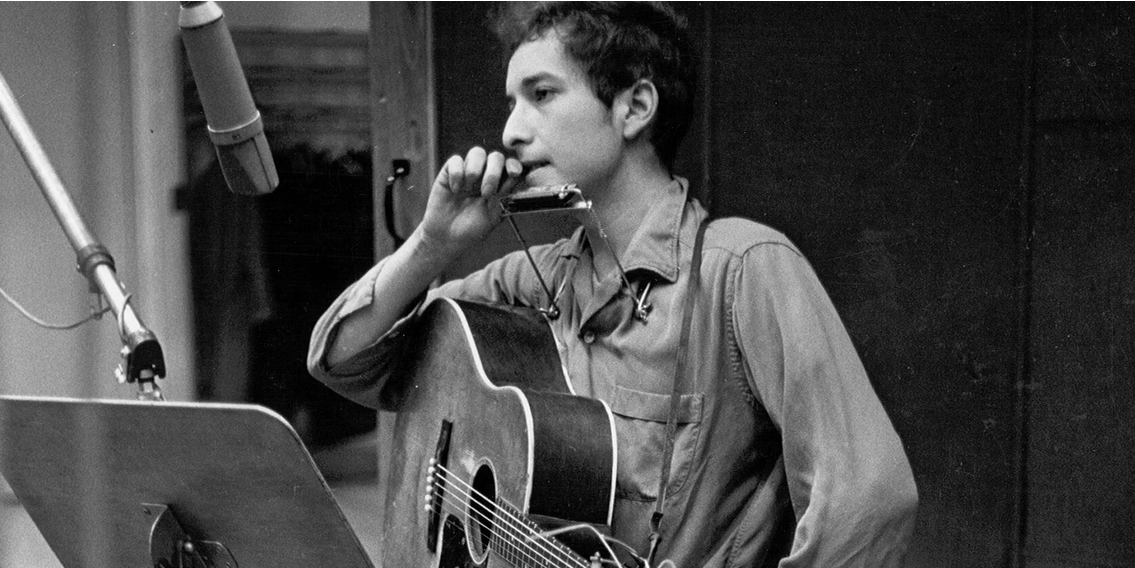
Bob Dylan, November 1961. (Photo: Michael Ochs)

I.

Many things matter about Folk Music: A Bob Dylan Biography in Seven Songs (Yale University Press; 273 pp.), Greil Marcus’s fourth—and, he has said, last—book about its subject. But your personal allegiance to Dylan in recent times isn’t one of those things. Whether you particularly value or even like the songs Marcus studies—in order of presentation, “Blowin’ in the Wind” (1962), “The Lonesome Death of Hattie Carroll” (1964), “Ain’t Talkin’” (2006), “The Times They Are A-Changin’” (1964), “Desolation Row” (1965), “Jim Jones” (1992), and “Murder Most Foul” (2020)—also doesn’t matter. The Dylan we surveil in these pages is not the sum of his successes or failures, or of any reader’s likes or dislikes. He is a creative force, a dark, hunched, music-producing presence prowling through decades of celebrity and centuries of history. If you retain a nerve of commitment to anything Dylan has ever done or been, that will be your point of entry, and meanings will flow even from songs you never cared about—songs you may not care about now, except as vehicles for Marcus to do what he does best. 

Sunday, January 30, 2022

Exposure: Jane Campion’s The Power of the Dog

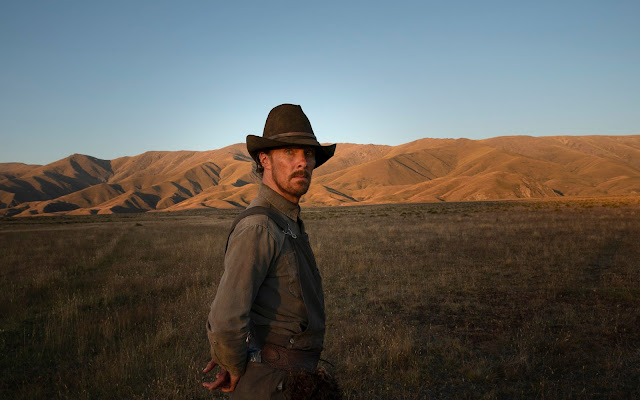
Benedict Cumberbatch in The Power of the Dog, currently streaming on Netflix.

Reading the rapturous reviews of The Power of the Dog is a bit like talking to an anti-vaxxer. The experience is so disorienting – the depiction of reality so inverted – that after a while you begin to question your own sanity. I forced myself to sit through the movie a second time, just to be sure I hadn’t missed something. I hadn’t. Jane Campion has made a pretentious, incoherent, excruciating adaptation of Thomas Savage’s 1967 novel of the same name. Many audience members may feel similarly, I suspect, but raising questions can invite gaslighting from critics ready to anoint the film. Witness Slate editor Jeffrey Bloomer, a self-described Campion fan, who found the viewing experience “absolutely miserable.” In response to his heresy, the poor man is led by reviewer Dana Stevens through some kind of struggle session to get him to recant his view and assent to the picture’s inscrutable wisdom. Watching them try to decode the movie like an ancient rune is disturbing. It seems every year brings us an empty art house film that the chattering classes adore. But The Power of the Dog has to rank near the top for eliciting such an Orwellian campaign of misinformation. 

Monday, January 17, 2022

Belfast: Memories of an Irish Childhood

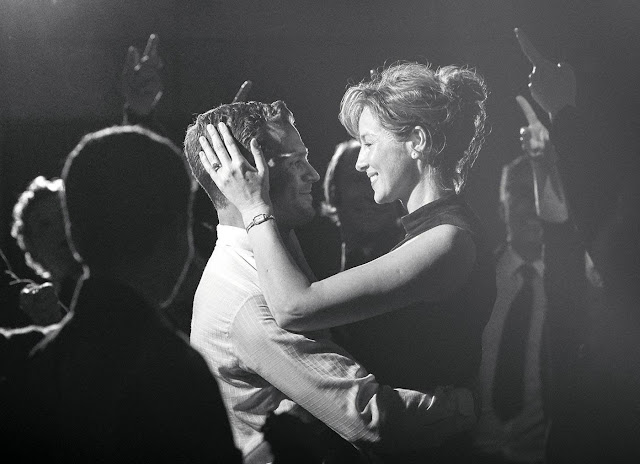
Jamie Dornan and Caitriona Balfe in Belfast.

Watching the black-and-white trailers for Belfast, Kenneth Branagh’s fictionalized memoir of growing up Protestant in the titular city at the peak of the Irish Troubles (the film begins in the summer of 1969), I feared that he’d been caught in the trap of turning his childhood into self-conscious neo-realism, like Alfonso Cuarón in the strenuously overrated Roma. I needn’t have worried. Haris Zambarloukos’s cinematography opens in almost hallucinatory color that reveals Belfast in all its complexity, modernist and glittering as well as enshrining gorgeous old buildings. And when the color morphs into black and white, it’s the bustling, lived-in black and white of the Parma Bertolucci and his photographer, Aldo Scavarda, captured in his the 1964 Before the Revolution or, as a friend observed, the black and white of the pictures Tony Richardson made in the late fifties and early sixties out of the great English New Wave dramas Look Back in Anger and The Entertainer (both shot by Oswald Morris) and A Taste of Honey (shot by Walter Lassaly). Belfast isn’t quite up to those movies – or the other movies I thought of while I sat through it, John Boorman’s 1987 Hope and Glory (based on his memories of a childhood in London during the Second World War) and Jim Sheridan’s 2002 In America (a too-little-known magic-realist marvel about a struggling Irish family living illegally in Hell’s Kitchen). But Belfast is plenty good enough. It’s vibrant and vivifying, and I was carried away by it.

Wednesday, May 26, 2021

How to Throw Your Voice Visually: Becoming Photography

Chuck Samuels: Becoming Photography (Kerber Verlag, 2021).
 
“From the idea that the self is not given to us, I think there is only one practical consequence: we have to create ourselves as a work of art.” – Michel Foucault

Much of what we now define as the poetics of images, the aesthetics of the camera, and the politics of photography comes to us from the thoughtful pens of cultural theorists such as the German critic Walter Benjamin, the French philosopher Roland Barthes, the American polemicist Susan Sontag, and the British art historian John Berger. Their speculations on what makes photography not only an art form but a special and privileged form of modernist consciousness have paved the way for a deep appreciation of both the magic potential and the seductive powers of technological reproduction. Our ways of seeing and thinking about seeing have often been guided by their ruminations on what happens when we photograph something or someone, and their penetrating analysis of the photographic arts has inspired and influenced generations of image-makers. 

Monday, January 18, 2021

Master Acting Classes: The Right Stuff (1983)

Fred Ward, Dennis Quaid, Scott Paulin, Ed Harris, Charles Frank, Scott Glenn and Lance Henriksen in The Right Stuff (1983).

In The Right Stuff, writer-director Philip Kaufman pulls off the near-impossible. Not only does he find a deeply satisfying way to dramatize Tom Wolfe’s cheeky, novelistic non-fiction chronicle of the development of the NASA space program, but in the course of three hours and fifteen minutes he moves from satirizing it to celebrating it. He does it with the aid of his brilliant collaborator Caleb Deschanel, whose astonishingly varied cinematography moves from a replication of the velvety, myth-bound westerns of John Ford in the thirties and forties and George Stevens in the fifties through a wide, muted yet clear-eyed reflection of the late fifties and early sixties in New Mexico and Florida to a gloriously trippy depiction of John Glenn’s triple orbit around the earth in the Friendship Seven in 1962. And he does it with the aid of one of the most thrilling ensemble casts ever put together – almost all of whom were relative unknowns in 1983.

Tuesday, December 8, 2020

Sean Connery: Larger Than Life

Sean Connery (1930-2020) in Diamonds Are Forever (1971).

Everyone knows that Sean Connery, who died on Halloween at the age of ninety, became a movie star the moment he stepped before the camera as James Bond, Ian Fleming’s Agent 007, in Dr. No in 1963. And for most of us who saw the early Bond pictures in the theatre as they appeared – I was thirteen when I was initiated, with the second of the series, From Russia with Love – all the subsequent Bonds, at least until Daniel Craig stepped up in 2006, always seemed like pretenders to a throne Connery had abdicated after the 1971 Diamonds Are Forever. Not that you could blame the guy. Very few of his fans took him seriously as an actor until he’d freed himself from the shackles of the leading role in the most beloved (and longest-lasting) series in movie history. He gave splendid performances as the life-embracing poet who can’t be slowed down even by a lobotomy in the 1966 comedy A Fine Madness and as the émigré Irish miner who leads a crew of violent rebels against the Pennsylvania coal barons in 1970’s The Molly Maguires – both fine movies but audiences failed to show up for them. (On the other hand, neither Woman of Straw with Gina Lollobrigida nor Marnie, directed by Alfred Hitchcock, both released in 1964, the same year as Goldfinger, did much for him. Marnie contains one of his rare bad performances – he looks befuddled, which seems like a fair response to what’s going on around him.)

Tuesday, September 1, 2020

Neglected Gem: American Hot Wax (1978)

Tim McIntire (seated) in American Hot Wax (1978).

Aloha Bobby and Rose, about the doomed romance of a pair of Angelenos, a car mechanic and a young single mom – an earthbound beauty who might have stepped right out of a Bruce Springsteen ballad – slipped in and out of theatres in 1975 without attracting much notice.  But the writer-director, Floyd Mutrux, turning out only his second picture, is immensely talented. He shows an unerring instinct for the 1970s working-class milieu; the two lovers, on the run as a result of a convenience-store prank that goes disastrously wrong, are dreamers whose pragmatism, the bitter consequence of living in a world where the odds are always against you, keeps souring their reverie. The two actors – Paul Le Mat, riding a brief period of stardom after he walked away with George Lucas’s American Graffiti, and Dianne Hull, who went on to become a highly respected Hollywood acting coach – give offbeat, subtle, mood-inflected performances that should have become classics. And Mutrux stays on their wavelength, framing scene after scene to showcase the way their faces and bodies convey the quicksilver shift in their emotions. The soundtrack is heavy on early Elton John, and songs like “Bennie and the Jets” and “Tiny Dancer,” with their starstruck visions of rock ‘n’ roll glory, seem mysteriously, unexpectedly appropriate for Rose and Bobby’s road trip, which breaks our hearts because we want so badly for it to take them out of their lives and we know those lives are going to catch up to them by the final reel. And Mutrux and DP William A. Fraker’s soft-focus SoCal images of service stations and bus stops, bars and motels and endless freeways, are strangely magical. There’s a car-crash sequence that doesn’t look like any car crash you’ve ever seen in a movie; watching the picture again recently, I thought of the auto accident that opens Carroll Ballard’s 1996 Fly Away Home, which shares that distinction.

Sunday, March 15, 2020

Betraying Jane: Autumn de Wilde’s Emma.

Anya Taylor-Joy in Emma.
Many people love Jane Austen’s novels for the romance of them, and the romance is very good: unsentimental, clear-eyed, with endings and couplings that seem absolutely right. But it’s her wit that has made her greatest novels classics of English literature, and it’s rather astonishing how many people don’t seem to realize this, including many TV and movie adapters of her work. Andrew Davies, who seems to have made PBS’s Masterpiece Theatre his permanent employer, recently supplied the network with his rendering of Austen’s unfinished novel Sanditon. Unfortunately, it was a melodramatic horror, devoid of humor, let alone wit. A local theatrical musical adaptation of Pride and Prejudice began with Elizabeth Bennet alone onstage reading out loud Austen’s famous first line, “It is a truth universally acknowledged, that a single man in possession of a good fortune, must be in want of a wife.” The actress then looked up at the audience and said, “But I don’t think that’s true,” thus proving the playwright was unfamiliar with wit and irony and Jane Austen in general. Things went downhill from there.

It’s generally agreed that Austen’s two greatest novels are Pride and Prejudice and Emma, so it’s no surprise that each has generated close to a dozen television and movie versions. The 1996 film edition of Emma, written and directed by Douglas McGrath, features a very good script and a number of other pleasures, but Gwyneth Paltrow and Jeremy Northam are rather uneven in their performances: Paltrow is sometimes stiff and stagey, and Northam’s Knightley is a little too wan and affable. I remember liking a little-seen 1996 TV version, shown on the A&E Network, starring Kate Beckinsale and Mark Strong and written by Davies, even though Davies made a great deal of the Gypsies who attack poor Harriet Smith and the turkey thieves who plunder Mrs. Weston’s coops, underscoring issues of class that needed none. And of course, the 1995 teen spoof Clueless, with Alicia Silverstone and Paul Rudd, is great fun.

Tuesday, December 31, 2019

Fond Farewells: Rip Torn and Rene Auberjonois

Rip Torn and Jeff Morris in Payday (1973).

In my final 2019 posting on Critics at Large I’d like to pay tribute to two marvelous character actors who passed away this year, Rip Torn (who died on July 9 at the age of 88) and Rene Auberjonois (only 79 when he died on December 8). These two men could hardly have been less alike in style or in the kinds of roles they were drawn to, but though they had long careers and occasionally appeared in movies or TV series that were popular enough to draw attention to their gifts, the quality of their best work has tended to be overlooked.

Thursday, October 25, 2018

Radio Daze: Fond Memories of an Aggravating Angel

Photo by John Marsonet.

“To deal with the history of cultures means to abandon oneself to potential chaos and yet to retain a deep belief in the basic ordination and meaning of things. It is a very serious task. One requiring a great lightness of spirit.” – Hermann Hesse, Magister Ludi

I definitely miss being on a weekly radio program. From about 1988 until the end of the 20th century, I was the visual art critic for CJRT-FM in Toronto, a wonderful community-based station with an eclectic mix of programming and hosts covering every aspect of popular culture, from classical music, folk and jazz, to BBC-imported Goon Shows and compelling ideas-based documentaries. The program on which I appeared every Wednesday to review an exhibition, interview an artist, curator or museum official, discuss an architectural design site and occasionally assess art books of mainstream interest, was appropriately called On the Arts, and that’s exactly what it was, with a day each week exclusively devoted to music, films, theatre, art, design, books and art politics.  It just now seems so perfectly 20th-century, in fact, that kind of diversity of interests, since independent public radio (and television for that matter) has become such a rare thing to behold or behear. (Critics At Large has been sharing excerpts of the program as podcasts.)

One of the other joys of my radio days was the fact that it was through this medium that I was able to cross paths with a delightful friend of over thirty years, the late, great Kevin Courrier, who passed away (or went to spirit, as he would have called it) in mid-October of this year. The path to Kevin, however, first led me to encounter the irascible, sardonic, sarcastic, infuriating and brilliant Tom Fulton, Kevin’s co-host at CJRT-FM and his mentor of many years: the man who Kevin said helped him “find his voice.” Kevin in turn helped me find my own voice, guiding me through the odd vagaries and quirks of the radio broadcast medium of expression.

Thursday, October 11, 2018

Behind the Mirror: The Cinematic Uncanny of Michael Curtiz

A scene from Michael Curtiz's final film The Comancheros (1961).

“Hide in the mirror. No one will look for you there.”  – Ljupka Cvetnova

“Movies are magic.”  – Van Dyke Parks

When I was coming of age in the mid-60s in the Toronto suburb of Don Mills, there wasn’t much to do apart from reading books and watching television. Well, there were some other activities, but they were illegal back then. And one of the accidental benefits of primitive television in the days, before the advent of cable, TCM and Netflix, was the ironic fact that old movie studios used to provide the bulk of late-night programming in the form of classic films from the golden age. Especially late-late-late night television, for the likes of me, for whom there was no better way to come down from the excitement of attending all-day outdoor rock festivals with ten stellar bands.

As a result I caught magical glimpses of some of the great cinematic gems and enjoyed many of my favourite flicks in a film festival occurring only in my own mind. It turned out that many of my favourites were produced and directed by the same quietly titanic but toweringly talented individual. Back then I was also able to actually rent 16-mm versions, along with the projector, from our local library (another thing of the past) and even to order the films themselves by mail order from outfits called Blackhawk and Castle Films. I used to screen these at home for friends, often with my own substituted soundtracks, in the case of some grand silent masterpieces.

Where to begin to unravel the wildly multi-phrenic universe of one of the most gifted and underrated geniuses in film history: Michael Curtiz? Perhaps by asking a basic question: what might all the following drastically divergent and highly stylized visual entertainments have in common? Just one single but remarkable thing, which was the result of the commercial ascendancy of Hollywood after both the end of the First and the Second World Wars, when a flood of talented newcomers washed up on its sunny shores from a conflict-ravaged Europe.

Friday, July 6, 2018

Journey's End: Battle Scars

Asa Butterfield in Journey's End (2017). (Photo: IMDB)

The British director Saul Dibb’s World War I film Journey’s End is a fine, mournful piece of work, but it opened without fanfare early in the year and closed almost immediately. Dibb has made only a handful of movies; I don’t think his last one, an adaptation of Irène Némirovsky’s novel Suite Française, was released at all on this side of the ocean, though it has Michelle Williams, Kristin Scott Thomas and Margot Robbie in the cast. (It’s set in World War II.) In Journey’s End he’s working with a screenplay by Simon Reade based on the 1928 R.C. Sherriff play, one of the most downbeat of all war dramas. The major WWI play produced in America in the twenties was Maxwell Anderson and Laurence Stallings’s What Price Glory?, which is raucous and funny – a hard-boiled comedy – except for the middle act, a poetic lament that takes place in the midst of a bloody battle. But in England it was Journey’s End, a relentlessly tragic glimpse of the war from the point of view of a doomed group of British officers in a trench in Aisne, France, just before Operation Michael (though it was warmly received when it moved to Broadway in 1929).

Thursday, June 7, 2018

Neglected Gem: The Ballad of Cable Hogue (1970)

Stella Stevens and Jason Robards in Peckinpah's The Ballad of Cable Hogue. (Photo: Getty)

In a brilliant essay for Critics at Large on women in Sam Peckinpah’s movies, Amanda Shubert wrote that The Ballad of Cable Hogue “distills the romantic spirit at the core of Peckinpah’s sensibility: love without possession.” In the romance between Cable (Jason Robards), who finds water in the middle of the Arizona desert and turns it into a watering hole called Cable Springs for stagecoach passengers, and Hildy (Stella Stevens), a prostitute whom the citizens of nearby Dead Dog run out of town, love without ownership is merely an extension of the transitoriness to which they are philosophically dedicated because they recognize it as the state of things. In the movie’s opening episode, Cable is robbed by his partners, Taggart (L.Q. Jones) and Bowen (Strother Martin) – playing a variation on the bounty hunter roles they created in Peckinpah’s The Wild Bunch the previous year – and left for dead without water in the desert. He survives four dry days through sheer orneriness while, like Tevye in Fiddler on the Roof, he keeps up a running monologue to God, assuming that his maker has no intention of letting him die of thirst. He finds water just as he’s about to give up, but the sign of God’s grace at the eleventh hour and the sudden twist in his fortune impart an indelible awareness of morality and the fact that we don’t own time, or our own lives. For Hildy, Dead Dog – a town that deserves its name – where she ekes out a ramshackle existence, seeing customers in a room above the saloon, is merely a way station for her; her destination is San Francisco, and being forced to leave brings it that much closer. She stops by Cable Springs and lives with Hogue for a few blissful weeks – what the characters played by George Clooney and Jennifer Lopez in Steven Soderbergh’s Out of Sight would call a “time out” from their lives. She wants him to come with her to San Francisco, but he’s stubborn about waiting for Taggart and Bowen to swing through the desert again so he can get his long-awaited revenge. So she goes on without him. She returns for him three years later, this time to invite him to New Orleans, after he’s had that revenge, or something like it; by now he’s ready to run away with her. But fate has other plans, and Hildy is its unwitting envoy: the chauffeur-driven automobile that brings her slides down a hill, Cable steps in, instinctively, to save Bowen, and he ends up getting run over. Hildy keeps him company during his last days, and leaves after his funeral.

Wednesday, May 30, 2018

Half-Witted & Scruffy-Lookin' – Solo: A Star Wars Story

Alden Ehrenreich as Han Solo in Solo: A Star Wars Story. (Photo: Jonathan Olley)

Note: This review contains spoilers for Solo: A Star Wars Story.

Disney, and Kathleen Kennedy in particular, must now serve two masters. Lucasfilm’s market – though it is an absolutely massive one – is as fractured and divided as anything else in North America right now. Star Wars fandom is split in two, and every move Kennedy makes has to cater either to one group or to the other, because nothing she does can possibly make both sides happy.

This was the reason I wasn’t excited for Solo: A Star Wars Story. It's serving a different fanbase: the guys on the other side of the aisle; the ones The Last Jedi left behind. As the origin story of cinema’s most famous silver-tongued scoundrel, Solo is for those who never want Star Wars to change; who want to relive their nostalgic attachments again and again forever; and who hated Rian Johnson’s film because it was something other than a nakedly indulgent power fantasy aimed straight at them. Solo has clearly positioned itself as a comforting reset to the status quo these fans pine for, tailor-made to placate this aging demographic that’s so petulant, its constituents might literally boycott a franchise because it insulted them by daring to grow in new and interesting directions. The upshot here is that no matter where you land on this franchise, I think we can all agree that for recognizing this rift in her marketshare, and for pivoting so quickly and capably to capitalize upon it, Kathleen Kennedy is a fucking genius.

Friday, May 25, 2018

The Victors and the Vanquished: Thunder in the Mountains

(from left) Chief Joseph (Heinmot Tooyalakekt) and Oliver Otis Howard. (Photo: Wikimedia Commons)

Few things are more depressing than the close examination of the history of North America. Not the ancient true history of the continent and its inhabitants over the last 20,000 years, but rather the imaginary history of the Europeans who came and invented a conceptual country superimposed over the multiple ones that already existed here since the Ice Age receded. That imaginary history of the immigrants who became both Americans and Canadians is fascinating because it was written by the victors in the blood of the vanquished. The poet Robert Duncan once remarked that blood is the ink in which human history is written, and never is that fact more clear than in a recent book by Daniel Sharfstein from WW Norton (Penguin/Random House) called Thunder in the Mountains: Chief Joseph, Oliver Otis Howard, and the Nez Perce War.

"T-under," as he translated his own name to one early visitor to his ancestral homeland, was only called Joseph because his father had been christened in November 1839 by a missionary who had recently come from New York to preach the gospel to the Nez Perce peoples. So his father was called Old Joseph and he was called Young Joseph, and eventually, just Joseph. Nez Perce, of course, was yet another misunderstood and misapplied assumption originally made by the French explorers who saw some natives making a sign for the tribe that resembled a pierced nose, so they presumptuously renamed the group The Pierced Noses. In reality, something neither the French nor any other soon-to-become “Americans” took much notice of when they saw the splendour of the continent spread before them, was that this culture was really and paradoxically called Nimi’ipuu, or the real people. Which people were real and which were not, what kind of human being qualified for equal treatment had of course been at the core of one of the central events in American history: the Civil War.

Wednesday, February 7, 2018

Well-worn Experience: Dance Hall by Jerry Granelli

Drummer Jerry Granelli in the studio. (Photo courtesy of DL Media)

I don’t know if it’s been properly proven but the adage that some things get better with age can often apply to a musician. In the case of Dance Hall (Justin Time), the new album from drummer Jerry Granelli, experience makes for great music. On this session, the producer is Lee Townsend, whose know-how makes him one of the best sound designers in the business. Dance Hall features guitarists Bill Frisell and Robben Ford, two of the most interesting and, I will say, distinguished musicians of the past 30 years. On electric bass is J. Anthony Granelli, Jerry’s son and long-time music director. To bring all this musical experience into one studio to record cover songs, no less, speaks to the essence of Granelli’s respect for and personal appreciation of popular song. As he says in the liner notes, “the key for me was not doing covers, but finding songs that were personal to my journey” and what a journey it has been for the famous drummer, who turned 77 on December 30th.