|
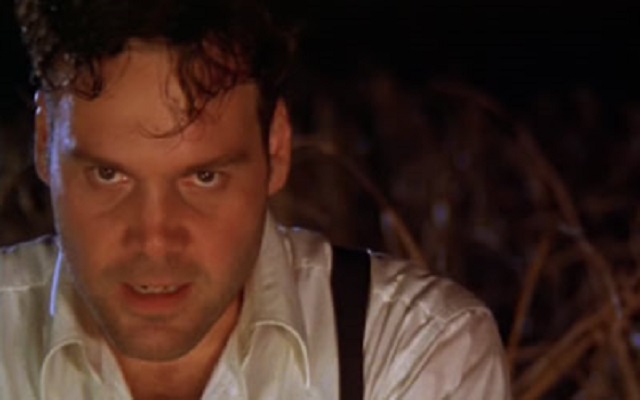
| Tosa Kazunari in Beyond the Infinite Two Minutes (2020). |
Somehow, Kato doesn’t freak out.
The essence of time travel is narrative. Like the unread pages of a good book, the future has already happened; it just hasn’t yet happened to you. The metaphor applies doubly to filmmaking, which usually takes a narrative and shoots it out of order. Continuity must be maintained, and character and emotional arcs made convincing. If they aren’t, paradoxes manifest, the cinematic world collapses, and viewers branch off from the storyworld prematurely, each into their own individual lifeworlds.
2020’s Beyond the Infinite Two Minutes (ドロステのはてで僕ら “We at the End of the Droste”), director-cinematographer-editor Yamaguchi Junta’s feature debut, realizes this metaphor in the most direct way. Beyond is shot to look like it was done in a single take, using just one phone, tripod, boom mic, the world’s longest power cord, and lots and lots of stopwatches. To give you a sense of its flavor, it was inspired by One Cut of the Dead (カメラを止めるな! “Don’t Stop the Camera!”), Ueda Shinichiro’s 2017 smash hit about a group of people tasked with making a one-shot microbudget zombie film. There are cuts in Beyond – of course there are cuts; it’s a time travel film – but to keep up the illusion, the requisite plot complications have to develop organically from the situation the characters find themselves in, and from who they are as characters, as people. Writer Ueda Makoto does a hell of a job in just 70 minutes.